

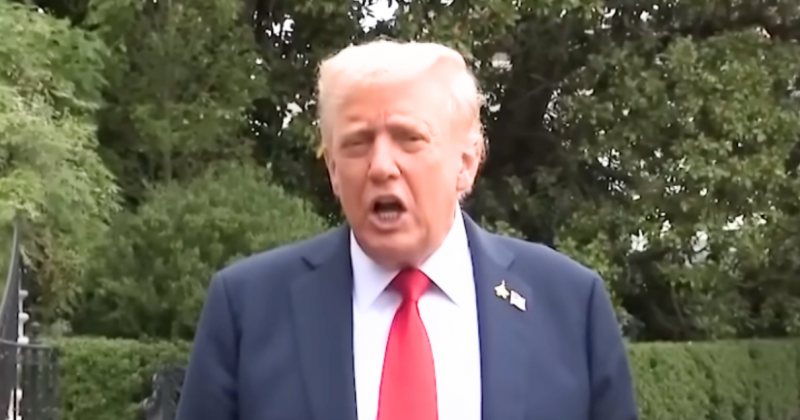
A single sentence from President Donald Trump sent ripples through diplomatic circles this week, as the commander-in-chief made clear that even longtime partners face consequences if they cross Washington on matters involving Iran.
Speaking to Fox News on Monday, Trump zeroed in on Oman, a nation quietly negotiating with Tehran over how ships move through the Strait of Hormuz — a chokepoint responsible for ferrying a massive share of the planet’s oil supply.
Trump’s language left no room for ambiguity about what lies ahead if those negotiations produce an outcome Washington views as harmful to American interests.
“If Oman gets in the way, we’ll bomb the s*** out of them,” the president declared.
Few words could have captured the moment more starkly. Oman occupies a unique position in Middle East diplomacy — simultaneously a U.S. security partner and one of the only channels of communication between Washington and Tehran.
That dual role now sits under enormous strain as the confrontation between the United States and Iran deepens.
Global energy markets have felt the tremors of this standoff for months. Shipping interruptions near the strait have unsettled traders and fueled anxiety in Washington over losing control of the passage altogether.
Trump has repeatedly staked out a firm position: Iran does not get to dictate who passes through the strait, nor can it impose fees on tankers with American backing.
This week’s comments were not an isolated outburst. Earlier in the year, a reporter asked Trump whether he would accept a joint arrangement between Iran and Oman governing the waterway.
His answer was direct. “The strait will be open to everybody,” Trump said. Pressed on who would hold authority over it, he added, “Nobody is going to control it… We will watch over it.”
He then pivoted to Oman by name, issuing a warning that foreshadowed Monday’s remarks almost word for word.
“Oman will behave just like everybody else or we’ll have to blow them up. They understand that. They’ll be fine,” Trump said at the time.
Muscat chose silence over rebuttal, declining to publicly answer that earlier threat.
Some reassurance eventually came through a different channel. Treasury Secretary Scott Bessent later disclosed that Oman’s ambassador had personally guaranteed there were no plans to charge vessels for using the strait.
Oman’s fingerprints are all over the diplomatic history between the U.S. and Iran.
The sultanate helped broker the framework that eventually produced the 2015 nuclear accord, cementing its reputation as a trusted intermediary.
That reputation is now being tested. A more aggressive American posture toward Tehran has left little space for the kind of quiet mediation Oman built its reputation on.
Iran, meanwhile, has treated its geographic control near the strait as a bargaining chip, using the threat of disruption to extract concessions from Washington.
The U.S. has responded in kind, layering military deployments with economic sanctions in an effort to drag Iranian leadership back to negotiations on American terms.
Washington’s demands remain unchanged: a lengthy halt to uranium enrichment, a complete abandonment of nuclear weapons ambitions, and surrender of Iran’s stockpiled enriched uranium.
Tehran has countered with its own list — relief from sanctions, unfrozen assets, a stand-down of U.S. military pressure, and expanded say over what happens in the Strait of Hormuz.
Markets have already priced in the uncertainty. Oil prices have ticked upward as investors weigh the odds of further disruption to one of the busiest shipping lanes on Earth.
What Trump’s warning ultimately signals is a widening of the administration’s red lines — not just for adversaries like Iran, but for allies whose choices could hand Tehran leverage Washington isn’t willing to concede.
