

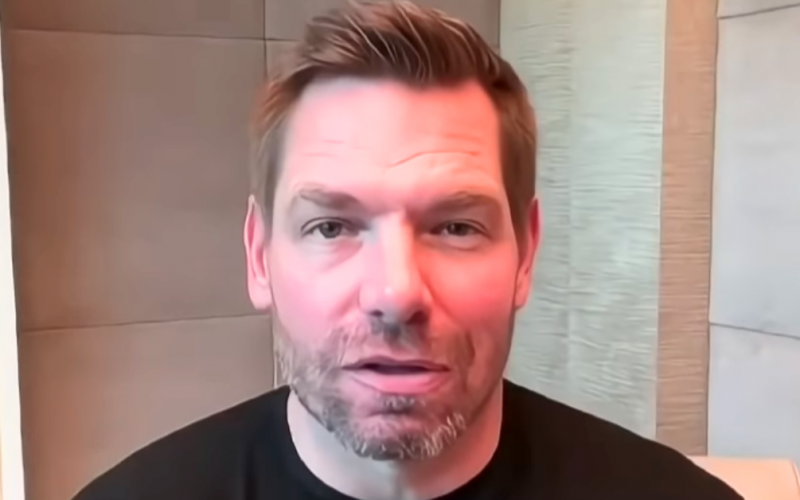
A decade-old FBI investigation into a Chinese national’s ties to a sitting congressman has resurfaced in full, after the Trump administration ordered the release of internal bureau files documenting years of surveillance, recruitment attempts and a criminal probe that ultimately produced no charges against the lawmaker involved.
The records center on Rep. Eric Swalwell, D-Calif., and Fang Fang, a Chinese national also known as Christine Fang, whom agents suspected of leveraging personal relationships, campaign fundraising and intern placements to gain access to American political figures, initially reported by Axios in 2020.
The White House Government Transparency Task Force released the documents Monday as part of a broader initiative targeting foreign interference in U.S. elections and government institutions.
The files confirm the FBI treated the matter as a predicated investigation, meaning agents had established factual grounds to believe a crime or national security threat existed, unlocking tools such as electronic surveillance and confidential sources unavailable in a preliminary assessment.
Court and bureau records show the case began under a different premise entirely.
Before agents ever opened a criminal file, they spent months trying to recruit Fang as an informant, hoping she could shed light on Chinese efforts to influence local politicians.
An undercover employee met with her repeatedly, and by June 2013 Fang had signed a contractor agreement with a fictitious consulting firm set up by the bureau.
That recruitment effort collapsed just days before agents pivoted to investigating Fang for suspected crimes.
Documents suggest the outreach itself may have surfaced evidence of the very donation scheme investigators would later pursue.
Internal memos referred to Fang by the code name “Rusty Thumbs” and noted her parents were believed to be officers with China’s Ministry of State Security.
Agents wrote that her connections to MSS personnel, combined with her access to U.S. officials, made her a potentially valuable source on Chinese influence campaigns, even as they weighed the risk she posed.
By March 2014, the bureau had opened a formal probe, internally named “Freshman Fifteen,” reviewed jointly by FBI headquarters and the Justice Department’s Public Integrity Section.
Investigators initially examined whether Swalwell traded internship offers for campaign contributions funneled through Fang. Agents wrote in one memo that their objective was to gather enough evidence to indict both Fang and Swalwell for campaign finance violations and quid pro quo conduct.
Financial records cited in the files show agents traced at least two 2013 conduit contributions directly back to Fang, and documented at least two more suspected illegal donations routed through others in 2014.
A 2015 memo describes agents approving a $1,000 donation from a confidential source to a Swalwell fundraiser at Fang’s request, allowing investigators to document how she allegedly handled reimbursements.
A separate individual told agents Fang had asked him to attend a fundraiser and promised to cover his contribution if he brought a checkbook; he said he refused.
Interview summaries show Swalwell told agents in 2015 and 2016 that he had a physical relationship with Fang, whom he first met in 2012.
He said his campaign treated her intern referrals as coming through the Asian Pacific Islander American Public Associations, a prominent constituent organization, and acknowledged concerns about his campaign’s compliance with donation reporting rules.
Agents removed Swalwell as a subject of the case on February 8, 2017, after concluding the investigation had not established that he violated federal law. The probe continued against Fang alone.
By that point, however, Fang was gone. Associates told investigators she left the United States for China around May 2015, shortly after the FBI searched her home and began interviewing people close to her.
One associate, a winery owner who had co-signed leases with Fang, said she told him she was returning to China after being questioned about the donation scheme.
He told agents he suspected she might be a Chinese intelligence operative, describing her as private and frequently absent without explanation.
The bureau’s closing memo outlined evidence that Fang may have violated several statutes, including bans on foreign national and straw donor contributions, as well as laws against false statements and acting as an unregistered foreign agent.
The Justice Department declined to prosecute her, and the State Department later barred her from re-entering the country.
The investigation’s early phase was overseen in part by the Justice Department’s Public Integrity Section, then led by Jack Smith, who later became the special counsel who pursued criminal charges against Donald Trump.
Swalwell has said for years that he cooperated fully with the FBI.
His office told reporters at the time that he provided information about Fang to the bureau but declined to discuss details that might be classified.
Earlier this year, his attorneys, Norm Eisen and Sean Hecker, sent a cease-and-desist letter to FBI Director Kash Patel demanding the files not be released, calling the move an attempt to damage Swalwell’s campaign for California governor.
Following Monday’s release, Swalwell attorney Sara Azari said the documents contain “nothing new” and reiterated that no charges were ever filed against the congressman.
She said the release of a closed investigation years later raised concerns about the use of federal law enforcement records for political purposes.
