

Alabama lawmakers spent years fighting to reclaim control over how the state draws its congressional lines. On Monday, the U.S. Supreme Court gave them exactly what they wanted.
The nation’s highest court issued an order Monday afternoon lifting a lower court’s block on Alabama’s 2023 congressional district map — a map federal judges had twice concluded likely violated the Voting Rights Act by diluting the political influence of Black voters across the state’s seven congressional districts.
The Supreme Court’s unsigned, one-paragraph ruling offered no explanation. It simply granted Alabama’s appeal and returned the dispute to the lower court for fresh review.
The action carries immediate consequences.
Alabama’s congressional primary is scheduled for May 19 — just days away — and the ruling effectively swaps out the court-ordered map currently governing those elections and replaces it with the state’s pref
erred boundaries before a single primary result is certified.
The road to Monday’s order stretches back to the 2020 census.
After new population data arrived, Alabama drew a congressional map that placed Black voters in southern Alabama across three separate districts, leaving them a minority in each.
Civil rights organizations and Black voters sued, arguing the configuration ran afoul of Section 2 of the Voting Rights Act, which bars racial discrimination in voting.
Federal judges agreed. The Supreme Court itself upheld that conclusion in 2023 during Allen v. Milligan, affirming that Alabama’s original map likely crossed a legal line.
Alabama went back to the drawing board and produced a revised 2023 map. Federal courts blocked that version too, again finding it likely violated the Voting Rights Act.
A court-appointed special master stepped in and drew a replacement map, which a district court ordered the state to use.
After a full trial in 2025, the district court issued a final ruling that Alabama’s 2023 map was “an intentional effort to dilute Black Alabamians’ voting strength and evade the unambiguous requirements of court orders standing in the way.”
Alabama carried its case back to the Supreme Court. The justices held off acting until they resolved a related dispute out of Louisiana.
That case, Louisiana v. Callais, produced a 6-3 decision on April 29 that shook the redistricting landscape. The majority concluded that Louisiana’s congressional map amounted to an unconstitutional racial gerrymander — drawn with race as the dominant factor — and struck it down.
The ruling raised the legal bar plaintiffs must clear when arguing that a map dilutes minority voting power and restored broader authority to state legislatures to draw district lines without court-imposed racial requirements.
Two days after the Callais decision landed, Alabama Republican Governor Kay Ivey called a special legislative session. Lawmakers convened May 4 and passed legislation within days establishing a contingency framework for new congressional primaries.
Ivey signed the bill into law. It grants the state the ability to set aside May 19 primary results in affected districts and conduct fresh primaries under the reinstated 2023 map, provided courts continue to allow its use.
Alabama had urged the Supreme Court to move quickly. The state argued its situation was legally identical to Louisiana’s and told the justices it drew its 2023 map by trying to “achiev[e] the State’s neutral goals (like protecting incumbents) and refus[ed] to let race predominate.”
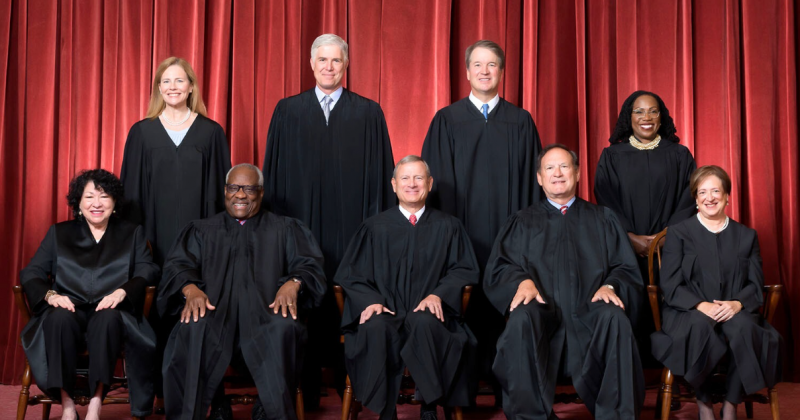
Three justices pushed back forcefully. Justice Sonia Sotomayor authored a dissent joined by Justices Elena Kagan and Ketanji Brown Jackson, calling the majority’s order “inappropriate” and warning it “will cause only confusion as Alabamians begin to vote in the elections scheduled for next week.”
Sotomayor argued the lower court’s findings did not rest entirely on Voting Rights Act grounds.
The district court had also concluded Alabama violated the Fourteenth Amendment through intentional discrimination against Black voters — a constitutional determination Sotomayor wrote was “independent of, and unaffected by, any of the legal issues discussed in Callais.”
Under the court-ordered map currently in place, two congressional districts carry substantial Black voting-age populations and are represented by Black Democrats.
At least one of those incumbents is projected to lose their seat once the 2023 map takes effect.
State officials have said they intend to finalize the redistricting process in time for the November 2026 general election.
