

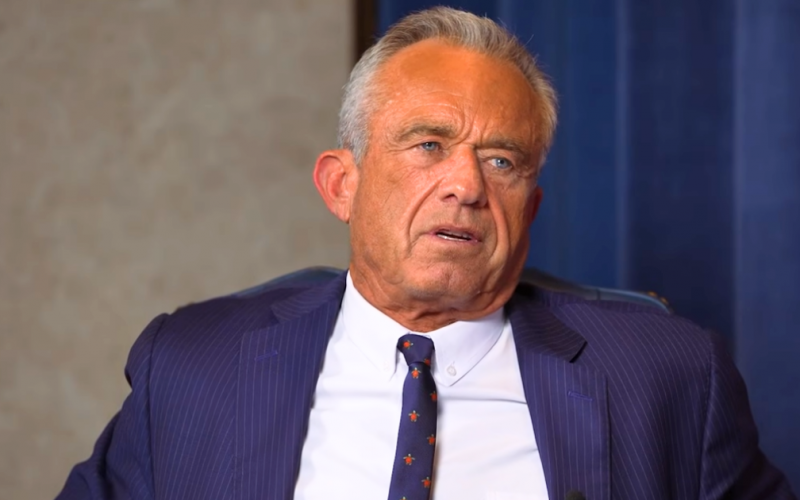
Robert F. Kennedy Jr. delivered a sweeping critique of America’s addiction treatment and rehabilitation system, arguing that it is fragmented, poorly coordinated, and structured in ways that financially benefit relapse rather than long-term recovery.
Kennedy highlighted that essential services—including housing, law enforcement, healthcare, and mental health support—are rarely integrated, leaving no single authority accountable for patient outcomes.
“The system itself is designed to keep you sick,” Kennedy said, emphasizing that the perverse incentives are embedded in the structure, not the intentions of individual caregivers.
He described the prevailing model as fee-based, where treatment centers earn revenue through repeated admissions, creating an environment in which recovery is secondary to financial gain.
Kennedy also criticized insurance companies, pointing to their economic incentives that reward ongoing treatment cycles rather than permanent recovery.
Using an analogy to Lloyds of London, he explained that insurers profit from higher overall activity.
“With Lloyds of London, rather have one boat sink a year, or 100 boat sinks a year,” he said. “Rather have 100 because then everybody is buying the insurance and the cost of the pie goes up and they’re collecting friction on it.”
According to Kennedy, this cycle persists across the entire rehabilitation ecosystem. Each relapse increases costs and revenue for service providers, and no one organization is tasked with tracking long-term outcomes.
Kennedy argued that effective, evidence-based treatments exist but are underutilized because the system lacks accountability.
“We have lots of evidence to treatments. We know what works,” he said. “We’re not doing it well, because nobody has an incentive to do that, and so there’s no accountability.”
As part of a solution, Kennedy advocated for a coordinated care model in which a single authority oversees a patient’s recovery.
He proposed outcome-based reimbursement, where providers would receive one payment for treatment and remain responsible for supporting the individual over several years.
This approach aims to shift financial incentives from repeated short-term interventions to sustained recovery, according to LifeZette.
During a recent appearance on “CUOMO,” Kennedy emphasized the importance of integrating services, particularly for vulnerable populations such as the homeless.
“It’s a fragmented system, where nobody really is responsible for the outcome to the addict,” he told host Chris Cuomo, noting that housing, treatment centers, and outpatient programs often operate in silos.
Kennedy announced $100 million in funding for the “STREETS” initiative, aimed at tackling substance use and homelessness in eight U.S. cities.
Managed by the Substance Abuse and Mental Health Services Administration within the Department of Health and Human Services, the program seeks to implement coordinated, long-term solutions to addiction.
Highlighting the urgency of reform, Kennedy cited addiction as the leading cause of death for Americans under 45, with total costs approaching $1 trillion annually.
He also noted that survey data indicate 37 percent of homeless individuals reported regular drug use within the past six months, underscoring the need for comprehensive, accountable interventions, as noted by NewsNation.
Kennedy concluded that systemic reform, rather than isolated treatment episodes, is critical to addressing the addiction crisis.
By aligning financial incentives with recovery and integrating support across sectors, the United States can create a treatment system that prioritizes wellness and long-term outcomes over short-term profits.
WATCH:
