

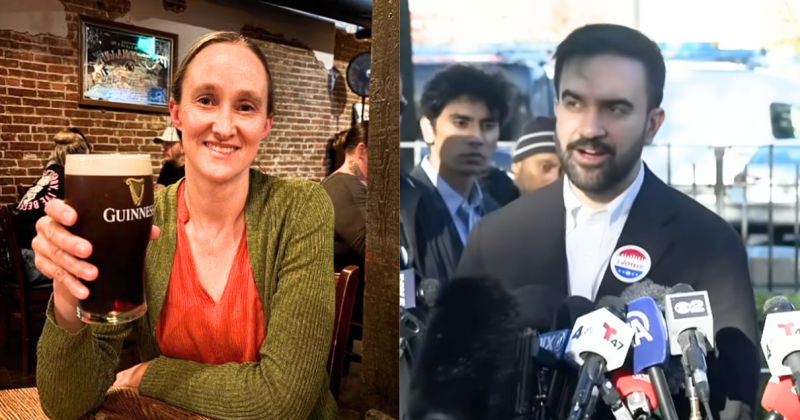
Seattle Mayor Katie Wilson spent the first months of her tenure picking fights with the city’s biggest employers.
Now, with Starbucks accelerating a massive corporate migration to Tennessee, she is publicly admitting she went too far.
Wilson, 43, rode a wave of labor activism to City Hall, defeating incumbent Bruce Harrell in November 2025. Her politics were never subtle.
Within hours of Harrell conceding the mayoral race, Wilson stood outside a shuttered Starbucks Reserve Roastery on Capitol Hill and addressed a crowd of striking baristas.
Her message to Seattle residents was direct: stop buying coffee from one of the city’s most prominent employers.
“I am not buying Starbucks and you should not either,” Wilson told the rally.
The boycott call was only the beginning. Weeks later, at a forum held at Seattle University, Wilson was pressed on whether she worried her aggressive tax agenda would drive high earners out of Washington state.
She was not worried.
“I think the claims that millionaires are going to leave our state are like super overblown,” Wilson said. “And the ones that leave, like, bye,” she continued, laughing and waving her hand.
The clip spread rapidly across social media, drawing condemnation from the business community nationwide. The fallout was swift and pointed.
Starbucks announced plans to move or hire 2,000 workers in Nashville over the next five years, a $100 million Tennessee expansion that has rattled Seattle’s corporate community.
The company has laid off roughly 1,000 corporate employees in Seattle since 2025, and around 400 of the Nashville positions are expected to be transferred directly from Seattle.
Starbucks has maintained that its global headquarters will remain in Seattle. But the scale of the Tennessee investment has done little to quiet local fears about the long-term trajectory.
Wilson has since reversed course. In an interview with the New York Times, she acknowledged her posture toward the business community had been a mistake.
“Those comments were not productive in the sense that they caused more harm than good,” Wilson told the Times.
She added that she has an ongoing relationship with Starbucks leadership, that the company’s planned move to Nashville did not catch her off guard, and that Starbucks has committed to continuing philanthropic contributions in Seattle, including helping fund a new homeless shelter.
“I want them here,” Wilson said. “And I believe they want to be here.”
Not everyone is satisfied with the reversal.
Howard Schultz, the founder who built Starbucks from a local roaster into a global empire, published a Wall Street Journal op-ed the same day the company announced its latest round of Seattle layoffs — 61 additional positions cut from its hometown workforce.
Titled “Seattle Turns Hostile to the Great Businesses It Made,” the piece took direct aim at Wilson and the political environment she represents.
“Seattle’s mayor, Katie Wilson, has chosen to cast business as a foil rather than a partner,” Schultz wrote.
“Her socialist rhetoric vilifies employers, even while she continues to rely on them for revenue. She has encouraged residents who disagree with her policies to leave,” he added.
Schultz — who opened Starbucks’ first store in Seattle in 1971 and purchased the company outright in 1987 before stepping down from the board in 2023 — relocated to Miami shortly before the op-ed’s publication.
He said his departure was largely personal but added that he felt compelled to speak out about the business climate in the city and state that shaped his career.
Schultz argued that the ecosystem that once produced Microsoft, Amazon, and Costco has grown “fractured” due to what he described as chronic homelessness, disorder in core commercial districts, and ongoing budget shortfalls.
He reserved sharp criticism for Washington’s approach to fiscal policy.
“The theory appears to be that prosperity can be mandated through redistribution rather than generated through growth,” Schultz wrote. “Washington has a broken tax system.”
Washington’s legislature passed a 9.9 percent tax on income above $1 million in March, set to take effect in 2028. Wilson supported the measure.
The state has already seen significant departures: Amazon founder Jeff Bezos relocated his personal fortune to Florida, and Fisher Investments — a money management firm with more than 6,000 employees — left Washington in 2024 following the passage of a state capital gains tax.
Schultz noted that both Microsoft and Amazon have slowed hiring and reduced headcounts as they redirect resources toward data infrastructure and global competition.
Observers have also noted that Wilson has gone conspicuously quiet on a second boycott — one she had directed at outdoor retailer REI.
The REI Union was among the earliest labor organizations to endorse her mayoral run, but Wilson has issued no public statements as that union’s contract dispute continues.
Starbucks insists Seattle remains its permanent global home.
But with hundreds of jobs already transferred and thousands more headed to Nashville, many in the city are asking whether a mayor’s words — and her policy agenda — may have consequences no walk-back can fully undo.
