

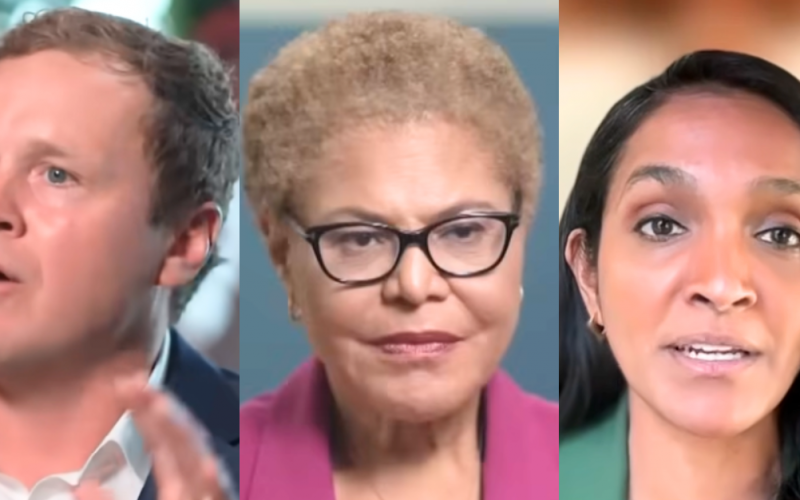
A legal confrontation between California and the federal government over access to the state’s voter registration records has escalated to the Ninth Circuit Court of Appeals, with a top federal prosecutor publicly questioning what the state is working to conceal.
Los Angeles U.S. Attorney Bill Essayli stepped into the spotlight Sunday, using a post on X to call out California’s election administration practices and back the push for a formal federal examination of the state’s voter rolls.
The timing was no accident.
Essayli’s comments came on the heels of a stunning reversal in the Los Angeles mayoral primary, where Democrat Nithya Raman watched her campaign appear to collapse on election night, with early returns placing her in third position and drawing visible tears from the candidate herself.
Days of continued counting transformed that apparent defeat into a second-place finish, vaulting Raman into the runoff and igniting a fresh wave of skepticism from critics who have long argued that California’s post-election ballot counting process lacks sufficient oversight.
The pattern, they note, is not isolated — late-arriving ballots in California have repeatedly moved final results in favor of Democratic candidates, a trend Essayli cited as central to his office’s interest in taking a harder look at how the state runs its elections.
His concerns extend well beyond the counting process.
Essayli publicly highlighted California’s voter registration identification rules.
This permits first-time registrants who cannot supply a driver’s license number or Social Security number to instead verify their identity using documents such as gym membership cards, workplace employee badges, prescription medication labels, credit cards, debit cards, and insurance documents.
“California allows first-time voters to register using forms of ID that most Americans would find surprising,” Essayli wrote, framing the policy as one warranting serious federal scrutiny rather than a rubber stamp of approval.
He pressed further, raising doubts about whether California is actively maintaining clean and accurate voter rolls — specifically whether deceased residents, individuals who have left the state, and felony convicts who are ineligible to vote are being properly removed from the registration system.
California’s ballot harvesting rules drew additional fire.
The state allows outside parties to gather completed ballots from voters and submit them on their behalf, a practice Essayli argued creates a fundamental accountability gap.
“This makes it difficult to track who actually received, completed, and submitted each ballot,” he wrote.
The federal government’s effort to obtain California’s voter registration data is not new — the push has been underway for more than a year, aimed at determining whether the state is honoring its obligations under federal statutes designed to maintain election integrity and guard against fraud.
Essayli released a letter sent by the Justice Department’s Civil Rights Division to California Secretary of State Shirley Weber in August 2025, which laid out the federal demand in plain terms: hand over the full voter registration database so officials can assess the state’s compliance with the National Voter Registration Act and the Help America Vote Act.
The Justice Department, operating under Harmeet Dhillon, made clear it viewed California’s resistance as legally indefensible.
“California cannot limit the Justice Department’s access to mere inspection of the requested voter registration records,” the department wrote, asserting its entitlement to a complete copy of the records exactly as California maintains them.
Federal officials also sought every voter registration application filed between December 2023 and July 2025, arguing that federal election law supersedes the privacy rationale California has used to justify withholding the data.
California’s standard registration requirements call for applicants to provide a state driver’s license number, a state-issued ID number, or the final four digits of a Social Security number.
Those who cannot meet those requirements are issued a unique identifier by election authorities, while first-time federal election voters operate under a distinct verification framework established under the Help America Vote Act.
Essayli left little ambiguity about where he stands.
“If California genuinely wants voters to trust its elections, it should open its records, not fight to keep them closed,” he wrote. “What are they afraid of?”
