

Dozens of House Democrats broke ranks with their party leadership Thursday, joining Republicans to approve legislation that would threaten federal funding for colleges and universities that participate in certain boycotts of Israel.
The House passed the Protect Economic and Academic Freedom Act in a 237-169 vote, with 33 Democrats joining Republicans in supporting the measure. Just two Republicans opposed the bill.
The vote exposed a significant Democratic divide over Israel and the Boycott, Divestment and Sanctions movement as lawmakers continue debating how universities should respond to anti-Israel activism on college campuses.
Under the legislation, colleges participating in federal student-aid programs could lose eligibility if they engage in what the bill defines as a “nonexpressive commercial boycott” targeting Israel or Israeli entities without a valid business justification.
The measure would also impose requirements on universities receiving certain federal funds involving international education programs and academic opportunities connected to Israel.
The legislation still needs Senate approval before it can reach President Donald Trump’s desk.
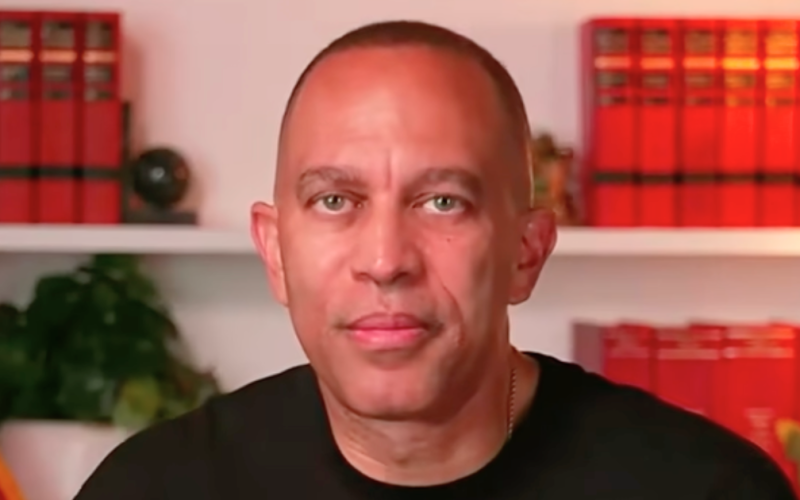
House Minority Leader Hakeem Jeffries (D-NY) opposed the measure along with 167 other Democrats, while 33 members of his caucus crossed the aisle to help Republicans pass it.
Among the Democrats supporting the legislation were Reps. Jared Moskowitz (D-FL), Debbie Wasserman Schultz (D-FL), Ritchie Torres (D-NY), Marie Gluesenkamp Perez (D-WA), Henry Cuellar (D-TX), Brad Sherman (D-CA) and Josh Riley (D-NY).
Reps. Thomas Massie (R-KY) and Warren Davidson (R-OH) were the only Republicans to oppose the bill.
The bipartisan support came despite fierce opposition from Democrats who argued the federal government could punish universities over decisions involving constitutionally protected political expression.
Rep. Jerry Nadler (D-NY), who opposes the BDS movement, nevertheless voted against the legislation because of concerns about free speech.
Nadler argued that protecting the First Amendment requires defending political expression even when he strongly disagrees with the underlying message. He described BDS as objectionable but maintained that Americans retain the right to advocate for it.
The bill’s supporters rejected the argument that the legislation is designed to silence political debate.
Rep. Josh Gottheimer (D-NJ), who helped lead the bipartisan effort, said the measure targets discriminatory institutional conduct rather than academic discussion or individual political speech.
“It simply says that if your university takes federal taxpayer dollars, it can’t discriminate against academic partnerships or investments with one country,” Gottheimer said while advocating for the legislation.
The New Jersey Democrat has been an outspoken opponent of BDS and argued that universities must ensure Jewish students can receive an education without facing discrimination or intimidation.
House Rules Committee Chairwoman Rep. Virginia Foxx (R-NC), another leader behind the legislation, similarly framed the measure as a response to discrimination against Jewish students, per Trending Politics.
“They are discriminating against people of the Jewish faith,” Foxx said during the debate. “Now is not the time for talk. It is the time for action.”
Rep. Rashida Tlaib (D-MI), one of Congress’ most prominent critics of Israel, came down firmly on the opposite side.
Tlaib called the legislation an assault on free speech and academic freedom and argued that Jewish students have also participated in campus campaigns supporting BDS.
The debate reflects a broader political fight that has intensified on college campuses since the Hamas-led Oct. 7, 2023, attack on Israel and the subsequent war in Gaza.
Pro-Palestinian activists have organized demonstrations and campaigns demanding universities divest from Israel, while Republicans and other supporters of Israel have accused some campus movements of creating hostile environments for Jewish students. Protest organizers have rejected claims that advocacy for Palestinians should automatically be characterized as antisemitism.
The Democratic split Thursday demonstrated that the issue does not fall cleanly along party lines.
While the overwhelming majority of House Democrats opposed the legislation, the 33 defections provided Republicans with a sizable bloc of Democratic support and allowed the measure to advance with a clear bipartisan majority.
The fight now moves to the Senate, where lawmakers will determine whether the legislation advances to Trump for his signature.
