

The Pentagon confirmed Tuesday that approximately 140 U.S. service members have sustained wounds during the first ten days of Operation Epic Fury, the ongoing American military campaign against Iran that launched Feb. 28.
“The vast majority of these injuries have been minor, and 108 service members have already returned to duty,”chief Pentagon spokesman Sean Parnell said in an official statement.
Eight service members remain listed as severely injured and are receiving the highest level of medical care,Parnell confirmed.
U.S. Central Command defines “seriously wounded” as troops facing imminent death or who may die from their injuries — a classification that now applies to eight of America’s fighting men and women still recovering from the conflict.
Seven American service members have paid the ultimate price since President Donald Trump ordered strikes against Iran on Feb. 28.
Six of those soldiers died when a drone struck a command center at Port Shuaiba, Kuwait, just one day after the U.S. and Israel launched their military campaign.
Those killed were Capt. Cody A. Khork, 35; Sgt. 1st Class Noah L. Tietjens, 42; Sgt. 1st Class Nicole M. Amor, 39; Spc. Declan J. Coady, 20; Maj. Jeffrey O’Brien, 45; and Chief Warrant Officer Robert Marzan.
All six were Army reservists, reported NBC News.
Army Sgt. Benjamin N. Pennington, 26, of Glendale, Kentucky, became the seventh American fatality, dying after sustaining wounds during a March 1 attack on Prince Sultan Air Base in Saudi Arabia.
The human cost of the campaign runs alongside a staggering financial toll.
The cost of munitions used during the first two days of the war reached $5.6 billion, a U.S. official confirmed to CBS News.
American consumers are feeling the impact at the gas pump.
Average gas prices surged from $2.90 per gallon before the war began to $3.50 per gallon, as oil markets reacted to supply disruptions reminiscent of volatility last seen during Russia’s invasion of Ukraine in 2022.
CBS said oil prices swung wildly over supply disruptions, rocketing 30% Monday before retreating on Trump’s prediction that the war would end “very soon.”
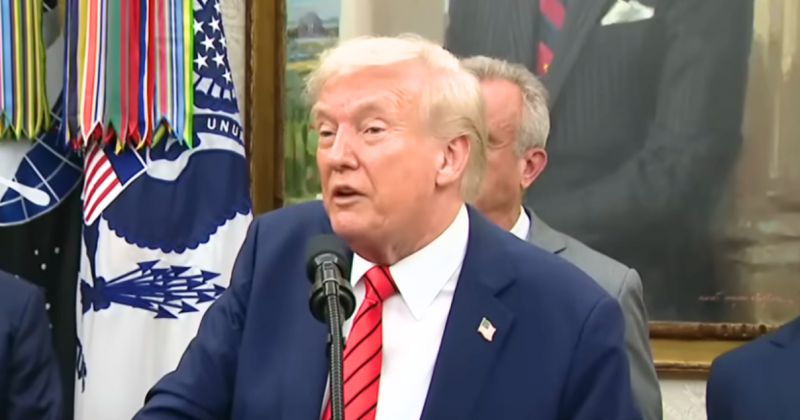
President Trump expressed optimism about a swift resolution to the conflict.
“We’re way ahead of schedule,” Trump told reporters in Florida on Monday, adding he thought the war would end “very soon.”
Trump also weighed in on Iran’s future leadership, saying he was not pleased with the appointment of Mojtaba Khamenei — son of the slain Ayatollah Ali Khamenei — as Iran’s new supreme leader.
The president also addressed his goals for the conflict’s outcome.
“We want a system that can lead to many years of peace, and if we can’t have that, we might as well get it over with right now,” Trump said.
An embarrassing miscommunication rattled markets earlier in the day. Energy Secretary Chris Wright falsely posted on social media that the U.S. Navy had escorted a tanker through the Strait of Hormuz.
White House press secretary Karoline Leavitt quickly corrected the record.
“The US Navy has not escorted a tanker or a vessel at this time,” Leavitt told reporters.
WATCH:
Oil prices had fallen more than 17 percent immediately following Wright’s post before his account deleted it.
Anxious Republican lawmakers flooded the White House with calls Monday as oil prices briefly surpassed $100 a barrel.
Economic adviser Stephen Moore issued a stark warning about the financial ripple effects of the conflict.
“When the price of gas and oil rise, so does everything else. Given affordability was already an issue, this leads to real challenges,” Moore said.
