

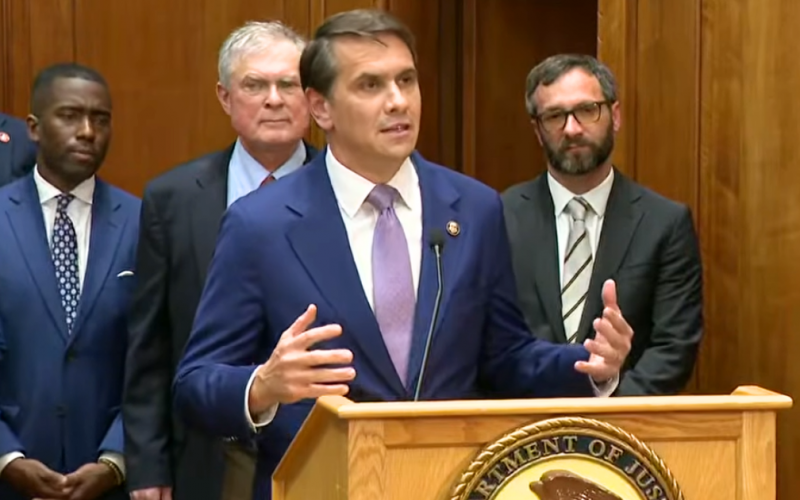
The Department of Justice (DOJ) and the Bureau of Alcohol, Tobacco, Firearms, and Explosives (ATF) have announced a major regulatory overhaul that will roll back dozens of Biden-era firearms rules.
The move marks one of the most significant federal shifts in gun policy in years and signals a broader push toward Second Amendment protections under the Trump administration.
The agencies unveiled 34 notices of final and proposed rulemaking this week aimed at reducing what officials describe as excessive regulatory burdens placed on gun owners, firearms dealers, and manufacturers.
The changes follow a comprehensive review ordered under President Trump’s Executive Order 14206, titled “Protecting Second Amendment Rights.”
Federal officials say the effort is designed to modernize outdated rules, remove redundant compliance requirements, and restore clearer boundaries between lawful gun ownership and federal enforcement authority.
The move comes after years of criticism from firearms advocates who argued that prior regulations under the Biden administration created confusion and imposed unnecessary penalties on licensed dealers.
“The Second Amendment is not a second-class right,” Acting Attorney General Todd Blanche said, according to The Gateway Pundit. “This Department of Justice is ending the weaponization of federal authority against law-abiding gun owners. We will continue to vigorously defend their rights as the Constitution demands.”
The regulatory package includes broad categories of reform.
Federal officials say the “modernization” efforts will expand electronic recordkeeping for gun dealers, revise ATF Form 4473 requirements, and standardize record retention periods.
Other changes are aimed at reducing compliance burdens, including revisions to interstate firearm transport rules and adjustments to certain notification requirements that industry groups have long criticized as unnecessary.
Additional measures focus on clarifying regulatory language, including definitions tied to straw purchases, mental health-related prohibitions, and business premises classifications for Federal Firearms Licensees.
Officials say the goal is to eliminate ambiguity that has historically led to uneven enforcement.
The rulemaking also includes efforts to align federal firearms regulations with recent court decisions, including adjustments following Garland v. Cargill, as well as repeals of several high-profile Biden-era rules.
Those include the 2023 stabilizing brace regulation and the 2024 “engaged-in-the-business” rule, both of which drew strong opposition from gun rights groups.
ATF leadership said the overhaul reflects a broader institutional shift toward cooperation with the firearms industry rather than adversarial enforcement.
Robert Cekada, recently confirmed as ATF Director, said the agency is refocusing its mission on criminal enforcement rather than regulatory technicalities affecting compliant gun owners.
“These reforms reflect our commitment to doing that through regulations that are clear, legally sound, and narrowly tailored to that purpose,” Cekada said. “Our enforcement focus from here on out is on willful violators and criminal actors, not inadvertent compliance issues by responsible owners and licensees.”
The agency also announced structural changes intended to reshape its internal enforcement approach, including ending prior enforcement policies critics said targeted gun dealers over paperwork violations, revising how compliance data is published, and restricting certain federal alert systems to trafficking-related investigations.
Supporters of the changes say the overhaul represents a long-awaited correction after years of regulatory expansion they viewed as hostile to lawful gun ownership.
Critics, however, are expected to argue the rollback weakens oversight mechanisms intended to track firearm distribution and sales compliance.
The ATF says the reforms are only the first wave of a broader modernization effort, with additional rule changes expected as the agency continues reviewing its regulatory framework.
Public comment periods on the proposed rules will remain open for roughly 90 days through the federal rulemaking portal.
Officials emphasized that the agency will continue accepting public input as part of what it describes as a more transparent and collaborative regulatory process moving forward.
