

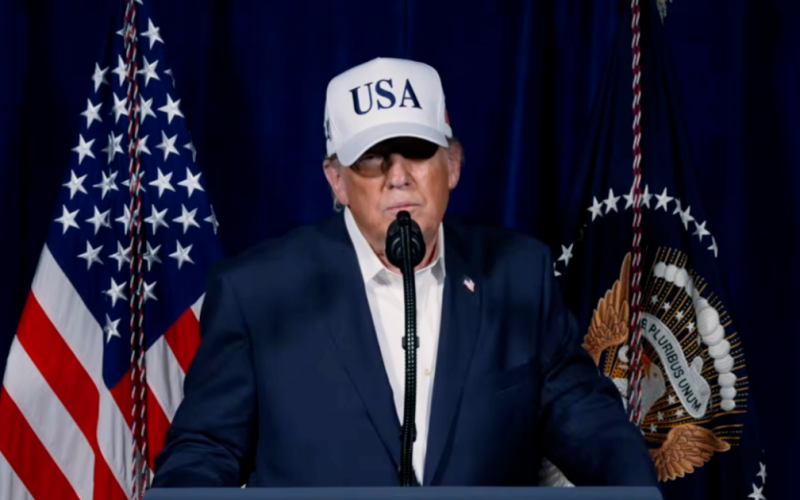
The U.S. carried out a new round of military strikes against Iranian targets near the Strait of Hormuz on Saturday after Iran allegedly violated a ceasefire agreement by launching attack drones at commercial shipping, President Donald Trump announced.
The operation marked the second round of U.S. strikes against Iran in less than 24 hours and comes as tensions continue to mount despite a ceasefire reached earlier this year.
According to Trump, Iran launched four one-way attack drones at vessels transiting the strategically important waterway Friday evening. U.S. forces intercepted three of the drones, while a fourth struck a Singapore-flagged commercial cargo ship, causing damage but allowing the vessel to continue its voyage.
“Iran shot at least four One Way Attack Drones at Ships transversing the Strait of Hormuz,” Trump wrote on Truth Social. “Damage was done but the ship was able to proceed on its way. We knocked down three other drones. Obviously, this is a foolish violation of our Ceasefire Agreement.”
U.S. Central Command said American forces responded by targeting Iranian missile and drone storage facilities along with coastal radar installations used to support attacks in the region.
Military officials described the strikes as a response to “unwarranted aggression against commercial shipping by Iranian forces” and said the attacks were intended to protect freedom of navigation through one of the world’s busiest maritime trade routes.
In a second statement, Trump warned that additional Iranian attacks could trigger a broader military response.
“United States aircraft just struck Iranian missile and drone storage locations, and coastal radar sites, for violating the Cease Fire Agreement, AGAIN,” Trump wrote.
“It is very possible that they will never learn. There may come a point when we are no longer able to be reasonable, and will be forced to militarily complete the job that we very successfully started. If that happens, the Islamic Republic of Iran will no longer exist!”
The latest exchange follows Friday’s U.S. strikes against Iranian military facilities after what the administration described as an earlier violation of the ceasefire.
The current ceasefire stems from a Memorandum of Understanding signed between the U.S. and Iran in mid-June, temporarily halting hostilities while negotiations continue toward a broader peace agreement. As part of that framework, the U.S. lifted its naval blockade of Iranian ports on June 18.
Iran has accused the U.S. of violating the agreement and has reported retaliatory actions against U.S.-linked positions in Bahrain and Kuwait following the latest American strikes, Trending Politics.
Neither U.S. Central Command nor Iranian officials have released detailed damage assessments from Saturday’s operation.
The Strait of Hormuz remains a central point of contention in negotiations between Washington and Tehran. The waterway handles a significant share of the world’s oil shipments, making any disruption a major concern for global energy markets and international shipping.
The latest military action raises fresh questions about whether the ceasefire can survive as both countries continue accusing each other of violating its terms while diplomatic efforts remain ongoing.
