

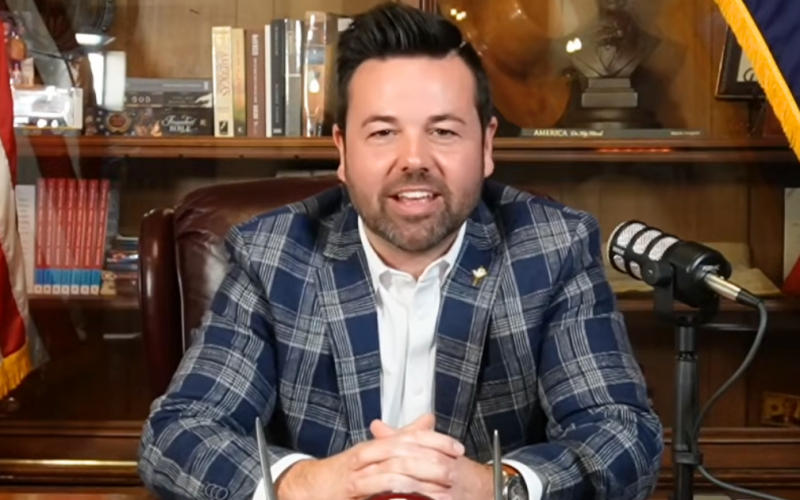
Indiana Lt. Gov. Micah Beckwith (R) is escalating his fight over the public broadcasting of the Islamic call to prayer, reaffirming his support for restrictions despite backlash from religious liberty groups and constitutional scholars.
The comments have turned Beckwith into a focal point of a larger battle over religious expression, government authority, and the limits of state power.
During a June appearance on the “Conservative Review” podcast hosted by Daniel Horowitz, Beckwith said public broadcasts of the prayer should be prohibited, arguing that government should intervene when religious messages are publicly amplified.
Beckwith later reinforced his position in a post on X after questions arose about whether he still supported the proposal.
“Yes, I 100% want to ban mosques in America from blaring the Muslim call to prayer through loudspeakers 5 times a day across our cities,” Beckwith wrote.
He said his position was focused on what he described as concerns about Islamic political ideology rather than opposition toward individual Muslims.
The remarks quickly drew criticism from groups that said the proposal would improperly target a specific faith practice.
The Council on American-Islamic Relations (CAIR) argued that the Constitution protects religious exercise for Americans of all faiths and warned that government restrictions aimed at one religious community would conflict with those protections, according to BizPac Review.
Constitutional experts have also questioned whether a law specifically banning the adhan could survive a court challenge.
Legal scholars noted that governments can impose neutral regulations involving issues such as noise, timing, and public safety, but restrictions aimed at a particular religion’s practice would likely raise First Amendment concerns involving both religious freedom and government neutrality toward faiths, according to Hoodline.
Beckwith has cited recent Supreme Court decisions as support for his views on religion in public life, including the 2022 ruling in Kennedy v. Bremerton School District.
Constitutional scholars who reviewed the ruling said the decision did not create a legal preference for Christianity over other faiths, The Indiana Citizen reported.
During the podcast discussion, Beckwith also described Islam as a political and military ideology rather than solely a religion and argued that government officials should examine foreign funding connected to mosques and organizations he believes could pose security concerns.
He said he has discussed those concerns with Indiana Attorney General Todd Rokita.
A spokesperson for Rokita’s office said the attorney general’s office would use its investigative authority when there are concerns involving organizations with possible ties to foreign terrorist groups.
The statement referenced new state authority aimed at investigating potential security threats, though it did not announce any specific action connected to Beckwith’s comments, The IndyStar reported.
The dispute has also created tension among Indiana Republicans.
Gov. Mike Braun (R) previously urged Beckwith to “think before you speak” and suggested the lieutenant governor may have regretted the way some earlier comments were presented.
Beckwith has said he believes he and Braun share concerns about national security and foreign influence but acknowledged the governor may approach the issue differently.
Indiana Treasurer Daniel Elliott, also a Republican, has pushed back on Beckwith’s remarks, arguing that religious liberty protections apply equally to all Americans.
Elliott and other critics have said the comments do not represent the broader Republican Party or Indiana values.
The debate comes as communities nationwide continue to navigate disputes involving religious expression, public accommodations, and constitutional protections.
Supporters of Beckwith’s position argue government should address concerns about foreign influence and public religious displays, while opponents say any restrictions must apply equally across faiths and cannot single out a particular religion.
The dispute now moves beyond Beckwith’s remarks themselves, raising questions about how far government officials can go when attempting to regulate religious expression while remaining within constitutional boundaries.
WATCH:
