

A generational divide is playing out among rock’s biggest icons over whether concerts should double as political rallies.
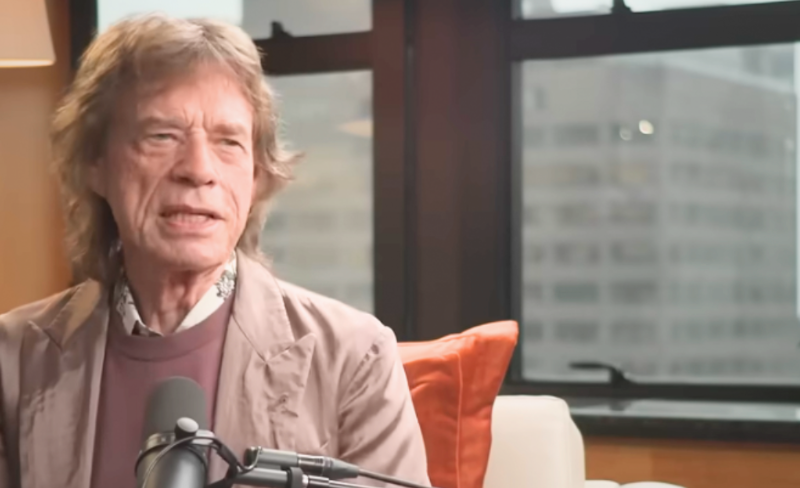
Rolling Stones frontman Mick Jagger waded into the debate during a newly released interview, staking out a position sharply at odds with several of his musical peers.
The 82-year-old spoke with journalist David Marchese for an episode of The New York Times’ “The Interview” podcast that dropped Saturday.
Clips from the sit-down began circulating on the social media platform X, drawing swift reaction online.
Marchese steered the conversation toward Bruce Springsteen, another rock veteran known for weaving political commentary into his live shows.
Springsteen has spent years using concert stages as a platform to attack President Donald Trump, a pattern that has defined much of his recent public persona.
Jagger, however, described a fundamentally different relationship between performer and audience.
Asked about his own approach to live shows, the Stones frontman kept his answer focused on service rather than self-expression.
“My job in the live music world is — [for] those people that come — is to make [them] have the best time they possibly can,” Jagger said.
He went further, describing the emotional escape a good concert should provide fans who paid to attend.
According to Jagger, a performer’s task is to help the crowd “forget all their problems, and the problems of the world, and their mortgages, and their whatever.”
Jagger likened the atmosphere of a great show to that of a major sporting event, where distractions fall away and attention narrows to the moment at hand.
“It’s similar to going to a sports event, really,” he said, “because everything else is shouted out. You’re just watching who’s going to win. You’re not worrying about everything else.”
On the subject of political speeches from the stage, Jagger was blunt and unambiguous.
“And you don’t want to lecture them,” he said.
The rocker also explained that his performance style is not fixed, but shifts depending on where he’s playing and who showed up.
Festival audiences, he noted, are often not devoted Rolling Stones fans specifically, which changes how he connects with the crowd compared to a headlining tour stop.
Jagger added that cultural differences shape how audiences express enjoyment, noting that a subdued crowd in Finland could be having just as much fun as a wildly energetic crowd in Argentina.
Springsteen has taken a notably different stance when it comes to weighing fan reaction against his own political expression.
Questioned earlier this year about whether backlash from fans concerned him, Springsteen brushed the idea aside.
“I don’t worry about it,” he said. “My job is very simple: I do what I want to do, I say what I want to say, and then people get to say what they want to say about it.”
Springsteen is hardly the only major music figure to turn concerts and public platforms into vehicles for anti-Trump messaging.
Neil Young, 80, has released protest songs targeting Trump, made highly publicized anti-Trump gestures, and taken action against companies or platforms that clashed with his political views.
On the other side of the cultural divide stands British comedian Ricky Gervais, whose criticism of politically driven award shows has become the stuff of internet legend.
Hosting the Golden Globes in 2020, Gervais used his opening monologue to challenge Hollywood’s habit of turning acceptance speeches into political statements.
“If you do win an award tonight,” Gervais told the room, “don’t use it as a platform to make a political speech, right? You’re in no position to lecture the public about anything. You know nothing about the real world. Most of you spent less time in school than Greta Thunberg.”
He didn’t stop there, closing his point with a pointed instruction to award winners.
“So,” Gervais continued, “if you win, right, come up, accept your little award, thank your agent and your god, and f*** off, okay?”
Though separated by profession and years, Jagger and Gervais landed on strikingly similar conclusions about the responsibilities of public entertainers.
Both men argued, in their own ways, that fame comes with an obligation to the audience — not a license to lecture it.
The remarks have reignited longstanding tension over how far entertainers should go in mixing politics with performance.
