

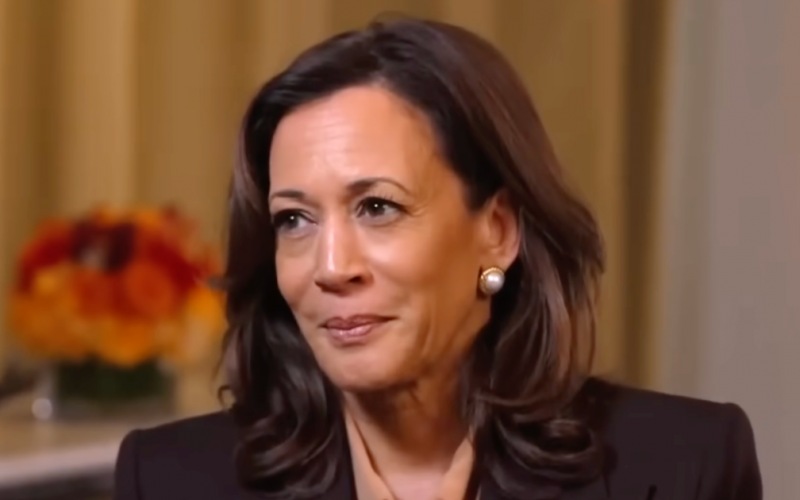
Former Vice President Kamala Harris is facing criticism after proposing a series of major political and institutional reforms during a livestream discussion about the Democratic Party’s future following the 2024 election losses.
Speaking Wednesday during a livestream hosted by the “Win with Black Women” podcast, Harris said Democrats should embrace what she described as an “expanded playbook” ahead of the 2026 midterm elections and future presidential races.
“I think that we need an expanded playbook in a way that we invite all ideas,” Harris said during the discussion.
“This is a moment where there are no bad ideas, a no bad idea brainstorm is what I’d like to call it,” she added while discussing possible reforms to American political institutions.
Among the ideas Harris floated were expanding the Supreme Court of the United States, revisiting the Electoral College system, granting statehood to Washington, DC, and Puerto Rico, and exploring multi-member congressional districts.
Harris specifically referenced “Supreme Court reform, which includes expanding the Supreme Court,” reviving a proposal heavily debated during former President Joe Biden’s administration.
The former vice president also suggested Senate Democrats should impose stronger penalties for Supreme Court nominees or justices accused of misleading lawmakers during confirmation hearings.
The comments quickly drew backlash from conservatives and Republican officials who accused Harris of supporting structural changes designed to benefit Democrats politically after recent electoral defeats.
Utah Sen. Mike Lee (R) mocked the proposals online, writing, “Well, maybe a few bad ideas,” in response to Harris’ remarks.
Conservative commentators also criticized Harris’ discussion about changing the Electoral College after Democrats lost both the Electoral College and the national popular vote during the 2024 presidential election.
Ian Miller wrote online that Harris’ proposals came despite Democrats losing the popular vote nationally, calling attention to the party’s broader electoral struggles.
Harris’ remarks also intensified speculation surrounding a possible 2028 presidential campaign as she remains active in Democratic political circles following her departure from office.
The comments come amid growing national debates involving the judiciary, election laws, congressional representation and the structure of federal institutions following recent Supreme Court decisions and redistricting disputes.
Supporters of Supreme Court expansion argue the court has become politically imbalanced after years of contentious confirmation battles and ideological shifts within the judiciary.
Critics, however, frequently describe “court packing” proposals as attempts to reshape the court for partisan political advantage rather than judicial reform.
The U.S. Constitution does not establish a fixed number of Supreme Court justices, meaning Congress could theoretically expand the court through legislation approved by both chambers, per the Conservative Brief.
Harris also revisited longstanding Democratic criticism of the Electoral College system, which some Democrats argue unfairly benefits Republicans in presidential elections.
Republicans have generally defended the Electoral College as a safeguard protecting smaller states and preserving the country’s federalist structure.
Another proposal discussed by Harris involved multi-member congressional districts, which could significantly alter how elections for the House of Representatives are conducted nationwide.
The remarks come as Democrats continue debating the party’s future direction following major election losses and ongoing divisions between moderate and progressive factions ahead of the next presidential cycle.
