

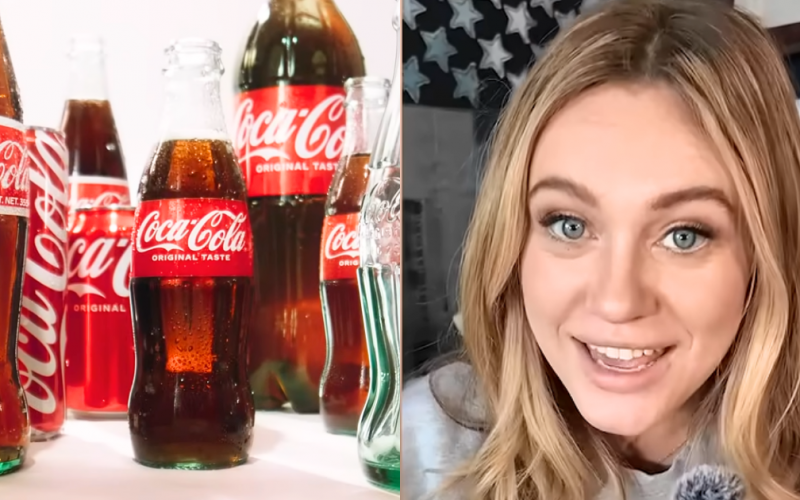
Coca-Cola is facing backlash after viral tests of the company’s personalized can feature appeared to show inconsistent treatment of religious phrases, with users questioning why some Christian messages were rejected while other submissions advanced through the customization process.
The controversy gained attention after The Daily Wire’s Isabel Brown shared a video showing her tests of Coca-Cola’s customization feature, highlighting differences in how the tool responded to certain religious phrases.
During the tests, she reported that several phrases referencing Christianity were rejected, while some other religious and controversial phrases initially moved forward in the process.
The same rejection message appeared for additional Christian phrases, including “Virgin Mary,” “Jesus Christ,” “Holy Trinity,” “Holy Spirit,” “Jesus is God,” and “Christ is King,” according to Brown.
Social media creator Ryan Haff conducted a separate test and recorded himself entering phrases into Coca-Cola’s customization tool.
Haff showed phrases including “Allah Is King” and “Satan Is King” moving forward in the process, while “Jesus Is King” was rejected, similar to Brown’s results, according to The Gateway Pundit.
The results quickly spread online, fueling accusations among critics that Coca-Cola’s content filters were not being applied consistently and raising questions about whether some religious viewpoints were being treated differently.
Some users argued that positive Christian messages were being blocked while other religious or controversial phrases were initially accepted.
Following the backlash, Coca-Cola appeared to make changes to the filtering system.
Some phrases that previously advanced through the tool were later rejected, although users continued to report differences in how certain submissions were handled.
Independent testing by Resist the Mainstream later found that individual religious names, including “Jesus,” “Allah,” “Satan,” and “Buddha,” were no longer permitted by the tool.
However, some related phrases continued to produce different results.
In another test by RTM, the tool allowed “Allah lives” and “Satan lives” to proceed to the preview stage while rejecting “Jesus lives” with the same message that the phrase was not permitted.
Coca-Cola’s personalization tool includes a notice explaining that some submissions may not be permitted if they are religious or political in nature, belong to a business, organization, celebrity, public figure, or trademark, or are considered inappropriate or unsuitable.
The company previously addressed similar concerns in 2024, telling Reuters that the tool “does not approve names or phrases that are religious in nature or are for political candidates, trademarks, or celebrities.”
Coca-Cola said at the time that specific religious names and phrases were already included among submissions that would be denied.
The company has not issued a public statement specifically addressing the latest viral tests.
Automated moderation systems are commonly used by companies that offer personalized products to prevent offensive, copyrighted, or restricted content from being printed.
These systems often rely on keyword filters and automated reviews, which can sometimes create results that users view as inconsistent.
Supporters of stricter content filters argue companies have a responsibility to prevent inappropriate messages from appearing on consumer products.
Critics, however, say automated systems should be applied consistently and transparently, especially when they involve religious or political content.
The controversy has renewed broader concerns among critics about how major corporations use automated moderation systems and whether those tools are being applied fairly when they involve religious or political speech.
WATCH:
