

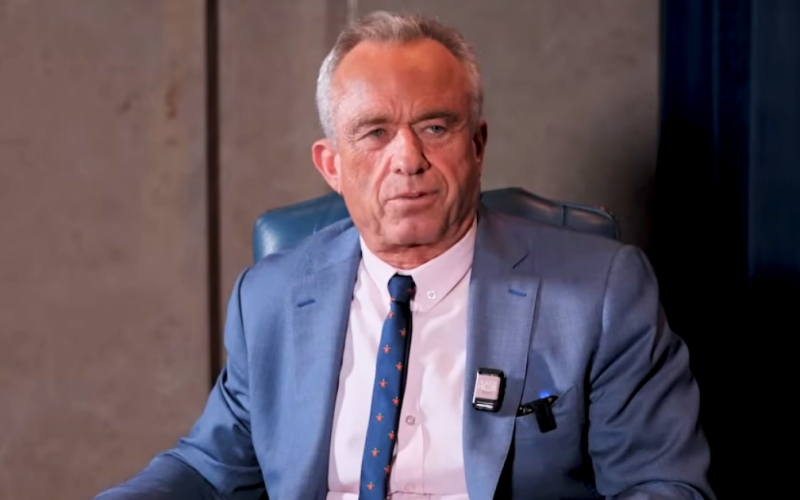
Health and Human Services Secretary Robert F. Kennedy Jr. has launched a new federal initiative aimed at reducing the use of psychiatric medications in the United States, placing renewed focus on what he describes as widespread overprescribing across the country.
The plan was unveiled during a Make America Healthy Again Institute summit on mental health and centers on expanding transparency, strengthening prescribing oversight, and increasing patient involvement in treatment decisions.
“Today, we take clear and decisive action to confront our nation’s mental health crisis by addressing the overuse of psychiatric medications—especially among children,” Kennedy said.
A central focus of the initiative is “deprescribing,” a process that involves regularly reviewing psychiatric medications and, when appropriate, gradually reducing or discontinuing them under medical supervision, according to The Post Millennial.
The Substance Abuse and Mental Health Services Administration is expected to play a central role, preparing a national report on prescribing trends, while additional guidance is being developed to support clinicians in safely tapering medications when appropriate.
In a “Dear Colleague” letter to providers, officials emphasized that psychiatric drugs should not be treated as the only treatment option.
Instead, they encouraged a broader approach that includes therapy, nutrition, physical activity, and social support.
“We will support patient autonomy, require informed consent and shared decision-making, and shift the standard of care toward prevention, transparency and a more holistic approach to mental health,” Kennedy added.
The move comes as psychiatric medication use continues at high levels across the country.
Data from the Centers for Disease Control and Prevention (CDC) shows approximately 16.5 percent of U.S. adults were taking psychiatric medications as of 2020, according to The Hill.
Kennedy has frequently raised concerns about prescribing practices, particularly involving antidepressants and similar medications, arguing that patients are not always fully informed about risks or how to safely discontinue use.
Some of his past claims, however, have been disputed by medical experts.
The American Psychiatric Association (APA) responded cautiously, expressing support for continued research and clinician training but pushing back on the framing of the initiative.
“That being said, while APA supports efforts to improve the quality, safety, and evidence base of mental health treatment, we strongly object to framing the nation’s mental health crisis as primarily a problem of ‘overmedicalization’ or ‘overprescribing,’” the organization said. “Deprescribing alone is not a sufficient response to this crisis.”
Critics of the initiative warn that reducing reliance on psychiatric medications could create risks for patients with serious conditions who depend on them for stability.
Supporters, however, argue the effort could improve transparency, expand treatment options, and reduce unnecessary long-term prescribing, according to The Guardian.
Kennedy addressed those concerns directly, stressing that the initiative is not intended to discourage medication use but to ensure it is appropriately prescribed and clearly understood.
“We’re not telling you to stop,” he said. “We are making sure you, and your clinician, have the information and support to make the right decision for you.”
Federal officials say additional steps—including expert panels, prescribing reviews, and clinician training programs—are expected in the coming months as part of a broader effort to reshape how mental health care is delivered nationwide.
