

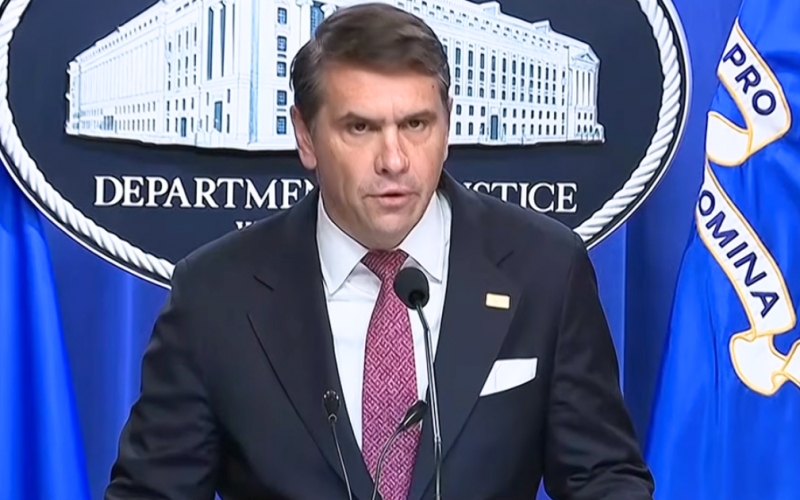
The U.S. Department of Justice (DOJ) is intensifying a federal antitrust investigation into the beef industry as regulators examine whether decades of consolidation among major meat processors have distorted competition and contributed to higher grocery prices.
At the core of the inquiry is a highly concentrated processing system dominated by four companies—Tyson Foods, Cargill, JBS USA, and National Beef.
Together, they account for roughly 85 percent of grain-fattened cattle slaughter in the United States, a level of concentration that has drawn renewed scrutiny from federal regulators assessing competitive conditions across the supply chain.
The investigation itself has expanded into a wide document review spanning millions of records, as officials trace how the industry’s structure has evolved over time.
That review includes plant closures, shifts in regional processing capacity, and the long-term decline in independent cattle operations, all of which regulators believe may have altered how cattle move from ranchers to consumers, according to The Baltimore Sun.
Alongside the structural review, federal officials have outlined their enforcement approach toward potential antitrust violations.
Acting Attorney General Todd Blanche has emphasized that industry concentration and changing market dynamics are central to the inquiry, while also noting that enforcement efforts depend heavily on information from within the sector.
To support that effort, officials are relying on established federal reporting systems that allow individuals in the industry to submit information about suspected misconduct.
Those channels are intended to surface allegations involving practices such as price coordination or manipulation of bidding processes, particularly in highly concentrated markets.
Financial incentives are also built into those programs.
In major enforcement cases, eligible whistleblowers may receive awards ranging from 15 percent to 30 percent of funds recovered through legal action, a structure designed to encourage reporting in complex industry investigations.
Broader agricultural trends are also shaping the context of the probe.
The U.S. cattle herd has fallen to about 86.2 million head, its lowest level since the 1950s, while the number of cattle ranching operations has dropped by more than 17 percent over the past decade—representing a loss of more than 100,000 operations nationwide.
Agriculture Secretary Brooke Rollins has pointed to these declines as evidence of growing strain within the sector, linking reduced herd size and fewer producers to broader concerns about food supply resilience and pricing pressure across the beef market.
Attention has also turned to ownership structures within the processing industry.
Some officials have raised concerns about foreign involvement in major firms, including Brazil-based control of JBS and partial foreign investment in National Beef.
Those relationships have prompted discussion about whether control of critical food infrastructure by overseas entities could create vulnerabilities in the domestic supply chain, according to the American AG Network.
White House economic advisers have added that persistent inflation in beef prices reflects the interaction between tight cattle supplies and a highly consolidated processing sector.
Some officials have also pointed to foreign-owned firms operating in the U.S. market as an additional factor complicating oversight and regulatory transparency, RFD News reported.
Industry advocates argue the current situation is the result of long-term consolidation trends.
R-CALF USA estimates that more than 665,000 cattle operations have disappeared since 1980, a reduction the group attributes to mergers, acquisitions, and increasing market dominance among large processors.
The group and other producer advocates have called for greater transparency in pricing practices and stronger enforcement of competition laws, arguing that the existing structure has left ranchers with limited negotiating power while reducing overall market resilience.
Federal officials have not announced a timeline for potential enforcement actions, though both civil and criminal pathways remain under consideration.
Companies named in the investigation—including Tyson Foods, Cargill, JBS USA, and National Beef—have not issued detailed public responses to the latest developments.
In a related area of enforcement, regulators are also reviewing past actions involving Agri Stats, a data analytics company previously accused of facilitating pricing coordination in poultry and pork markets.
The company has denied wrongdoing and maintains that its reporting tools are designed to improve efficiency and market transparency rather than restrict competition.
WATCH:
