

With control of the U.S. Senate expected to hinge on a handful of tightly contested races, Maine’s 2026 contest against Republican Sen. Susan Collins has emerged as one of the most closely watched in the country, with political analysts continuing to label the seat a toss-up in what is shaping up to be a critical national battleground.
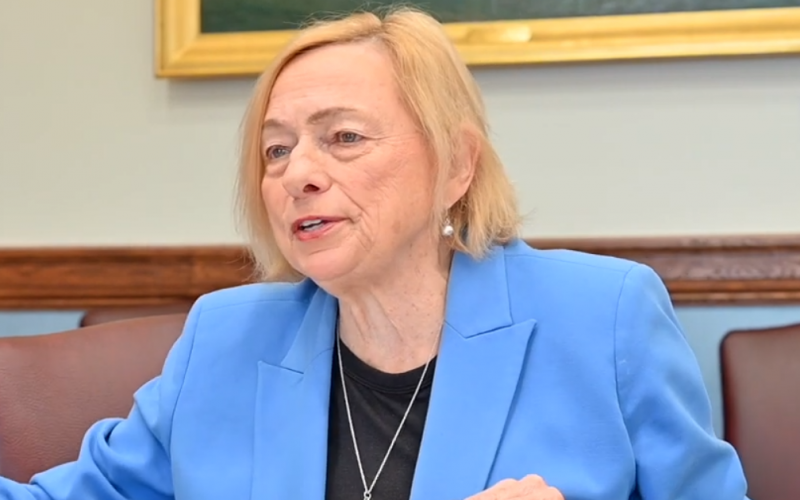
That high-stakes backdrop sharpened this week after Maine Gov. Janet Mills suspended her campaign for the Democratic nomination, effectively clearing the path for oyster farmer and political newcomer Graham Platner, who had already established a significant lead in both polling and grassroots momentum as the primary narrowed.
Mills said her decision was driven primarily by financial constraints as the cost of the race escalated and voter surveys showed her trailing by a widening margin.
Recent polling averages placed her roughly 20 points behind Platner, with some surveys showing an even larger gap as the race moved toward the June primary, according to Just the News.
In announcing her withdrawal, Mills framed the decision around the realities of modern campaigning.
“While I have the drive and passion, commitment and experience, and above all else—the fight—to continue on, I very simply do not have the one thing that political campaigns unfortunately require today: the financial resources,” she said in a statement.
Mills, a term-limited governor with a long career in Maine politics, entered the race last year after being recruited by national Democratic leaders who viewed the seat as one of the party’s strongest opportunities to challenge Republican control.
Despite that backing, her campaign struggled to match Platner’s rapid rise and expanding fundraising network, leaving her increasingly on the defensive as the primary developed, according to The Hill.
Platner, a first-time candidate and oyster farmer from coastal Maine, built a campaign centered on anti-establishment messaging that resonated with progressive voters.
He quickly gained support from national figures including Sens. Elizabeth Warren (D-MA) and Bernie Sanders (I-VT), helping solidify his position as the frontrunner heading into the final stretch of the primary, The Guardian reported.
At the same time, Platner’s campaign drew scrutiny over past online comments and earlier controversies, including resurfaced social media posts and questions surrounding a tattoo he later covered.
While the issues fueled criticism from opponents, they did not significantly slow his momentum as he maintained a strong lead in polling and continued fundraising gains.
Following Mills’ withdrawal, Platner publicly thanked the governor for her service and emphasized unity heading into the general election.
Democratic leaders, including Senate Minority Leader Chuck Schumer and Sen. Kirsten Gillibrand, also quickly consolidated support behind him, framing the Maine race as central to their broader strategy to regain control of the Senate, according to Bangor Daily News.
Republicans responded by sharpening their focus on Platner, arguing that Sen. Collins remains well-positioned due to her long incumbency, statewide appeal, and history of winning competitive races in a politically mixed state.
The Republican National Committee criticized Platner’s record and framed the matchup as favorable for Collins in the general election.
With Mills now out of the race, the Democratic primary has effectively resolved into a single frontrunner ahead of June, shifting attention fully toward what is expected to be one of the most expensive and closely contested Senate battles in the country.
Political analysts continue to describe the Maine race as a key indicator of broader national dynamics heading into the 2026 midterm cycle.
WATCH:
