

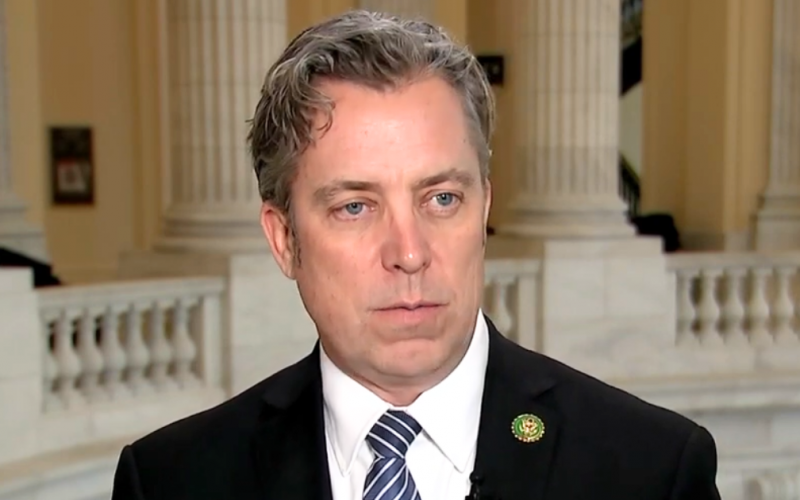
Rep. Andy Ogles (R-TN) is facing intense criticism after weighing in on last weekend’s failed terror attack in New York City, yet he is standing by his statements.
Authorities say two Islamist extremists from Pennsylvania, 18-year-old Emir Balat and 19-year-old Ibrahim Kayumi, hurled homemade explosive devices near Gracie Mansion during a protest outside Mayor Zohran Mamdani’s residence.
The devices reportedly contained metal shrapnel and triacetone triperoxide (TATP), a volatile explosive.
Video footage allegedly shows one suspect shouting “Allahu Akbar” as they were arrested. Both men have been charged in federal court with providing material support to ISIS and using a weapon of mass destruction.
No injuries were reported.
In response to the attack, Ogles voiced his opinion on X.
“Muslims don’t belong in American society,” he wrote. “Pluralism is a lie.”
His remarks immediately drew condemnation from Democrats and commentators nationwide.
Rep. Jamie Raskin (D-MD) labeled the comments “racism and religious bigotry,” highlighting constitutional protections for freedom of religion and equal protection under the law.
Rep. Don Beyer (D-VA) criticized Ogles for misrepresenting American values, emphasizing that Muslim Americans are integral contributors to society.
“They belong here, but this vile Islamophobia doesn’t belong in Congress,” he wrote.
Ogles’ statements echo controversial rhetoric from other Republican lawmakers.
Resist the Mainstream previously noted that Rep. Randy Fine (R-FL) drew sharp criticism after responding to a Muslim activist’s comments about dogs, tweeting, “If they force us to choose, the choice between dogs and Muslims is not a difficult one.”
The remark highlights a growing trend among some lawmakers of portraying Islamic faith as incompatible with American identity.
Supporters of Ogles argue that his remarks stem from security concerns, citing recent terror incidents.
Critics are calling for accountability, demanding that House GOP leadership respond, and public pressure is reportedly building for censure or removal from committee assignments.
Ogles’ defenders insist that highlighting ideological threats from radical groups is a matter of national security.
They argue that portraying such incidents solely as isolated criminal acts ignores broader patterns of Islamist extremism.
Critics, however, maintain that targeting an entire religious group crosses the line from security commentary into bigotry, potentially undermining social cohesion and trust in governance.
Ogles’ recent comments also build on a January speech, as highlighted by Newsbreak.
“Let me be clear, America is and must always be a Christian nation,” he declared, adding that “Christianity is the answer, always.”
In that address, he referenced founding figures, including John Adams, and highlighted the influence of Pilgrims and Puritans, arguing that only Christianity safeguards freedom, justice, and respect for women and minorities.
The controversy illustrates the intersection of political expression, religious liberty, and domestic security.
As social media continues to amplify lawmakers’ statements, public debate is intensifying over the limits of acceptable discourse and the responsibilities of elected officials to address threats without vilifying entire communities.
Meanwhile, federal authorities continue investigating Balat and Kayumi’s connections to extremist networks, emphasizing that the nation faces real risks even as political arguments unfold online.
