

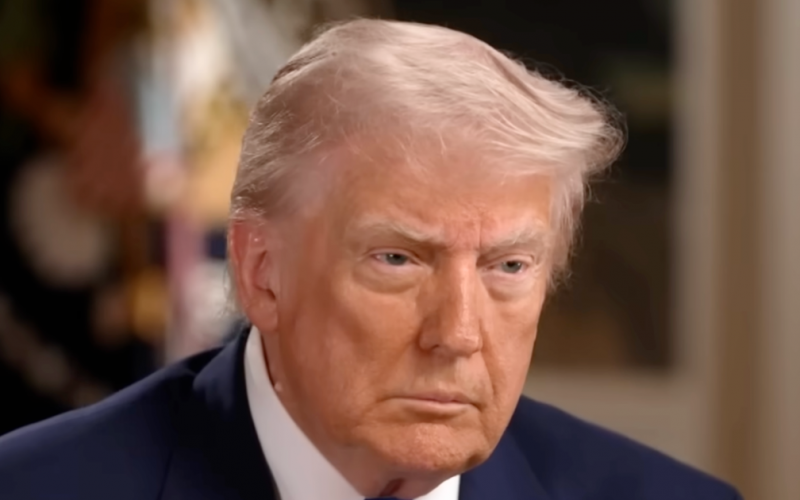
President Donald Trump told Congress the Iran conflict has “terminated,” arguing that a ceasefire ends hostilities and removes the requirement for lawmakers to authorize continued military action.
In a letter to lawmakers, Trump stated there has been no fighting for weeks and that the conflict is effectively over. “There has been no exchange of fire between the United States and Iran since April 7, 2026,” he wrote. “The hostilities that began on February 28, 2026, have terminated.”
The statement comes as the 60-day deadline under the War Powers Resolution is reached. That law requires the president to either obtain congressional authorization for military operations or end them within that timeframe.
The Trump administration is arguing that the ceasefire pauses or stops that clock because active combat has ended.
Defense Secretary Pete Hegseth reinforced that position in testimony to lawmakers, saying the ceasefire changes the legal calculation and suspends the deadline.
Lawmakers in both parties are pushing back, arguing the law does not allow for a pause simply because active fighting has stopped.
Maine Sen. Susan Collins (R) said the deadline remains binding and must be followed regardless of a ceasefire. “That deadline is not a suggestion; it is a requirement,” she said.
Critics also point to ongoing U.S. military activity as evidence the conflict is not fully over. Approximately 50,000 American troops remain stationed in the region, and U.S. forces continue to enforce a naval blockade targeting Iranian ports.
Lawmakers argue those actions constitute continued military engagement even in the absence of direct combat.
Trump dismissed those concerns and rejected the idea that Congress must approve the operation. He argued lawmakers are overstepping their authority and questioned the constitutionality of their demands.
“I don’t think it’s constitutional what they’re asking for,” he said, adding that past presidents have exceeded the 60-day limit without seeking approval.
At the same time, Trump acknowledged uncertainty surrounding negotiations with Iran. He said discussions are ongoing but expressed doubt about whether a final agreement will be reached. “They’ve made strides, but I’m not sure they’ll ever get there,” he said. “They want to make a deal, but I’m not satisfied.”
Pentagon officials have indicated U.S. forces remain in position and ready to act if negotiations collapse, which has fueled arguments that the conflict has not truly ended.
Lawmakers opposing the administration’s position say the continued military posture contradicts claims that hostilities are over, per Trending Politics.
The dispute centers on how the War Powers Resolution should be applied in a situation where active combat has paused but military operations and readiness continue.
The administration’s position relies on defining the ceasefire as the end of hostilities, while critics argue the broader military presence and potential for resumed action keep the conflict active under the law.
The disagreement sets up a direct confrontation between Congress and the White House over war powers. If the ceasefire holds and no further strikes occur, the administration’s interpretation could avoid immediate legal consequences. If hostilities resume or courts reject that interpretation, the issue of congressional authorization will return immediately.
