

For nearly six years, KaShawn Nicola Roper moved through the country while federal authorities searched for her in connection with a deadly 2020 shooting. Her freedom ended on a Florida roadway Wednesday, and it ended fast.
The FBI had listed Roper, 50, on its Ten Most Wanted Fugitives roster just one day earlier — a designation the bureau reserves for the nation’s most elusive alleged criminals. Alongside that listing came a $1 million reward for information leading to her capture.
The phones started ringing almost immediately.
Roper stands accused of opening fire on a vehicle in Missouri in August 2020, with two women inside absorbing the impact of multiple rounds. One woman survived. The other did not.
The shooting sent shockwaves through the local community and launched what would become a prolonged federal investigation stretching across multiple states and jurisdictions.
What followed that summer day was a years-long disappearance — Roper moving undetected while investigators pursued the case across state lines and through the federal system.
Authorities worked the case without rest, but Roper remained beyond their reach, surfacing nowhere long enough to be caught.
The FBI’s decision to escalate her case to the Ten Most Wanted list on Tuesday changed the equation overnight.
That list, one of American law enforcement’s most recognized tools, carries significant weight — both in terms of public awareness and in the resources the bureau dedicates to resolving each case on it.
By Wednesday morning, the bureau’s National Threat Operations Center had fielded multiple tips originating out of Florida.
Callers described a woman bearing a strong resemblance to Roper frantically loading a vehicle with her possessions — behavior that drew immediate attention from those who recognized her.
The tips reached law enforcement partners, who wasted no time acting on them.
The coordination between agencies was swift and precise, with multiple law enforcement entities communicating in real time to close in on the suspect’s location before she could move again.
Using the vehicle description relayed by tipsters, officers conducted a traffic stop and took Roper into custody.
She was subsequently transported to the Alachua County Jail, where she now faces charges of second degree murder, armed criminal action, and unlawful use of a weapon stemming from the Missouri incident.
Federal prosecutors also charged her separately with unlawful flight to avoid prosecution — a charge that traces back through the years she spent evading arrest.
The combination of state and federal charges means Roper now faces accountability on multiple legal fronts simultaneously.
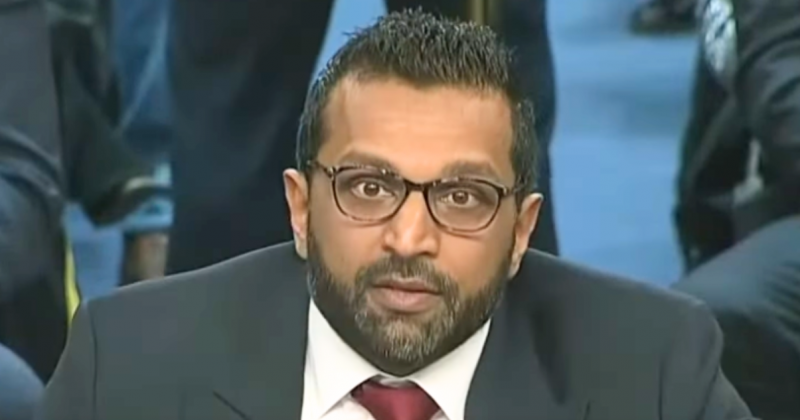
FBI Director Kash Patel spoke to the speed of the outcome, telling Fox News Digital: “KaShawn Roper was on the run for nearly six years. Hours after we added her to the Ten Most Wanted list, tips poured in and our partners had her in custody.”
Patel’s remarks underscored how critical the role of the public proved in cracking a case that had gone cold across the better part of a decade.
Patel extended credit to the agencies whose coordination turned an early-morning tip into an arrest before the day was out: “Outstanding work by FBI Kansas City, FBI Jacksonville, and our state and local partners in Florida and Missouri.”
The director also placed the arrest within the context of a wider enforcement record, noting that eight individuals from the FBI’s most wanted roster have been captured in just over a year — more than double what was recorded across the prior four years combined.
That figure reflects a significant acceleration in the bureau’s ability to locate and apprehend the country’s most wanted fugitives, with Wednesday’s arrest serving as the latest example.
The $1 million reward, the multi-agency response, and the rapid public cooperation all converged to bring a years-long pursuit to its conclusion on a Florida road.
For Roper, the six-year window closed in a matter of hours.
