

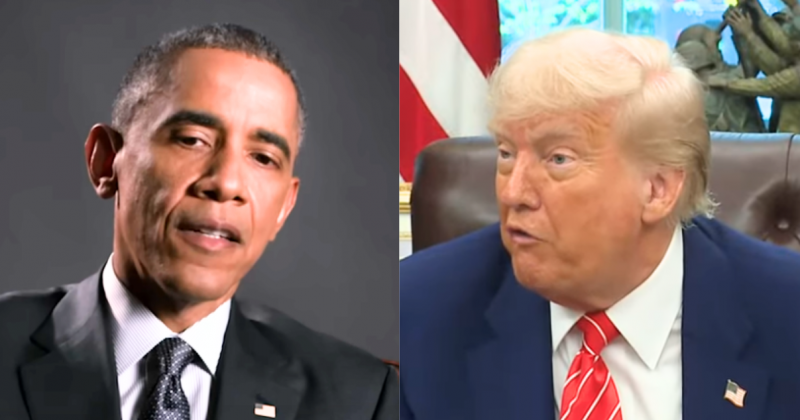
President Donald Trump has launched a direct challenge to major health insurance companies, accusing them of profiting excessively from government healthcare programs while American patients struggle with rising costs.
In a recent statement, Trump criticized the current system that channels taxpayer dollars through insurance corporations.
“Let the money go not to the big fat cats and the insurance companies that made 1,700 percent over a short period of time,” Trump said.
“Let the money go directly to the people, where they can buy their own health care.”
The president’s remarks target what he characterizes as an insurance monopoly that has benefited from federal healthcare policies at the expense of ordinary Americans.
His comments represent a significant shift in how Washington approaches healthcare reform.
Major health insurance companies have seen dramatic revenue growth in recent years.
The industry’s expansion has coincided with decreased competition in many markets across the country.
According to the American Medical Association, over 70 percent of metropolitan areas in the United States are now controlled by just one or two insurance providers.
This concentration gives these companies substantial control over pricing in markets where patients have limited alternatives, per a report.
UnitedHealth Group stands as the nation’s largest insurer, operating more than 2,600 subsidiaries.
The company reported third-quarter 2025 revenues of $113.2 billion, marking a 12 percent increase compared to the previous year.
The quarterly revenue figures for UnitedHealth rival or surpass the annual revenues of major technology corporations like Google.
These numbers highlight the scale and profitability of the consolidated insurance market.
Since the Affordable Care Act implementation, hundreds of billions in taxpayer subsidies have flowed through insurance companies.
Critics argue this system allows insurers and their pharmacy benefit managers to extract profits while transferring costs to patients.
Trump, however, argues that genuine healthcare affordability requires increased competition rather than further consolidation.
His proposed approach emphasizes expanding insurance plan options and giving consumers more direct control over healthcare dollars.
The president questions the logic behind routing taxpayer money through insurance companies instead of providing it directly to patients.
Trump contends that meaningful reform must reduce the role of insurance companies in the current system and redirect resources straight to patients.
Through social media posts, he has warned that the Affordable Care Act channels massive amounts of taxpayer funding through insurers to maintain a model that restricts choice and increases costs.
Republican lawmakers are beginning to rally behind similar reform concepts.
Sen. Rick Scott (R-FL) has introduced the More Affordable Care Act, legislation designed to address problems attributed to the existing healthcare law.
Scott’s proposed legislation has attracted support from Senate Republicans.
The bill advances reforms that would redirect subsidies from insurance company accounts toward Americans facing difficulties affording necessary medical care.
Additional accountability measures are also under consideration.
