

A magazine writer’s front-row seat at a high-profile murder trial evaporated within twenty-four hours, after cameras caught her flashing wide smiles instead of taking notes.
Vanity Fair had granted Brittany Romano press credentials to cover the trial of Lindsay Clancy, the Massachusetts mother accused of drowning her three children in the family bathtub.
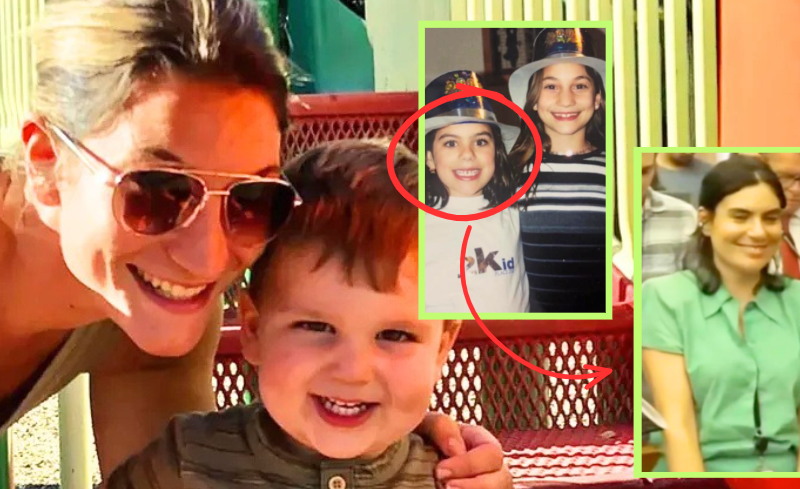
Court TV footage instead showed Romano beaming in a green dress from the courtroom’s first row, prompting immediate scrutiny of her presence there.
The children she allegedly killed, Cora, Dawson, and Callan, were each under five years old.
Prosecutors have charged Clancy with first-degree murder, though her defense does not dispute that she carried out the killings.
Instead, her attorneys argue she should be found not guilty by reason of insanity, pointing to her claims that internal voices commanded her to kill her children and herself.
Romano’s access to the courtroom was not incidental.
She had known Clancy since childhood, and the magazine had originally floated the idea of a first-person essay built around that relationship.
By the time backlash over her courtroom demeanor peaked, that plan had collapsed entirely. Vanity Fair confirmed the fallout in a formal statement addressing Romano’s status.
“We were interested in the prospect of a personal essay written by Brittany Romano about her experience growing up with Lindsay Clancy,” the magazine said. “Yesterday, after clear conflicts with our editorial standards and processes, we informed Romano that we were not moving forward with her essay and informed the court that she is no longer credentialed by Vanity Fair.”
One day she occupied a visible seat inside the courtroom; the next day, she was simply absent from it.
Pressed to account for her expression on camera, Romano pointed instead to a family reaction.
She said her father had watched her televised appearance and told her she looked, in his view, sad rather than amused.
She then posted, and quickly deleted, old photographs showing her and Clancy together as children, an apparent attempt to underscore the personal bond driving her original assignment.
Romano’s next move was a video posted directly to her own Instagram account, filmed in selfie style as criticism mounted.
“Hello, my name is Brittany Romano, and everyone seems to have an issue with me,” she said at the start of the clip.
Within that same recording, she meandered through a string of unrelated grievances, referencing “spinach in her teeth,” invoking the “Luigi Mangione crisis,” and taking aim at online critics she accused of “sitting in their living rooms giving X, Y, and Z.”
She dared her detractors to trade places with her. “If you were in that courtroom,” she said, “every single day, I would love to know what your thoughts are.”
She also issued a pointed warning to anyone posting about her online, noting that she is “dating a lawyer.” Romano further insisted she does not “work for Vanity Fair” and accused strangers online of “trying to claim [her] childhood.”
The episode caught the attention of conservative commentator Jack Posobiec, host of Human Events Daily, who used his platform to name and criticize Romano on air.
He claimed her courtroom conduct was not an isolated incident among the press corps present.
“I keep seeing the behavior of the crazy feminists who are in the courtroom now, smiling, laughing, and giggling,” Posobiec said. “Not just one. There’s three of them in there for the cameras, while all of this is going on.”
He then turned specifically to Romano’s résumé, listing outlets that have published her work.
“So this one in particular, she’s a writer for Teen Vogue, a reporter, mind you. She’s someone, the woman in green. Her name is Brittany Romano, and she’s posted all this publicly. So she’s a she’s a member of the press. She’s written for Business Insider. She’s written for USA Today, and she’s completely insane.”
Posobiec additionally alleged that Romano has been covering the separate case against Luigi Mangione and has maintained direct contact with him.
Meanwhile, Clancy’s own support network has grown both inside the courthouse and across social media platforms.
Many of her defenders point to her struggle with postpartum depression as central to understanding the case.
These supporters argue that regardless of the outcome, Clancy’s circumstances reveal gaps in the mental health support available to new mothers.
A fundraiser benefiting her parents has already collected more than $1 million in donations.
Testimony has painted a detailed picture of Clancy’s domestic life before the killings.
The family employed a nanny, and her husband worked from their home in Duxbury, Massachusetts, rather than commuting to an outside office.
Witnesses further testified that both Clancy’s parents and her in-laws remained closely involved and available to assist with the children during that time, and that Clancy belonged to a local country club.
Multiple doctors and therapists were treating Clancy in the period leading up to the killings, according to testimony, with regular appointments scheduled across her care team.
She had been prescribed a range of medications.
Court testimony confirmed that Clancy remains on some of those same prescribed medications as the trial continues.
