

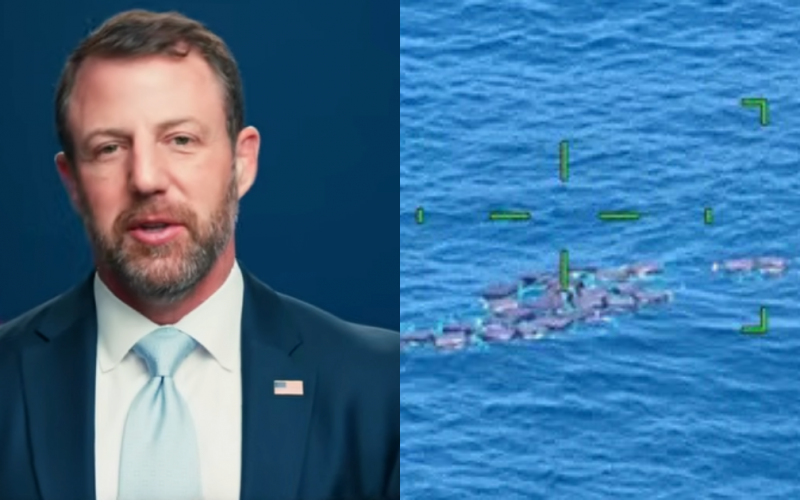
A U.S. Coast Guard operation off the coast of Ecuador has intercepted more than 4,500 pounds of cocaine worth an estimated $33.9 million, highlighting the continued intensity of maritime drug trafficking routes feeding the United States.
The seizure was carried out by the USCGC Escanaba during a patrol in the Eastern Pacific near Manta, Ecuador, after intelligence indicated a suspected smuggling vessel was dumping contraband overboard.
According to officials, a maritime patrol aircraft first spotted the activity and alerted the cutter, which then deployed its helicopter and pursuit teams to locate and recover the floating cargo.
The drugs were ultimately recovered from the water and brought aboard the cutter for processing and destruction.
Officials estimated the haul at roughly 4,510 pounds of cocaine, underscoring the scale of single shipments moving through the region’s trafficking corridors.
The operation falls under Operation Pacific Viper, a broader counter-drug campaign launched in 2025 aimed at disrupting maritime smuggling networks operating in the Eastern Pacific.
The initiative has surged cutters, aircraft, and joint task force coordination into one of the world’s most active cocaine transit zones.
Officials say the Eastern Pacific remains a critical pipeline for cocaine produced in South America, with shipments often routed through or near Ecuador before moving toward Central America and eventually the United States.
The port city of Manta has repeatedly been identified as a key transit point for traffickers leveraging commercial shipping lanes and remote coastal routes, according to Patriot Wise.
Supporters of the operation point to its scale as evidence of sustained pressure on trafficking networks.
According to DHS figures cited in official statements, Operation Pacific Viper has led to the seizure of hundreds of thousands of pounds of cocaine since its launch, along with multiple arrests tied to suspected trafficking networks.
“Operation Pacific Viper plays a central part of President Trump’s fight against the cartels at sea, cutting off their ability to make money,” DHS Secretary Markwayne Mullin said in a statement. “This operation has already seized over 215,000 pounds of cocaine and has arrested over 160 suspected narco-traffickers, with the Coast Guard working to keep these drugs out of American communities.”
Officials say the Escanaba interdiction reflects a broader shift in maritime enforcement, where drug seizures increasingly depend on layered intelligence and real-time surveillance rather than routine patrol encounters, allowing cutters to target specific areas more efficiently.
Analysts note that while seizures of this scale remove significant quantities of narcotics from circulation, they also underscore the scale and persistence of the broader trafficking networks operating through the Eastern Pacific.
Cocaine production in South America continues to feed global demand, and enforcement agencies acknowledge that only a fraction of total shipments are intercepted at sea.
Even so, officials argue that maritime seizures impose real costs on trafficking networks by forcing them to reroute shipments, replace lost product, and risk further detection.
Each intercepted load represents both a financial hit and a disruption to established smuggling logistics operating across international waters.
As Operation Pacific Viper continues expanding patrols across the Eastern Pacific, the Escanaba seizure stands as another example of how maritime enforcement remains a key front in efforts to disrupt drug flows long before they reach U.S. shores.
