

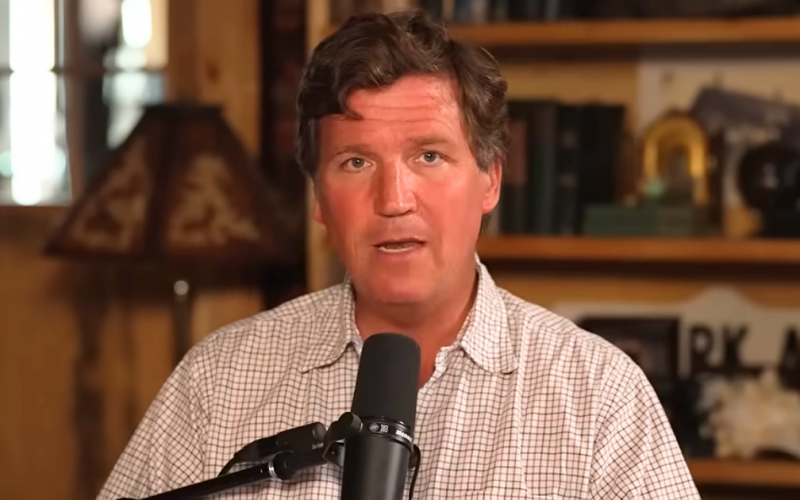
A growing divide within the Republican Party has resurfaced after conservative commentator Tucker Carlson signaled he is stepping away from long-standing political alignment with the GOP, pointing to what he describes as shifting priorities in U.S. foreign policy and national interests.
Carlson made the comments during an appearance on the “Can’t Be Censored” podcast, where he said he was breaking with the Republican Party politically.
He also emphasized that he is not aligning with Democrats and said he is uncertain how he will approach future elections, framing his position as a rejection of both major parties rather than a move toward any alternative political affiliation.
He described the decision as the result of what he views as a widening gap between party leadership and voter priorities.
He pointed to decades of support for Republican candidates and causes but said he now believes the party has shifted away from what he considers its core responsibility to represent American voters first.
In his remarks, Carlson criticized Republican leadership over U.S. policy toward Israel and Iran, arguing the party’s foreign policy focus has drifted toward priorities he believes come at the expense of domestic economic concerns and voter needs.
Carlson’s comments also reflect broader frustration he has expressed in recent months regarding U.S. foreign policy direction, particularly involving Middle East conflicts and military engagement abroad.
He argued that current policy debates have become increasingly disconnected from everyday economic and domestic concerns facing American voters, describing the shift as part of a longer-term decline in accountability within political leadership.
The development comes amid continued friction between Carlson and Republican leadership, including President Donald Trump, who has previously criticized Carlson’s remarks and publicly rejected aspects of his commentary.
Carlson, once broadly associated with the MAGA movement, has increasingly broken with party leadership over debates surrounding foreign policy, national security priorities, and U.S. military involvement overseas.
The split also highlights broader divisions within the conservative movement over U.S. foreign policy direction.
Former Rep. Marjorie Taylor Greene (R-GA) has also voiced criticism of aspects of Republican foreign policy positions, particularly regarding overseas military involvement, reflecting ongoing debate within the party over the balance between international commitments and domestic priorities, according to The Independent.
Polling cited in multiple reports has shown significant skepticism among Americans toward continued overseas military involvement, particularly regarding tensions with Iran.
Those findings have become a point of discussion among conservative commentators who argue the Republican Party should reassess its foreign policy direction in light of voter sentiment.
The White House has defended its foreign policy decisions, saying they are based on national security considerations rather than media narratives or polling trends.
Officials have maintained that current strategy is guided by long-term geopolitical interests rather than internal party disputes or commentary from political media figures.
Carlson’s comments add to ongoing divisions within the Republican coalition as foreign policy debates continue to shape internal party tensions heading into the next election cycle.
His remarks also underscore growing uncertainty over how influential media personalities may continue to shape voter sentiment and ideological direction within the broader conservative movement moving forward.
WATCH:
