

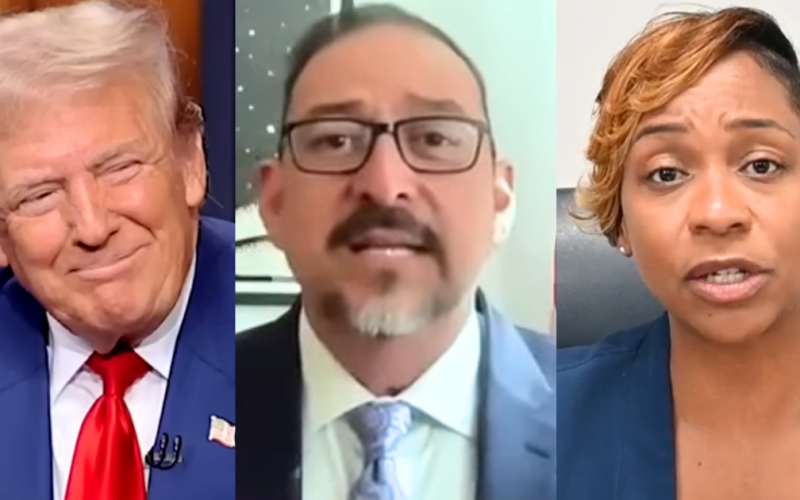
President Donald Trump on Tuesday signed a sweeping executive order aimed at tightening mail-in voting rules, a move his administration says is necessary to restore confidence in U.S. elections ahead of the upcoming midterms.
The directive takes significant steps to ensure only eligible voters receive absentee ballots.
It instructs the Department of Homeland Security, working alongside the Social Security Administration, to compile a verified list of U.S. citizens eligible to vote.
Under the order, mail-in ballots would be limited to individuals on that list, marking a major shift toward stricter oversight of ballot distribution.
The plan also strengthens enforcement mechanisms.
Attorney General Pam Bondi is authorized to investigate and potentially prosecute officials or individuals who distribute ballots to ineligible recipients.
In addition, the U.S. Postal Service would be required to send ballots only to approved voters and use secure, trackable envelopes designed to prevent fraud and improve transparency, according to TIME.
Speaking from the Oval Office, Trump defended the order as a necessary safeguard.
“The cheating on mail-in voting is legendary. It’s horrible, what’s gone on,” he said, arguing the reforms would help ensure fair and honest elections.
The executive action represents a major escalation in Trump’s longstanding push for election integrity reforms.
Supporters say the measures are a commonsense response to vulnerabilities in mail-in voting systems, while critics argue they could limit access to the ballot box.
Legal challenges are already taking shape.
Politico reported that Democratic election lawyer Marc Elias quickly vowed to challenge the order in court, writing, “If Trump signs an unconstitutional Executive Order to take over voting, we will sue. I don’t bluff and I usually win.”
Several state officials also signaled resistance.
Arizona Secretary of State Adrian Fontes called the move “unconstitutional,” while Oregon Secretary of State Tobias Read labeled it an “illegal power grab,” indicating that states are preparing for a legal battle over election authority.
Other officials echoed those concerns.
Maine Secretary of State Shenna Bellows said her state would not comply in advance, and Nevada Secretary of State Francisco Aguilar warned the changes could create confusion during an election year.
Voting rights organizations joined the opposition, claiming the measures could impact voter access.
The NAACP said the order “will not stand,” while Massachusetts Attorney General Andrea Joy Campbell pledged to take legal action to protect what she described as voting rights, CNBC reported.
The order aligns with broader legislative efforts backed by Trump, including the SAVE America Act, which would require proof of citizenship and voter identification nationwide.
While the House has passed the bill, it faces an uncertain path in the Senate.
At the center of the dispute is a fundamental constitutional question: how far the federal government can go in shaping election procedures traditionally managed by the states.
While the administration argues the changes are necessary to protect election integrity, opponents contend the executive branch lacks authority to impose such sweeping reforms.
Trump dismissed concerns about legal challenges, suggesting opposition would depend on unfavorable court rulings.
“I don’t know how it can be challenged,” he said, while acknowledging courts could ultimately weigh in.
The order follows months of federal efforts to obtain voter roll data and reflects ongoing concerns raised by Trump and his allies about the security of mail-in voting.
With the midterms approaching, the directive sets the stage for a high-stakes legal fight over election integrity, voter access, and the balance of power between states and the federal government.
WATCH:
