

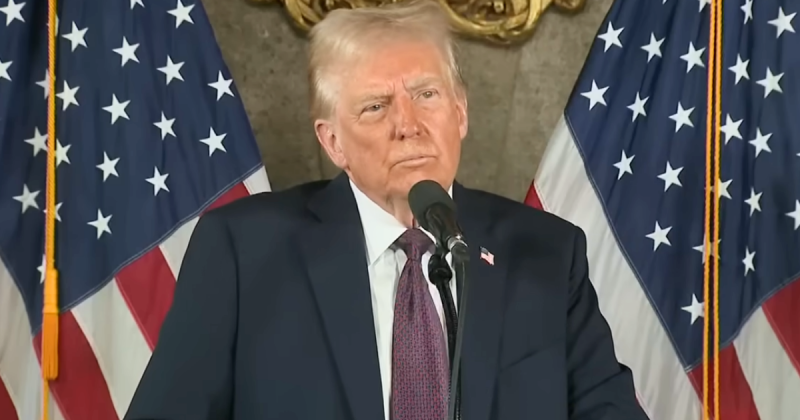
President Donald Trump issued a pointed warning to Iran’s leadership on Friday, signaling that the United States would respond if Tehran’s security forces target peaceful demonstrators with violence.
The statement comes as the Islamic Republic experiences its most significant unrest in years, driven by a deepening economic crisis and soaring living costs.
On Truth Social, Trump wrote that if Iran shoots and “violently kills peaceful protesters, which is their custom, the United States of America will come to their rescue. We are locked and loaded and ready to go.”
The post represented one of the clearest U.S. statements on Iranian internal affairs since the demonstrations began, drawing immediate pushback from Tehran.
The unrest erupted late last month after the Iranian rial plunged to historic lows against the U.S. dollar, triggering rampant inflation and sharply rising food and commodity prices.
The collapse in currency value spurred strikes and protests by shopkeepers and merchants—groups historically seen as pillars of social stability—and quickly drew in students and ordinary citizens across multiple provinces, according to Forbes.
According to rights groups and monitoring organizations, clashes between protesters and security forces have left at least seven people dead to date, with hundreds of arrests reported.
State media confirmed three fatalities and numerous injuries in Lorestan province after demonstrators attacked a police station, and additional deaths were recorded in Lordegan, Kuhdasht and Isfahan amid broader unrest, Reuters reports.
The protests—now described by several reporting agencies as the largest since the nationwide demonstrations of 2022 that followed the death of Mahsa Amini—reflect both economic grievance and political frustration.
While the earlier unrest grew out of social issues, the current wave is rooted primarily in economic hardship tied to currency collapse, high inflation and declining living standards.
Domestically, the economic turmoil has prompted high‑level responses.
The national currency reached unprecedented lows late last year, exacerbating public discontent and leading to the resignation of Iran’s central bank governor amid efforts to stabilize the economy.
Analysts described this as a symbolic breach of public confidence that helped mobilize broader societal sectors.
Iranian leaders wasted little time responding to Trump’s warning.
Ali Larijani, secretary of the Supreme National Security Council, stated on X that foreign interference in what he described as Tehran’s internal affairs would “destabilize the entire region and destroy America’s interests,” and insisted Iran distinguishes between peaceful demonstrators and disruptive actors.
Ali Shamkhani, adviser to Supreme Leader Ayatollah Ali Khamenei, echoed that stance, warning that any external involvement in Iran’s security would meet a “resolute rejection” and could have “regrettable consequences,” framing national defense as a nonnegotiable red line, according to ABC 15.
Moderate voices within Iran’s political hierarchy have sought to temper panic by acknowledging economic grievances and proposing dialogue.
President Masoud Pezeshkian called for engagement with trade unions and merchant representatives and pledged anti‑corruption efforts as part of broader reform initiatives, suggesting Tehran faces internal divisions over how to address public demands, The Epoch Times reports.
Trump’s warning also intersects with broader geopolitical tensions. U.S. and allied airstrikes last year targeted portions of Iran’s nuclear and missile infrastructure, compounding the effects of international sanctions and regional pressure.
Analysts suggest the combination of external military pressure and internal economic collapse has created a volatile environment that challenges Tehran’s ability to maintain control.
As Iran confronts simultaneous domestic unrest and international scrutiny, the exchange of sharp statements between Tehran and Washington highlights mounting tensions that could shape U.S.–Iran relations in the months ahead, with both economic hardship and political confrontation at the forefront.
