

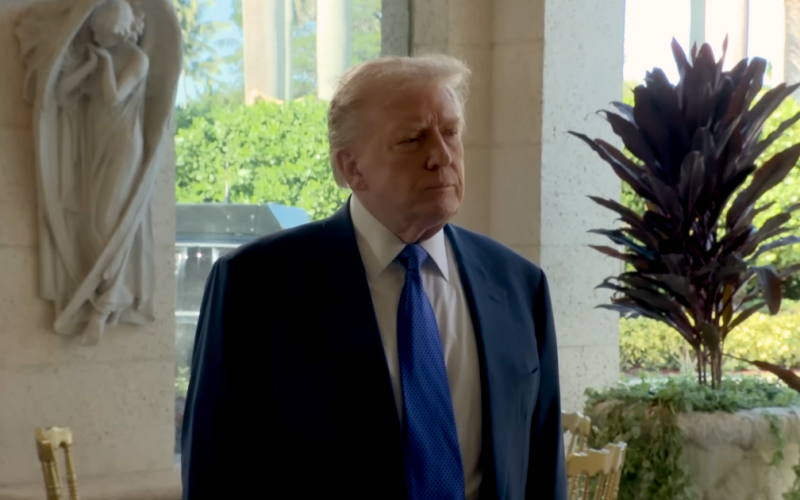
New concerns are swirling around the White House after a device worn by a top Trump aide appeared in photos taken during a sensitive military operation against Iran.
Images released by the White House show President Donald Trump overseeing the strike from a makeshift Situation Room at Mar-a-Lago during “Operation Epic Fury.”
An X post reacting to the image read: “Why is there a Bluetooth device in a classified briefing room while bombs are dropping? This is insane.”
The controversy centers on Trump’s chief of staff, Susie Wiles, who was seen wearing a wrist-based electronic fitness tracker during the briefing.
Online critics quickly flagged the device as a potential security risk, claiming that Bluetooth-enabled wearables could be hacked or used for surveillance during classified operations.
Some initially believed the device was an Apple Watch, but it was later identified as a WHOOP fitness tracker.
WHOOP CEO Will Ahmed responded to the backlash, stating that the device does not contain a microphone, GPS, or cellular connectivity.
He also noted that WHOOP devices are included on the National Security Agency’s approved list of personal electronics for limited secure environments.
The White House echoed that defense, telling the Daily Mail the device is “secure by design” and permitted in classified settings.
However, critics argued that most intelligence agencies still ban personal Bluetooth-enabled wearables in high-security rooms like the Situation Room.
Additional backlash focused on the decision to oversee the military operation from Mar-a-Lago instead of the traditional secure Situation Room in Washington, D.C.
One critic wrote that the makeshift setup appeared exposed, with drapes instead of secure walls, raising concerns about eavesdropping or compromised communications.
While Trump and his inner circle were in Florida, Vice President J.D. Vance and intelligence officials, including National Intelligence Director Tulsi Gabbard, were reportedly in the official White House Situation Room.
The images were released as the administration confirmed the strikes killed Iran’s Supreme Leader and multiple top military officials, per the Daily Mail.
Iran has since retaliated with missile and drone strikes across the Middle East, escalating fears of a wider regional war.
CENTCOM confirmed that at least three U.S. service members have already been killed in the ongoing conflict.
The device controversy now adds another layer of scrutiny to how the administration handled operational security during one of the most consequential military actions of Trump’s presidency.
As the situation develops, questions remain about security protocols, the use of personal electronics in classified environments, and whether the makeshift command setup met the standards typically required for wartime decision-making.
