

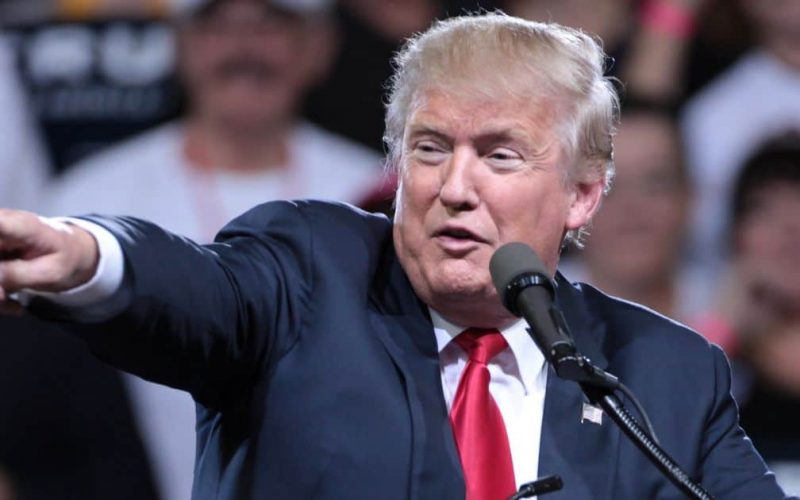
The Trump White House is moving to hold NATO member nations accountable for how they responded — or failed to respond — when the United States called for support during its military campaign against Iran’s Islamist government.
A Wall Street Journal report, drawing on accounts from unnamed administration officials, reveals the White House is actively reviewing options to reorganize American troop deployments and redirect military assets across the alliance based on each country’s conduct during Operation Epic Fury.
The calculus is straightforward: nations that answered America’s call stand to gain. Nations that turned their backs stand to lose.
Greece, Lithuania, Poland, and Romania each demonstrated solidarity with Washington throughout the Iran operation. According to the Wall Street Journal’s sources, those nations are now in line to host a larger American military presence.
Germany and Spain find themselves on the opposite end of that ledger, facing the potential withdrawal of U.S. troops and a reduced American military commitment within their borders.
No country attracted more negative attention than Spain. Socialist Prime Minister Pedro Sánchez seized on the Iran conflict to cast himself as Europe’s leading voice of opposition to the operation.
Sánchez slammed the door on U.S. Military access to Spanish bases and then took the additional step of denying American Air Force planes the ability to cross Spanish airspace on their way toward the Middle East.
The bad blood between Washington and Madrid runs deeper than the Iran operation alone. When President Trump called on NATO members to commit five percent of their GDP to national defense, Spain became the only European ally in the entire alliance to flatly refuse.
Long before that dispute, Spain had already earned a reputation as a chronic underperformer, having never managed to hit even the alliance’s minimum defense spending benchmark of two percent of GDP.
Germany told a different story — one that still drew American frustration. Berlin opened its bases to U.S. forces conducting Iran operations but made no effort to conceal its displeasure with the conflict. Chancellor Friedrich Merz publicly accused President Trump of initiating a “massive escalation with an open outcome” and declared with finality, “this is not our war.”
German President Frank-Walter Steinmeier matched that tone, branding the entire operation a “disastrous mistake” by America and claiming Washington had broken international law.
Britain, long regarded as Washington’s most reliable partner, also found itself in the crosshairs. President Trump singled out the United Kingdom, calling it America’s “once great ally.” Prime Minister Sir Keir Starmer first denied American forces access to British bases entirely before softening his position and allowing only defensive missions to proceed from British soil.
France and Italy drew their own share of blame. Both governments shut their airspace to American aircraft and declined invitations to join an international maritime coalition assembled to keep the Strait of Hormuz open during the fighting.
President Trump took his grievances public on Truth Social, writing Wednesday: “NATO wasn’t there when we needed them, and they won’t be there if we need them again. Remember Greenland, that big, poorly run, piece of ice.”
European analysts have long argued that Trump’s push to acquire Greenland poisoned relationships with European heads of state, nudging them further from Washington’s orbit. Those in Trump’s corner counter that the behavior of NATO allies during the Iran conflict makes the Greenland argument stronger, not weaker — demonstrating that America cannot afford to depend on Danish permission to access strategic territory if a confrontation with Russia or China ever demands it.
Republican criticism of NATO has historically centered on Trump himself, but that is beginning to shift. Former Secretary of State Mike Pompeo and former White House Press Secretary Ari Fleischer have both recently stepped forward to question what the United States is actually getting out of the alliance.
NATO Secretary General Mark Rutte, who has carved out a role as one of Trump’s more sympathetic voices in Europe, made a trip to the White House as tensions escalated. Speaking to CNN, Rutte acknowledged he “could see” the President’s disappointment with the alliance but pushed back by noting that the “large majority of European nations have been helpful” throughout the conflict.
