

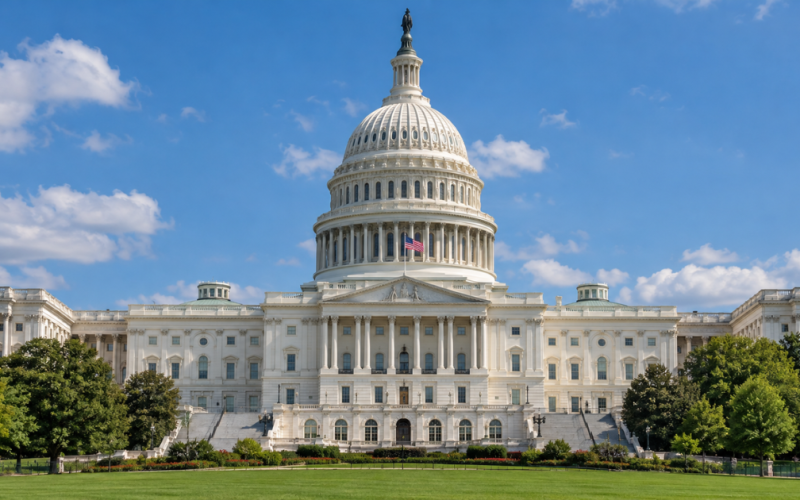
Capitol Hill is mourning the death of Laura Lytle, a longtime Senate press official who spent years advocating for journalists and played a critical role in helping reporters evacuate during the January 6, 2021, Capitol riot.
Lytle died Tuesday at age 51 following a battle with a rare form of lymphoma, leaving behind her husband and three children.
Her death has prompted tributes from congressional reporters and former colleagues who remembered her dedication to protecting press access, navigating Washington’s political environment and ensuring journalists could perform their jobs safely.
Lytle served as director of the Senate Daily Press Gallery from 2013 until 2023, becoming only the second woman to hold the position.
During her tenure, she oversaw press operations as the journalism industry underwent significant changes, including the expansion of digital news organizations and financial challenges facing traditional newspapers.
Her responsibilities frequently required balancing the demands of Senate leadership with the needs of reporters covering Congress.
Emma Dumain, a Politico editor who previously served on the Standing Committee of Correspondents, praised Lytle’s commitment to the journalists who depended on her.
“She really always put the press corps first and just navigated the tensions of her job really beautifully,” Dumain said.
Veteran congressional reporter Paul Kane recalled instances when Lytle challenged Senate officials over decisions affecting journalists.
“There were plenty of times where Senate leadership wasn’t thinking about journalists first, and she was fighting for us,” Kane said.
However, colleagues said her actions during the January 6 Capitol riot demonstrated her commitment to protecting others under extraordinary circumstances.
As rioters breached the Capitol and lawmakers were evacuated, Lytle helped secure the Senate press gallery and worked to ensure journalists were not abandoned during the emergency.
Katherine Tully-McManus, who was covering Congress for CQ Roll Call at the time, credited Lytle with helping protect reporters during the violence.
“I truly believe that she saved our lives on January 6,” Tully-McManus said.
“She was deadly serious about the stakes, and she was not going to put anyone in her care in danger.”
John Mulligan, who worked alongside Lytle in the Senate Daily Press Gallery, recalled her confronting Capitol Police when it appeared that reporters had been overlooked during evacuation efforts.
“What about us?” Lytle demanded.
“That was Laura. She was totally in command,” Mulligan recalled.
Lytle’s husband, Christian Yarnell, shared another account from that day.
While the Capitol was under attack, Lytle called home and asked him to keep their three children away from television coverage because she did not want them to worry about her safety.
“Even when she was very much in harm’s way, Laura was thinking first and foremost of how to protect others,” Yarnell said.
Beyond her professional responsibilities, colleagues and family members remembered Lytle for her humor, kindness and ability to connect with strangers.
Yarnell recalled that traveling with his wife often involved watching her strike up lengthy conversations with people seated next to her on airplanes.
Her career on Capitol Hill began well before her appointment as Senate gallery director.
In 2003, she became assistant director of the House Periodical Press Gallery before eventually moving into senior positions within the Senate press operation.
After leaving Capitol Hill in November 2023, Lytle transitioned into government relations and consulting.
Siobhan Hughes of The Wall Street Journal remembered her as a resourceful professional who was equally respected for her character, per Trending Politics.
“Not only was she good at her job — she was kind. Those two things don’t often go together,” Hughes said.
Lytle had been diagnosed with enteropathy-associated T-cell lymphoma, a rare form of cancer often associated with celiac disease.
She died just weeks before her 52nd birthday.
For the congressional journalists who worked with her, Lytle’s death marks the loss of a longtime advocate whose actions during one of the Capitol’s most dangerous days left a lasting impression.
