

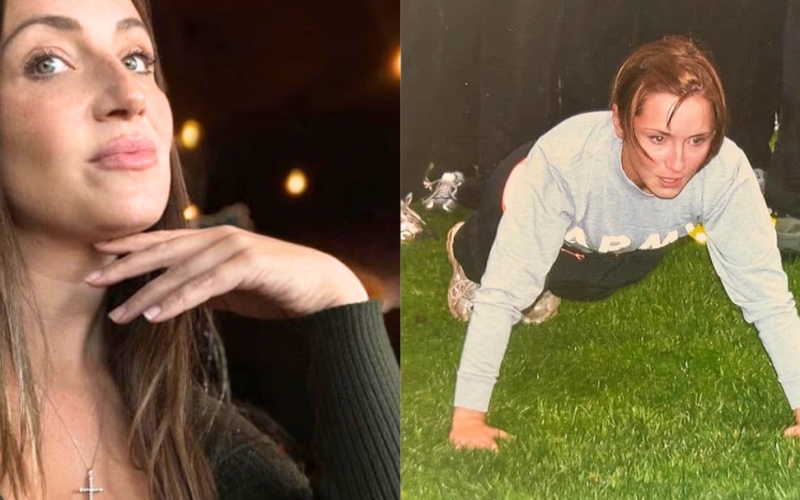
A former operator within one of the United States military’s most secretive units now sits in federal custody, arrested Wednesday on charges that she handed classified national defense information to people who had no legal clearance to receive it — among them, a working journalist.
Courtney Williams, 40, was taken into custody after prosecutors alleged she spent nearly three years feeding sensitive information about her time inside Delta Force to individuals outside her chain of authorized contacts. A federal magistrate judge in Raleigh unsealed the case against her Wednesday, with court records showing the complaint had been filed just days earlier.
Williams did not walk out of that courthouse. She was remanded to the custody of the U.S. Marshals Service, with hearings scheduled for early the following week. No attorney was listed in court records at the time of her arrest.
The charge she faces is not a minor one. Prosecutors invoked the Espionage Act, a statute reserved for cases in which the government believes national security has been materially compromised.
The journalist at the center of the case is Seth Harp, a reporter whose work has chronicled the darker corners of America’s special operations community. Though the federal affidavit stops short of naming him, his fingerprints are unmistakable throughout the court documents. Harp authored “The Fort Bragg Cartel: Drug Trafficking and Murder in the Special Forces,” a book published last year in which Williams figures prominently. He also wrote a widely-read Politico profile of Williams titled “My Life Became a Living Hell: One Woman’s Career in Delta Force, the Army’s Most Elite Unit,” where she is identified as having served as a “signature reduction specialist.”
Prosecutors allege the information pipeline between Williams and Harp ran from 2022 through 2025, carried across phone calls and text messages. What prosecutors also allege is that Williams knew — and said so herself.
Special Agent Jocelyn Fox, who authored the affidavit, pointed to a text Williams allegedly sent Harp on the very day his book and profile dropped publicly. “Other than a few factual errors, I would definitely have been concerned with the amount of classified information being disclosed,” Williams wrote, according to the filing.
She continued in the same message: “I thought things I was telling you so you could have a better general understanding of how the (SMU) was set up or operated would not be published and it feels like an entire TTP (Tactics, Techniques and Procedures) was sent out in my name giving them a chance to legally persecute me.”
The affidavit captured another exchange — this one with Williams’ own mother. “I might actually get arrested, and I don’t even get a free copy of the book,” Williams allegedly wrote. Her mother asked why. Williams answered: “for disclosing classified information.”
That was not the only moment of apparent self-awareness prosecutors documented. In a separate message, Williams wrote that she was “probably going to jail for life.” Asked directly whether she understood legal consequences were possible, she replied: “I have known my entire career, they tell you everyday . . . 100 times a day.”
When Williams was hired by the unit, she signed a Classified Information Nondisclosure Agreement. She signed another when she was fired. Prosecutors allege that in the time between those two signatures, she stored ten files on her personal computer under a folder she titled “Batch for Reporter.” Those files, according to the DOJ, contained personnel records from her Delta Force tenure — material formally designated as SECRET. The classified contents included, in the government’s words, “specific Tactics, Techniques & Procedures (TTPs) utilized by this (SMU) to execute sensitive missions.”
A message from Harp cited in the complaint referenced a physical thumb drive exchange. “Just wanted to let you know I dropped this in the mail today for the thumb drive. It’s stamped and addressed and ready to be sent back, no need to go to the post office!” he wrote. Harp’s book credited Williams as a source across more than ten hours of recorded phone conversations and upward of 180 text messages.
On the day the story went live, Williams posted to LinkedIn. “I stood in rooms with thousands of men who watched me be sexually harassed, assaulted, and discriminated against. And they did nothing. All that power inherently gifted to them, and they did nothing,” she wrote.
Harp responded to her arrest with sharp words. He called it “a vindictive act of retaliation, plain and simple,” told WRAL that Williams was “a brave whistleblower and truth-teller,” and argued the government was singling her out because she “exposed sexual harassment and gender discrimination in the unit.”
FBI Director Kash Patel announced the arrest himself on social media, delivering a direct message to others who might consider similar action: “Let this serve as a message to any would-be leakers: we’re working these cases, and we’re making arrests. This FBI will not tolerate those who seek to betray our country and put Americans in harm’s way.”
Reid Davis, the FBI’s special agent in charge in North Carolina, stated that anyone who discloses information they swore to protect “is reckless, self-serving and damages our nation’s security.” Roman Rozhavsky, an assistant director within the FBI’s Counterintelligence and Espionage Division, added that Williams “swore an oath to safeguard our nation’s secrets” and allegedly “betrayed that oath by sharing classified information with a media outlet and putting our nation, our warfighters, and our allies at risk.”
