

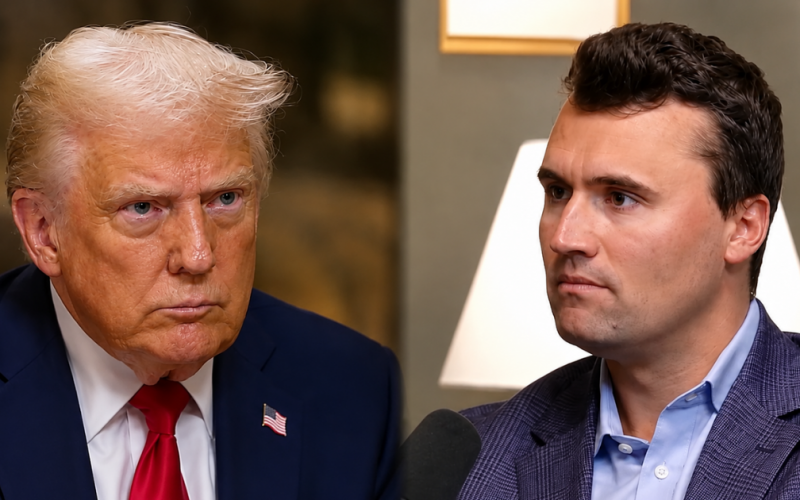
President Donald Trump privately rebuked conservative activist Charlie Kirk in 2025 over criticism of the administration’s handling of Jeffrey Epstein-related records, according to a forthcoming book detailing internal White House discussions surrounding the controversy.
The account appears in “Regime Change,” an upcoming book by New York Times journalists Maggie Haberman and Jonathan Swan, which describes tensions within Trump’s political coalition after the Justice Department and FBI concluded that there was no evidence of a so-called Epstein “client list” and no credible evidence that the late financier had blackmailed prominent individuals.
The findings sparked backlash among some conservative commentators and activists who argued that additional government records should be released.
According to the book, Kirk, co-founder of Turning Point USA, hosted an event in July 2025 where attendees criticized then-Attorney General Pam Bondi and questioned the administration’s handling of Epstein-related disclosures.
Trump reportedly became frustrated with several influential supporters, including Kirk, whom he believed were helping fuel claims that the government was concealing information.
The book states that Trump later called Kirk and expressed his displeasure over the criticism.
Days after the reported conversation, Kirk publicly signaled a shift in his approach to the issue.
“Honestly, I’m done talking about Epstein for the time being,” Kirk said during a July 2025 broadcast, adding that he trusted administration officials to handle the matter.
Kirk was later assassinated during a Turning Point USA event in Utah in September 2025. Authorities arrested a suspect in the case, and criminal proceedings remain ongoing.
The book also details a Situation Room meeting involving Vice President JD Vance, White House Chief of Staff Susie Wiles, Bondi, Todd Blanche and other senior officials. Trump was not present, according to the authors.
Participants reportedly discussed how to address growing criticism from portions of the administration’s political base regarding the Epstein investigation.
According to the book, Vance argued that releasing additional records could demonstrate transparency and help reduce public suspicion.
He also reportedly suggested other strategies, including increased public engagement by Justice Department officials and broader disclosure efforts before Congress could force additional releases.
Some officials expressed concern that continued controversy could generate damaging headlines and distract from other administration priorities.
The authors report that Blanche proposed seeking the release of additional court records related to Epstein. The administration later pursued legal efforts aimed at unsealing certain documents.
Months afterward, Congress passed legislation requiring greater transparency concerning Epstein-related records, leading to the release of additional materials with redactions.
The book also describes discussions involving Epstein associate Ghislaine Maxwell, who is serving a prison sentence following her conviction on federal sex trafficking charges.
Officials reportedly debated potential legal and public relations implications of obtaining testimony from Maxwell regarding Epstein and his associates, per the Daily Mail.
According to the authors, White House advisers expressed concerns that any appearance of favorable treatment toward Maxwell could trigger public backlash and undermine administration messaging.
White House officials defended Trump’s handling of the matter.
In a statement cited by the authors, spokesperson Abigail Jackson said Trump had been “totally exonerated on anything relating to Epstein” and pointed to document releases and legislative actions as evidence of the administration’s commitment to transparency.
