

The Israeli Defense Forces and U.S. military conducted coordinated strikes across Iran on Saturday morning, reportedly killing at least 40 senior Iranian military commanders, according to Israeli and U.S. sources.
An X post from Steve Guest, a former aide to Texas Sen. Ted Cruz (R), shared intelligence from Israeli sources: “If these reports are accurate, this is the largest decapitation strike in recent Iranian history.”
The operation, referred to in the U.S. as “Operation Epic Fury,” targeted key Iranian military and leadership sites.
The focus included command and control centers of the Islamic Revolutionary Guard Corps (IRGC), missile launch sites, air defense systems, military airfields, and locations tied to Iran’s nuclear program, reports the New York Post.
Major cities hit included Tehran, Isfahan, Qom, Karaj, and Kermanshah. In Tehran, areas near Supreme Leader Ayatollah Ali Khamenei’s compound, the defense ministry, and intelligence facilities were primary targets.
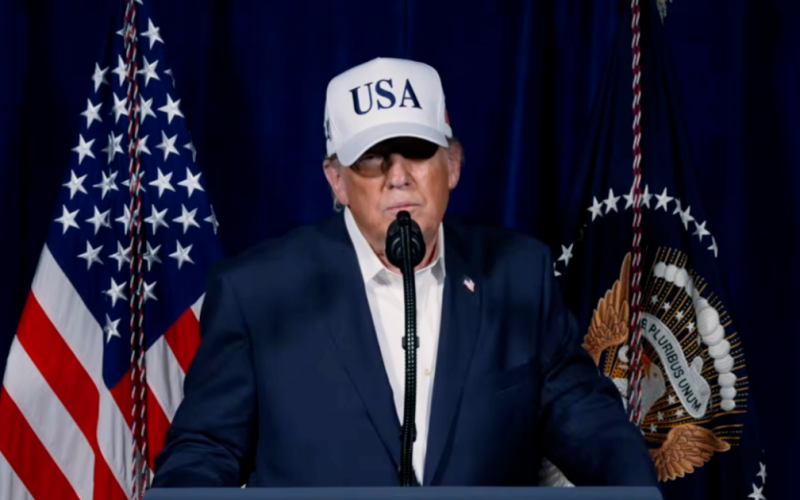
President Donald Trump described the strikes as necessary to neutralize threats posed by the Iranian regime, destroy ballistic missile capabilities, and prevent nuclear weapon development. “These strikes will continue as required,” Trump said in a briefing, according to CNN.
Among the reported dead were Defense Minister Amir Nasirzadeh, IRGC Commander General Mohammad Pakpour, and Ali Shamkhani, a senior advisor to Khamenei and former secretary of the Supreme National Security Council.
Four senior intelligence commanders were also killed: Javad Pourhossein, head of foreign intelligence; Mohammad-Reza Bajestani, head of security; Ali Kheirandish, head of counterterrorism; and Saeed Ehya Hamidi, an advisor on Israel-related conflict.
Israeli and U.S. officials confirmed that Supreme Leader Ayatollah Ali Khamenei was killed in one of the strikes, citing intelligence reports and extensive damage to his compound, per Reuters.
Iranian sources, including the Red Crescent, reported over 200 deaths from the broader strikes, with hundreds more injured. Casualty figures continue to be updated as the situation develops.
In response, Iran launched retaliatory ballistic missile and drone strikes targeting Israel and U.S. military bases across the region. Countries impacted included Bahrain, Kuwait, Qatar, the UAE, Saudi Arabia, Iraq, and Jordan, according to the Daily Mail.
Israeli air defense systems intercepted many incoming missiles, though some impacts occurred, triggering nationwide sirens. At least one fatality was confirmed after a missile struck a residential building, per Trending Politics.
Explosions in Abu Dhabi and Dubai caused civilian injuries from falling debris, while airspace across the Middle East was temporarily closed due to ongoing hostilities.
President Trump confirmed continued U.S. involvement in the operations. He urged IRGC members to stand down while offering potential immunity to those who comply, signaling an attempt to reduce further escalation.
Officials emphasized that leadership targeting was a central element of the operation, which had been planned over several months, highlighting intelligence cooperation between the U.S. and Israel.
The situation remains fluid, with military actions continuing. Trump’s administration and Israeli officials pledged further strikes if deemed necessary, underscoring the U.S. commitment to regional security and deterrence.
