

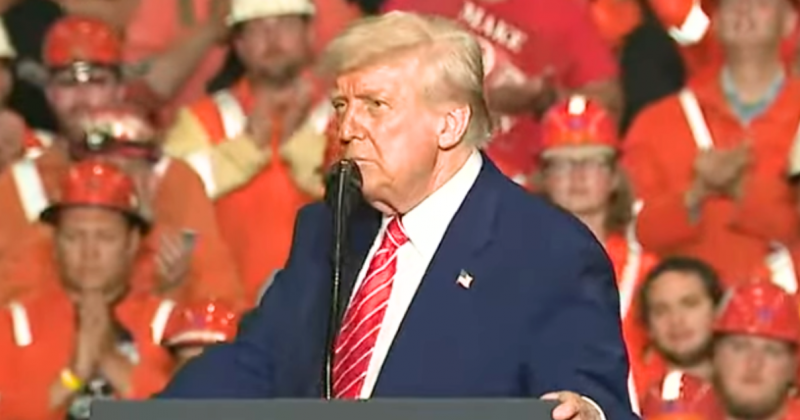
Republican National Committee Chair Joe Gruters has declared President Donald Trump the GOP’s “secret weapon” capable of helping the party “defy history” in November’s midterm elections.
Historically, the party controlling the White House suffers losses in congressional seats during midterm cycles.
However, one year into Trump’s second presidency, polling data indicates a significant decline in public support for the president and his policy initiatives.
The numbers paint a challenging picture for Republicans heading into the critical midterm season.
The latest Wall Street Journal poll shows Trump’s approval rating at 45 percent.
Reuters/Ipsos reports an even lower figure of 41 percent approval.
Real Clear Politics, which compiles an average of recent national surveys, places the president’s approval at 42 percent, with 55 percent of Americans disapproving of his job performance.
Fox News outlined that Trump began his second term with positive approval numbers.
By March of last year, his ratings dipped below the waterline and have continued to decline steadily in subsequent months.
Veteran Republican pollster Daron Shaw, who co-directs the Fox News Poll with Democrat Chris Anderson, told Fox News Digital that Republican support has remained solid.
However, opposition has become increasingly entrenched, particularly among Democrats.
Shaw identified Independent voters as a critical concern for the White House and Republican strategists nationwide.
While Independents typically vote at lower rates during midterm elections compared to presidential years, their participation remains significant enough to impact outcomes.
The pollster warned that erosion of presidential support among Independent voters could cost Republicans seats in the House and potentially affect close Senate contests.
This demographic shift represents a potential vulnerability for the GOP as they defend their congressional majorities.
Republicans secured sweeping victories in 2024, reclaiming the White House and Senate while maintaining their House majority.
Widespread anxiety over inflation proved a decisive factor driving voters toward Trump and Republican candidates at the ballot box.
Democrats attribute their strong performances in November’s 2025 elections and various special elections throughout the year to their concentrated messaging on affordability amid persistent inflationary pressures.
The cost of living has emerged as a dominant electoral issue over the past two years.
Trump’s approval ratings on economic matters average slightly below his overall approval numbers.
A Fox News national poll conducted last month revealed that an overwhelming majority of respondents expressed concern about high prices affecting their daily lives.
Republicans point to the One Big Beautiful Bill Act, Trump’s signature domestic policy achievement of his second term, as evidence of their commitment to addressing affordability through tax cuts.
Gruters argued that Republican policies give the party a decisive advantage on affordability issues heading into the midterms.
Democratic National Committee Rapid Response Director Kendall Witmer offered a contrasting assessment.
“As working families struggle to afford groceries, utilities, and health care, and worry about finding a job, Trump is busy meddling in foreign countries and palling around with executives, failing to address Americans’ top concerns on the economy,” Witmer stated.
Immigration, another issue that propelled Trump to reelection, has seen the president’s approval numbers decline over the past year.
The issue returned to prominence following the fatal shooting of a Minnesota woman and mother of three by an ICE agent during her protest against the administration’s immigration enforcement policies.
Shaw observed that the current issue environment favors Democrats more than the landscapes of 2022 or 2024 as the midterm cycle intensifies.
Presidential approval ratings and the generic ballot serve as critical polling indicators ahead of midterm elections.
Historical precedent suggests challenging times ahead for the party in power.
President George W. Bush’s approval rating stood more than 15 points underwater by Election Day 2006.
President Barack Obama hovered 10 to 12 points below the neutral mark leading into the 2014 midterms.
Republicans now confront a turnout challenge that previous administrations did not face.
MAGA voters demonstrate lower participation rates when Trump’s name does not appear on the ballot, creating uncertainty about Republican performance in down-ballot races.
Gruters noted that Trump has recently campaigned in three key midterm election battleground states and plans to “barnstorm the country with our candidates.”
The RNC chair emphasized that turning out Republican voters and maintaining enthusiasm will prove essential to success.
“There’s nobody that can energize our base more than President Trump,” Gruters said.
Shaw, who worked as a strategist and pollster for Bush’s 2000 and 2004 campaigns, characterized turnout as predominantly a Republican concern in the current political environment.
