

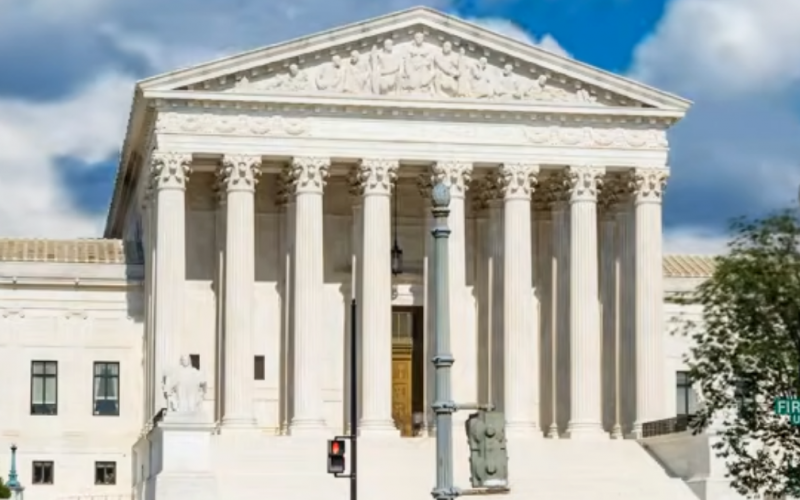
The Supreme Court stepped into a heated abortion pill battle Thursday, blocking a lower court order that would have restricted access to mifepristone while litigation continues, effectively keeping current federal rules in place for now.
The decision ensures the widely used medication remains available through telehealth consultations and mail delivery as the legal fight over its regulation moves forward.
The ruling preserves access to the drug in both states where abortion is legal and those where it is heavily restricted or banned, intensifying the broader national conflict over abortion policy following the overturning of Roe v. Wade.
At the center of the dispute is a clash between federal drug regulation and state-level abortion enforcement authority.
Louisiana, which is leading the challenge, argues that federal rules allowing remote prescribing and mail distribution of mifepristone undermine its abortion restrictions and make enforcement of state law significantly more difficult.
The state contends that telehealth access effectively allows residents to obtain the drug even in jurisdictions with strict bans, limiting the impact of state policy decisions, Just the News reported.
The order prevents enforcement of a Fifth Circuit Court of Appeals ruling that would have required in-person doctor visits before mifepristone could be dispensed.
That decision, according to USA Today, had briefly raised the possibility of reinstating stricter access requirements while litigation continues, prompting emergency intervention from drug manufacturers and federal regulators.
Mifepristone, approved by the Food and Drug Administration in 2000, is one of two drugs commonly used in medication abortions and has become increasingly central to abortion access in the United States.
Under Biden-era regulatory changes, the FDA expanded access by allowing telehealth prescriptions and pharmacy or mail delivery, significantly broadening how the drug is obtained nationwide, according to the Washington Examiner.
The underlying legal battle stems from Louisiana’s challenge to those federal regulatory expansions.
A federal appeals court had previously signaled that the state was likely to succeed, setting up the now-paused order that would have forced a return to in-person dispensing requirements.
The Supreme Court’s emergency action halts that ruling while the broader case continues through lower courts, leaving current access rules intact but unresolved.
The decision does not settle the underlying legal questions over FDA authority versus state regulatory power, which are expected to return to the Court for a final determination.
Justices Samuel Alito and Clarence Thomas dissented from the order. NBC News reported.
Alito argued that federal changes to mifepristone access conflict with the Supreme Court’s 2022 Dobbs decision, which returned abortion policy decisions to the states.
Thomas also raised concerns about the legal standing of drugmakers challenging state enforcement efforts, criticizing arguments that financial or logistical harm should override state authority in regulating abortion-related drugs.
For now, the ruling ensures there is no immediate disruption to access to mifepristone as the case continues.
However, the broader dispute over the balance of federal drug regulation and state abortion laws remains unresolved and is expected to return to the Supreme Court in future proceedings.
WATCH:
