

A sharply divided Supreme Court handed a legal lifeline to a wounded U.S. Army veteran this week, allowing his lawsuit over a deadly Taliban bombing in Afghanistan to proceed in a ruling that underscored a widening ideological split over the reach of military contractor immunity.
At the center of the case is former Army Specialist Winston Tyler Hencely, who was left permanently disabled in 2016 after a Taliban suicide bomber detonated an explosive vest inside Bagram Airfield, the largest U.S. military base in Afghanistan.
The attacker was linked to Fluor Corporation, a private military contractor operating on the installation at the time.
Hencely sued Fluor under state tort law, arguing the company was negligent in supervising and retaining personnel connected to the attacker.
Lower courts dismissed the case, holding that so-called “battlefield preemption” barred civilian-style liability claims tied to wartime activity.
In a 6–3 decision, however, the Supreme Court rejected that sweeping immunity theory and revived the lawsuit, exposing a clear ideological divide over how far federal war powers should extend to shield contractors from accountability.
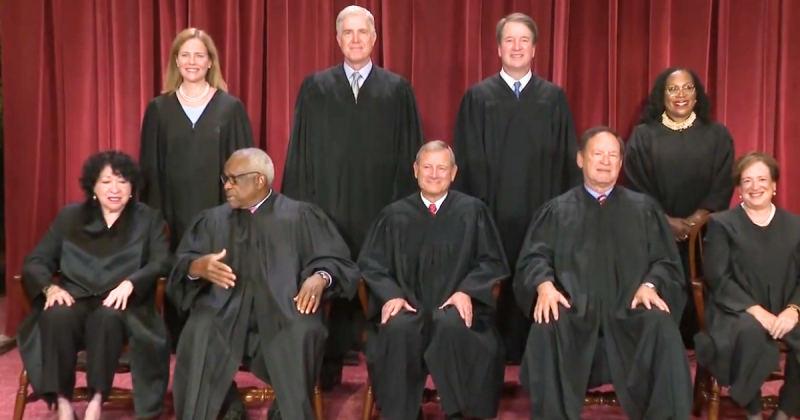
Writing for the majority, Justice Clarence Thomas led an unusual cross-ideological coalition that included Justices Sonia Sotomayor, Elena Kagan, Ketanji Brown Jackson, Neil Gorsuch, and Amy Coney Barrett.
Together, they concluded that lower courts had stretched battlefield preemption far beyond its legal limits.
Thomas’s opinion made clear that neither the Constitution nor federal law provides blanket protection for contractors when their alleged conduct was not directly ordered or authorized by the U.S. government.
The majority emphasized that ordinary state tort law cannot be erased simply because misconduct occurs in a war zone.
The ruling sent a blunt message: contractor activity is not automatically insulated from civilian judicial review, even in active combat environments.
Instead, courts must look closely at whether federal authority explicitly displaces state legal remedies before shutting the courthouse doors to injured plaintiffs.
On the other side of the ideological divide, Chief Justice John Roberts and Justices Samuel Alito and Brett Kavanaugh issued a forceful dissent warning that the majority had dangerously weakened federal control over wartime decision-making.
Alito, writing for the dissent, argued that war powers belong exclusively to the federal government and should not be second-guessed by state courts or juries.
According to Fox News, he framed the majority opinion as an erosion of constitutional boundaries between civilian litigation and military operations.
In unusually stark language, the dissenters warned that allowing state-law claims tied to battlefield environments could open the door to judicial interference in military strategy, potentially exposing sensitive operational decisions to inconsistent rulings across jurisdictions.
From their perspective, decisions involving contractor security arrangements in war zones are inseparable from broader military strategy—and therefore should remain fully shielded from state tort liability.
But the majority, led by Thomas, rejected that framing, insisting the Constitution does not grant contractors automatic immunity simply because they operate alongside the military.
The liberal justices joining Thomas signaled agreement that federal preemption must have clear limits, not sweeping presumptions, Newsweek noted.
The decision effectively aligned the Court’s liberal wing with Thomas’s narrower interpretation of battlefield immunity, creating a rare but significant cross-ideological bloc against the Court’s conservative dissenters.
The case now returns to lower courts, where Hencely’s claims against Fluor will proceed, setting the stage for further litigation over contractor responsibility in wartime environments.
Legal analysts say the ruling could reshape future disputes involving military contractors, particularly where alleged negligence overlaps with—but is not directly directed by—federal wartime authority.
