

A last-minute legal fight over political advertising costs has reached its first resolution, and Republican campaign organizations came out ahead.
Television and radio stations across the country will continue offering discounted advertising rates to national party committees, at least for now, after the Supreme Court intervened in a dispute that erupted just as midterm campaigns began spending heavily on airtime.
The order came in response to an emergency appeal filed by the National Republican Congressional Committee and the National Republican Senatorial Committee.
Both organizations asked the justices to block a federal appeals court ruling that had stripped party committees of access to reduced broadcast rates.
Federal law requires broadcasters to charge legally qualified candidates their “lowest unit charge” during specific windows leading up to an election.
That protection did not originally extend to political parties themselves.
That changed in March, when the FCC’s Media Bureau issued guidance allowing parties and joint fundraising committees to receive those same discounted rates, provided their advertising activity was coordinated with candidates.
Four Democratic congressional candidates objected.
They filed a challenge with the FCC and simultaneously sought relief from the U.S. Court of Appeals for the Fourth Circuit, asking the court to freeze the new policy while their administrative case was still pending.
On August 25, the Fourth Circuit agreed with the Democratic candidates and vacated the FCC’s guidance entirely. Party committees lost their automatic eligibility for the lower rates overnight.
Broadcasters responded almost immediately, according to Republican committees, pulling back the favorable pricing they had extended in anticipation of continued coordinated advertising.
Campaigns that had built their media budgets around those discounts suddenly faced sharply higher costs with the election approaching fast.
Republicans took the fight to the Supreme Court, framing the timing as a financial emergency rather than a routine legal dispute.
The Court’s unsigned majority opinion sidestepped the core question of whether parties are legally entitled to candidate-level ad discounts.
Instead, the justices zeroed in on a jurisdictional flaw in how the case reached the Fourth Circuit.
Federal communications law typically requires the FCC to complete its own administrative review before a case can proceed to a federal appeals court.
Because the Democratic candidates went to court while their FCC challenge was still open, the majority concluded the Fourth Circuit most likely never had authority to rule on the matter at all.
Financial harm factored heavily into the decision as well.
The justices pointed to broadcasters already withdrawing discounted rates as evidence that Republican committees faced losses that money alone could not later undo, given how close the case fell to Election Day.
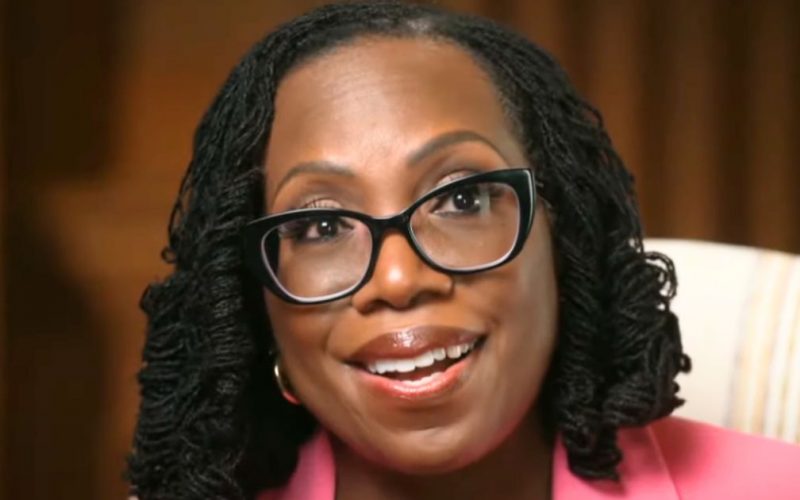
Justice Ketanji Brown Jackson broke from her colleagues, issuing the only public dissent.
She wrote that she was not persuaded the Republican committees would ultimately prevail on their argument about the Fourth Circuit’s jurisdiction.
For now, the practical effect favors continuity: party committees that meet the FCC’s coordination requirements can resume claiming the lower advertising rates while the underlying legal battle plays out in the courts.
Nothing about the policy limits it to one party.
Democratic committees satisfying the same conditions remain equally eligible, even though Republicans currently hold a substantial edge in national party fundraising and brought the case to the Court.
This ruling does not stand alone.
It follows a separate Supreme Court decision in June that eliminated caps on coordinated spending between parties and their candidates, a change that already gave national committees far more room to spend jointly with campaigns.
Layered together, the two rulings open the door to a new financial landscape for the midterms: parties coordinating larger sums with candidates, and potentially buying some of that advertising at reduced rates once reserved almost exclusively for candidates.
None of this settles the matter permanently.
The stay is a temporary measure, not a final verdict on the FCC’s authority to extend discounted rates to political parties.
Litigation continues, and the Republican committees still must pursue further review before the underlying legal question is answered.
