

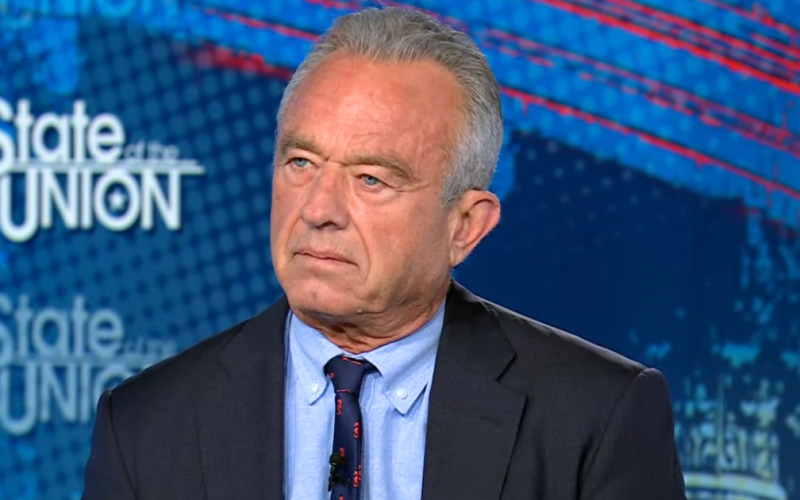
Health and Human Services (HHS) Secretary Robert F. Kennedy Jr. is moving to expand federal oversight of food ingredients through a proposed rule that would require manufacturers to notify the Food and Drug Administration (FDS) when they determine that certain substances qualify as “generally recognized as safe” (GRAS).
The proposal would change a decades-old system that allows companies to make their own GRAS determinations for certain food ingredients without first obtaining formal FDA approval.
Under current rules, manufacturers are not required to notify the FDA of those determinations, although some voluntarily do so.
“Shifting to a mandatory notification system closes a decades-old information gap,” Acting FDA Commissioner Kyle Diamantas said Monday, the Associated Press reported.
He said the proposal would give regulators greater visibility into ingredients entering the food supply.
Under the proposal, companies would have to submit information supporting their safety determinations.
The FDA would have 45 days to determine whether submissions contain the required information and up to 180 days to conduct a more substantive review.
However, manufacturers would not have to wait for FDA approval before putting products containing GRAS substances on the market, according to The Washington Post.
Diamantas said requiring formal FDA review of every GRAS determination would require Congress to give the agency additional authority.
Kennedy has called on Congress to provide the FDA with additional tools to oversee food ingredients.
The GRAS exemption dates to 1958, when Congress established an exception for substances with a long history of safe use, including common ingredients such as vinegar and spices.
Beginning in 1997, the FDA allowed companies to independently determine that certain substances qualified for the exemption based on scientific evidence and expert consensus.
Critics of the current system argue that the self-determination process has allowed ingredients to enter the food supply without direct FDA review.
The Center for Science in the Public Interest has characterized the practice as a regulatory loophole.
The proposed rule is part of Kennedy’s broader Make America Healthy Again (MAHA) agenda, which has focused on artificial colors, additives, and highly processed foods.
The FDA also announced Monday that it has completed work on a federal definition of “ultraprocessed food,” although officials did not release the proposed language. The definition has been submitted to the White House for review.
Kennedy said the two initiatives will change how the federal government approaches the nation’s food supply.
“These two actions will change how the federal government oversees what’s in our food and how we understand the foods that Americans eat,” Kennedy said at an HHS event.
Consumer advocates welcomed the mandatory notification requirement but argued that the proposal does not go far enough.
Melanie Benesh of the Environmental Working Group called for stronger safety standards and independent FDA review before chemicals are allowed in food.
Thomas Gremillion of the Consumer Federation of America likewise questioned whether the FDA has enough resources and staff to thoroughly review the information it receives, according to NOTUS.
The proposal will be open for public comment for 120 days.
Any move to require formal FDA approval of GRAS substances before they reach the market would require additional congressional authority, according to federal officials.
WATCH:
