

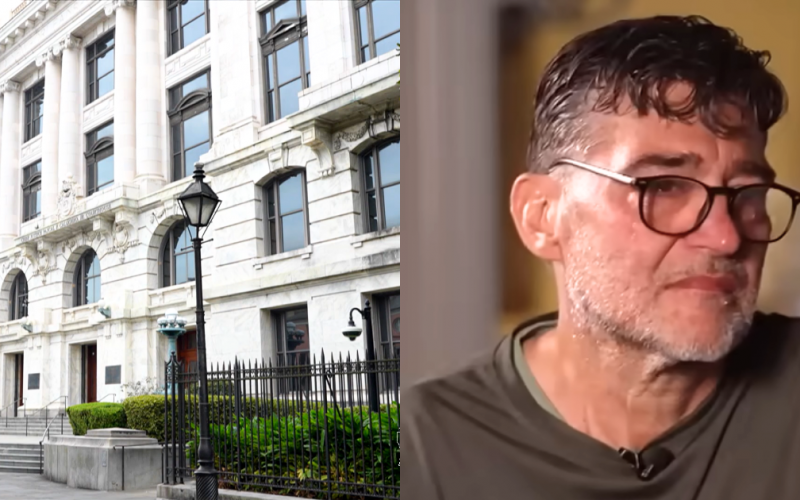
A Louisiana man who spent nearly three decades on death row has been freed after the state’s highest court unanimously overturned his murder conviction, citing new evidence that challenged key forensic testimony used at his trial.
Jimmie “Chris” Duncan, 57, was convicted in 1998 in the death of Haley Oliveaux, his girlfriend’s 23-month-old daughter, and was sentenced to death.
The Louisiana Supreme Court upheld a lower court’s decision to vacate Duncan’s conviction after finding that newly presented evidence undermined the foundation of the state’s case.
Duncan’s conviction centered heavily on bite-mark evidence presented by forensic dentist Michael West and testimony from pathologist Dr. Steven Hayne.
Prosecutors argued that marks found on Oliveaux’s body matched Duncan’s teeth and that the child had been sexually assaulted.
The findings, according to BizPac Review, led prosecutors to upgrade Duncan’s original negligent homicide charge to first-degree murder.
The appeal centered on a previously unseen examination video that defense attorneys said challenged the reliability of the bite-mark evidence presented at trial.
The footage showed West manipulating a dental mold against the child’s skin, raising questions about how the marks were created.
The video was central to an appeal brought after the Innocence Project joined Duncan’s legal team in 2022.
During a six-day evidentiary hearing in 2024, retired District Court Judge Alvin Sharp reviewed the footage and later granted Duncan’s claim of factual innocence, vacating the conviction in April 2025.
Prosecutors appealed the decision to the Louisiana Supreme Court.
The Louisiana Supreme Court later unanimously affirmed the lower court’s ruling, stating that the new evidence “undermined the core factual premises” of the state’s case.
The court also found that identifying the alleged bite marks as having been made by Duncan was scientifically indefensible, according to People.
Additional evidence raised during the appeals process included concerns about the reliability of a jailhouse informant whose testimony prosecutors used at trial.
The informant, Michael Cruse, claimed Duncan confessed but later recanted.
Defense attorneys also argued that evidence involving previous injuries suffered by Oliveaux and alternative explanations for certain injuries was not properly considered during the original trial.
Duncan’s legal team argued that the bite-mark evidence played a critical role in his conviction and that the newly reviewed video changed the understanding of the forensic analysis used against him.
Former District Attorney Jerry Jones, who prosecuted Duncan’s original case, later acknowledged that the bite-mark testimony should not have been presented, saying he did not know at the time that the evidence was unreliable.
The case has also renewed scrutiny of forensic testimony provided by Hayne and West, whose work has been challenged in other cases.
NBC News reported that Duncan is among several individuals whose convictions were later questioned after forensic evidence connected to the two experts was challenged.
Despite the overturned conviction, Duncan’s legal situation may not be fully resolved.
Ouachita Parish District Attorney Steve Tew has said prosecutors still intend to retry the case, arguing that the state’s evidence did not rely solely on the bite-mark testimony.
Duncan was released on bail before the Louisiana Supreme Court issued its final ruling.
He has said he hopes his case will help prevent similar wrongful convictions in the future. Oliveaux’s mother and members of her father’s family have publicly supported Duncan’s release and the effort to overturn his conviction.
WATCH:
