

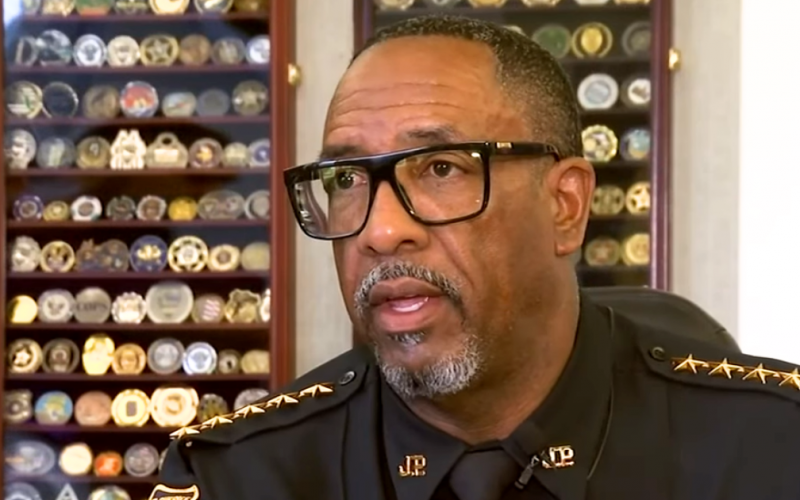
Jacksonville Sheriff T.K. Waters is publicly drawing a firm line in the debate over immigration enforcement in Florida, clarifying that his office will continue prioritizing public safety and strict adherence to the law despite calls from other sheriffs to reconsider federal deportation priorities for non-criminal illegal aliens.
Waters’ statement followed comments from Polk County Sheriff Grady Judd and other members of the State Immigration Enforcement Council, who proposed contacting federal GOP leaders—including President Donald Trump, Senate Majority Leader John Thune (R-SD), and House Speaker Mike Johnson (R-LA)—to urge changes in deportation priorities for certain illegal aliens living in the U.S. without criminal records.
“I was not part of that call, and I do not share or endorse the comments made by others,” Waters said, stressing that Jacksonville’s law enforcement operations will remain focused on crime-related enforcement and protecting residents.
He emphasized that his office’s priorities are guided by the law, not political debates.
Judd, a longtime hardliner on immigration, criticized federal inaction.
“While Congress does nothing, we are seeing firsthand the challenges presented by individuals residing here illegally,” he said during the council meeting.
Charlotte County Sheriff Bill Prummell echoed the concern, calling for congressional action to support local enforcement while acknowledging the risks of “collateral” consequences when federal agencies intervene, according to Trending Politics.
Waters highlighted Jacksonville’s long-standing collaboration with federal authorities through the 287(g) program, active in Duval County since 2008.
“In the past two years alone, we have processed 1,289 illegal immigrants for removal proceedings, all of whom committed crimes in our county,” he said, according to Florida Politics.
He noted that these efforts predate recent statewide mandates, demonstrating Jacksonville’s proactive approach to immigration enforcement.
Florida Attorney General James Uthmeier also weighed in, rejecting the council’s proposed letter to federal officials, Florida’s Voice reported.
“Anyone here illegally has broken the law,” he said, underscoring the principle that local law enforcement must enforce statutes regardless of policy debates.
The disagreement among Florida sheriffs reflects broader enforcement philosophies.
Some officials support flexible policies that differentiate between public safety threats and law-abiding residents, regardless of their immigration status.
Others, like Waters, prioritize strict adherence to federal and state law, keeping resident safety as the primary objective.
Immigration policy has long been a focal point for the Trump administration and conservative leaders, with Florida often serving as a testing ground for strict enforcement initiatives.
Local and state officials have emphasized compliance with federal law while maintaining public safety, and Waters’ approach aligns closely with this framework, signaling the state’s continued role in conservative-led immigration efforts.
Jacksonville’s example highlights the operational challenges local agencies face in balancing enforcement duties with broader policy debates.
Waters’ public refusal to endorse the council’s recommendations reinforces a law-and-order approach, showing that crime-focused enforcement remains the top priority in his jurisdiction.
He also emphasized that his office maintains strong federal partnerships, enabling swift action on criminal cases without waiting for legislative changes or policy reinterpretation.
As statewide debates over immigration enforcement continue, Waters’ stance illustrates how local authorities can exercise discretion while remaining aligned with federal law.
His public distancing from council recommendations sends a clear message that political or administrative pressures will not compromise the safety of Jacksonville residents and that enforcement will remain guided by criminal behavior rather than immigration status alone.
