

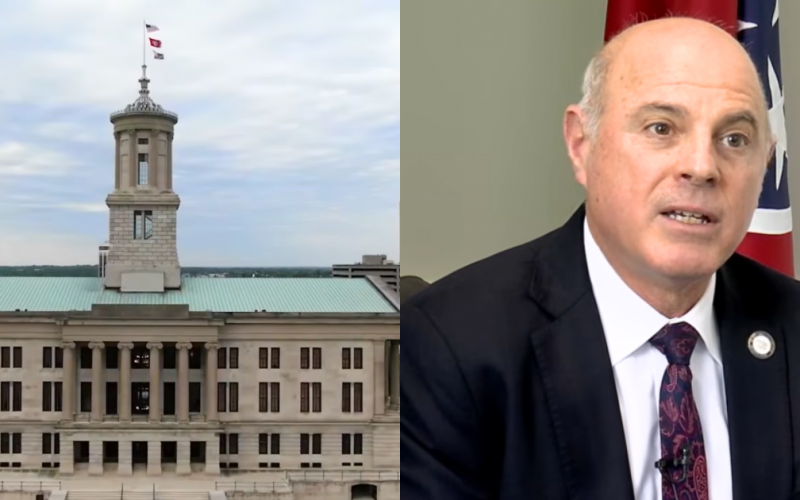
The Tennessee House of Representatives passed a landmark bill Thursday protecting the rights of private citizens and organizations to decline recognition of same-sex marriages, defending religious liberty, state sovereignty, and individual conscience.
House Bill 1473 cleared the chamber 68-24 along party lines, with all Republicans supporting the measure and all Democrats opposing it.
Sponsored by Republican Rep. Gino Bulso of Brentwood, the legislation asserts that private citizens and businesses are not obligated to acknowledge marriages that fall outside Tennessee’s legal definition of marriage.
HB 1473 cites the 2015 Supreme Court ruling in Obergefell v. Hodges—which legalized same-sex marriage nationwide—but limits its application to public entities, stating that private parties are not bound by the Fourteenth Amendment in this context.
The bill also prevents government officials from being disciplined or sanctioned for refusing to officiate or participate in ceremonies that violate the state’s marriage definition, according to LifeSite News.
Bulso characterized the legislation as a defense of religious liberty and the state’s traditional understanding of marriage.
“This legislation protects religious liberty in the Volunteer State by clarifying that private citizens can never be forced to recognize any other definition,” he said, referencing Tennessee’s 2006 Marriage Protection Amendment, which defined marriage as between one man and one woman and was approved by more than 80 percent of voters.
Fellow Republicans echoed concerns over judicial overreach. Rep. Monty Fritts of Kingston said, “The court decided to redefine something that Almighty God had not given that court the authority to redefine.”
Democrats strongly criticized the measure, arguing that it undermines constitutional protections and could create avenues for discrimination.
Rep. John Ray Clemmons of Nashville called HB 1473 a “slap in the face to the very spirit of the 14th Amendment,” warning that the bill could allow private entities to deny legally married same-sex couples access to healthcare, banking services, or employment benefits.
Rep. Sam McKenzie of Knoxville added that such matters belong in the courts, not the legislature.
Advocacy organizations echoed these concerns.
The Tennessee Equality Project said the bill “sows fear about the very protections that give families security” and called it one of the worst uses of the House’s time.
The group cautioned that private banks, hospitals, and employers could deny services or recognition to same-sex couples if HB 1473 becomes law.
The legislation now moves to the Republican-controlled state Senate, where it is being reviewed by the Judiciary Committee, according to WTVF.
If passed, HB 1473 would take effect July 1.
Bulso has also introduced companion bills aimed at restricting Pride displays in schools and expanding exemptions for private employers from LGBT anti-discrimination protections.
Legal analysts predict that HB 1473 could face challenges in federal court over questions of equal protection and civil rights.
Supporters maintain that the law does not alter the legal status of same-sex marriage but rather clarifies that recognition by private parties is voluntary.
Critics counter that it could foster an environment of legal and social discrimination against LGBT families.
HB 1473 is part of a broader Tennessee legislative trend targeting LGBT issues, following measures that restrict gender-transition care for minors, limit “trans” participation in sports, and ban certain drag performances in public schools.
As the bill progresses, debates over religious liberty, constitutional authority, and private rights are expected to continue shaping Tennessee’s approach to these contentious issues.
WATCH:
