

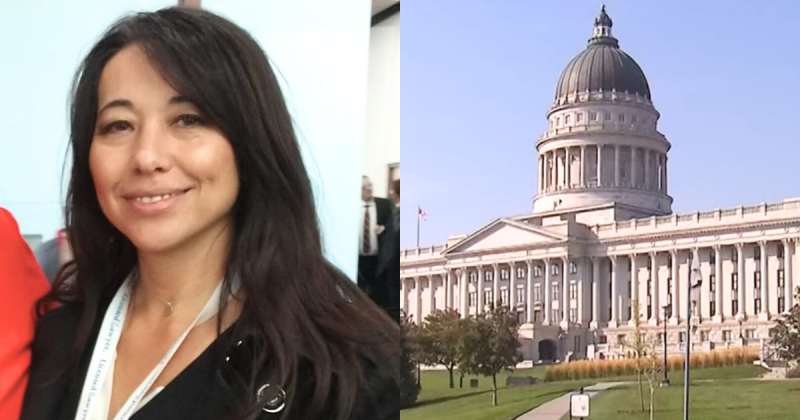
A controversial ruling by a Utah district judge has set off a heated political dispute over congressional maps in a state long considered a Republican stronghold.
Utah Third District Judge Dianna Gibson announced Monday that congressional districts for the 2026 midterm elections will follow a map submitted by activist groups, rather than the plan drawn by the GOP-controlled legislature.
The activist-backed map was created by the League of Women Voters of Utah and Mormon Women for Ethical Government.
Gibson’s decision establishes a Democratic-leaning district in Salt Lake County, the state’s most liberal area, potentially flipping one of Utah’s four congressional seats.
Republicans reacted with immediate outrage, characterizing the ruling as judicial overreach.
Utah GOP Chairman Robert Axson accused the judge of “playing King from the bench” and undermining the constitutional authority of elected officials to draw legislative maps, according to The Western Journal.
The backlash escalated when State Rep. Matt McPherson announced he plans to file articles of impeachment against Gibson, citing “gross abuse of power, violating the separation of powers and failing to uphold her oath of office.”
Another Republican lawmaker, Candice Pierucci, described the ruling as a prime example of judicial activism, criticizing Gibson for imposing strict deadlines that limited lawmakers’ ability to submit alternative proposals, according to The Blaze.
Central to the dispute is Proposition 4, a 2018 voter-approved measure that prohibits partisan gerrymandering.
The Republican legislature’s map, which preserved four GOP-leaning districts, was struck down for allegedly violating this reform.
The activist-submitted map keeps Salt Lake County intact as a single district, concentrating Democratic voters and improving the chances of a flipped seat.
Historically, Democrats have struggled to win congressional seats in Utah, with victories largely confined to a few liberal counties.
In the 2024 election, only Salt Lake, Summit, and Grand counties voted for Vice President Kamala Harris.
By preserving these voters in a single district, the new map could dramatically alter the state’s congressional delegation for the first time in decades, increasing national political stakes.
Observers note that this ruling mirrors similar battles across the country.
California voters recently approved Proposition 50, temporarily returning map-drawing authority to a Democrat-controlled legislature, while Texas Republicans enacted maps designed to strengthen GOP seats ahead of the 2026 midterms.
Democrats praised Gibson’s decision as a step toward fairness and impartial representation. DNC Chair Ken Martin described the map as reflecting the state’s diversity and political makeup, framing it as a move toward fairer representation, per Fox News.
Republicans countered that such decisions should be made by elected legislators accountable to voters, not judges or activist groups.
Local voters have expressed mixed reactions, with some lauding the effort to curb partisan gerrymandering and others warning that judicial intervention undermines representative democracy.
With all four congressional seats in Utah currently held by Republicans and the GOP holding a slim House majority, the outcome of this dispute could reshape both the state’s political landscape and the national balance of power.
Analysts predict the ruling will influence not only Utah’s elections but also similar redistricting battles across the country, setting a precedent for the 2026 midterms.
