

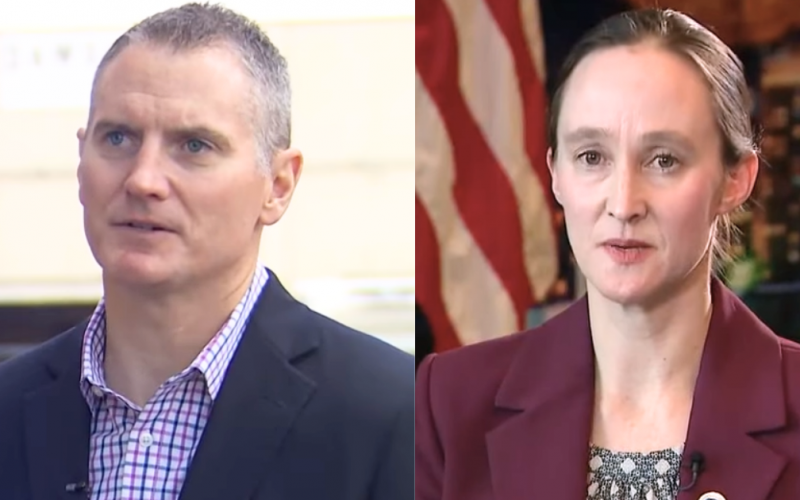
Seattle’s new mayor, Katie Wilson, has placed the city’s police department at the center of a contentious showdown with federal immigration authorities.
Her recent directives instruct officers to monitor and document federal enforcement activities, using body cameras and in-car video, while explicitly barring them from participating in deportations.
The move has sparked sharp criticism from law enforcement leaders, who warn that it risks turning local police into political pawns rather than public safety enforcers.
Wilson’s executive order prohibits federal agents from using city-owned properties—including parks, plazas, garages, and Seattle Center—for immigration operations.
According to the Epoch Times, local officers are tasked with verifying and documenting any federal activity, securing scenes for potential prosecution, and reporting violations.
Critics say the instructions blur the line between legitimate oversight and active political involvement, forcing Seattle police into a watchdog role traditionally handled by federal authorities.
Mike Solan, president of the Seattle Police Officers Guild, blasted the plan as “toothless virtue signaling” that compromises both officer safety and operational clarity.
“The concept of turning local officers into observers of federal law enforcement is ludicrous and unsafe,” Solan said, referencing the deaths of Renee Good and Alex Pretti in Minneapolis during federal operations.
He added that the city is risking a confrontation between two armed law enforcement entities in a scenario that could easily escalate.
Police Chief Shon Barnes underscored the department’s neutral stance, emphasizing that officers will monitor activity but have no authority over federal agents or their enforcement policies.
“Our priority remains the life safety of all people,” Barnes said.
He stressed that while officers will document incidents if notified, they are not participants in federal actions, a position some experts say is increasingly difficult to maintain in politically charged enforcement scenarios.
Beyond police monitoring, Wilson has pledged $4 million in city funds to organizations providing legal assistance and community support for illegal aliens.
She also encouraged local schools and municipal courts to adopt similar policies, framing the measures as a safeguard for vulnerable populations in the city, WRGA News reported.
Critics, however, argue that this diverts resources from core public safety needs and effectively politicizes law enforcement, turning officers into quasi-immigration monitors rather than crime responders.
The White House has also weighed in, citing a dramatic 1,300 percent spike in assaults against ICE officers.
Spokeswoman Abigail Jackson warned that local obstruction endangers both federal agents and residents.
“Officials should work with law enforcement, not against them. Encouraging resistance to federal officers puts the public at risk,” she said per BizPac Review, highlighting the potential consequences of Wilson’s directives.
Wilson’s Stand Together Seattle program further encourages private property owners to post warnings that federal agents may not enter without a warrant.
The initiative also coordinates reporting and information sharing among community organizations, a step critics argue transforms civic oversight into political posturing.
The city’s sanctuary policies, which have long limited cooperation with ICE, provide the framework for Wilson’s approach, but opponents contend her measures escalate tension without addressing actual threats to public safety.
By positioning police officers as monitors of federal enforcement, Wilson has reshaped the local law enforcement role—tasking officers with documentation, oversight, and coordination duties, while keeping them from engaging in direct enforcement.
The decision raises critical questions about officer safety, the politicization of policing, and the effectiveness of sanctuary-style policies in managing immigration enforcement challenges.
Seattle police now find themselves on the frontlines of a political battle, tasked with balancing public safety obligations and compliance with controversial municipal directives.
