

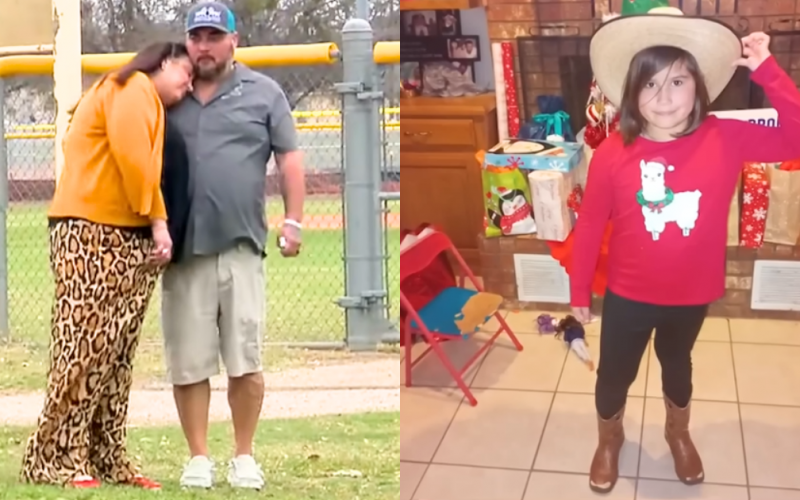
A Stephenville, Texas, family is raising awareness about the dangers of viral social media stunts after their 9-year-old daughter, JackLynn Blackwell, died last month while attempting the “blackout challenge,” a practice that restricts oxygen to the brain and can result in fainting, brain injury, or death.
The parents are urging other families to closely monitor minors’ online activity.
JackLynn was described by her parents, Curtis and Wendi Blackwell, as a spirited child who loved singing, drawing, dancing, and spending time with her family.
“It was just the three of us, we did everything together,” Curtis told CBS News.
Like many minors, JackLynn spent hours watching videos on platforms like YouTube, where seemingly harmless content can quickly lead to exposure to dangerous stunts.
On Feb. 3, an ordinary school morning turned tragic.
Curtis noticed unusual silence near the carport where JackLynn often played and discovered her unconscious with a cord around her neck.
He attempted CPR until emergency responders arrived, but she was pronounced dead shortly afterward.
The Blackwells later learned that JackLynn had previously been shown a video of someone performing a similar act and had been cautioned not to attempt it.
She had seen a video before, and she was told, ‘Don’t ever do that,’” Curtis said.
The family believes this incident highlights a larger problem: minors imitating dangerous online content.
According to the CDC, roughly 80 deaths in the United States have been linked to the blackout challenge.
Health experts note that minors aged 9 to 14 are particularly vulnerable to harm from such stunts because their brains are still developing, and they may not fully comprehend the risks involved, the Daily Horn noted.
Pediatricians warn that intentionally restricting oxygen can lead to permanent brain injury or death within minutes.
Despite efforts by social media platforms like TikTok and YouTube to remove or label videos promoting the blackout challenge, parents report that recommendation algorithms often continue to surface harmful material even after initially showing age-appropriate videos.
“You could check on your kid, it could be kid-friendly videos, and then minutes later it could be something dark,” Curtis said.
In response to their loss, the Blackwells are advocating for stronger accountability from social media companies and encouraging parents to closely monitor minors’ digital activity.
Curtis emphasized, “Even if it saves one life, that life means a lot.”
Experts recommend using monitoring applications, limiting unsupervised screen time, and discussing viral trends and peer pressure openly with minors.
JackLynn’s obituary and family statements highlight that she was more than the circumstances of her death.
She enjoyed creative play, family trips, and social activities, and her parents hope that sharing her story can prevent similar tragedies in other households.
The incident underscores ongoing challenges in protecting minors from risky content online.
While social media companies face scrutiny over recommendation algorithms and exposure to dangerous videos, families continue to play a critical role in supervising and educating minors about digital risks to prevent further preventable deaths.
WATCH:
