

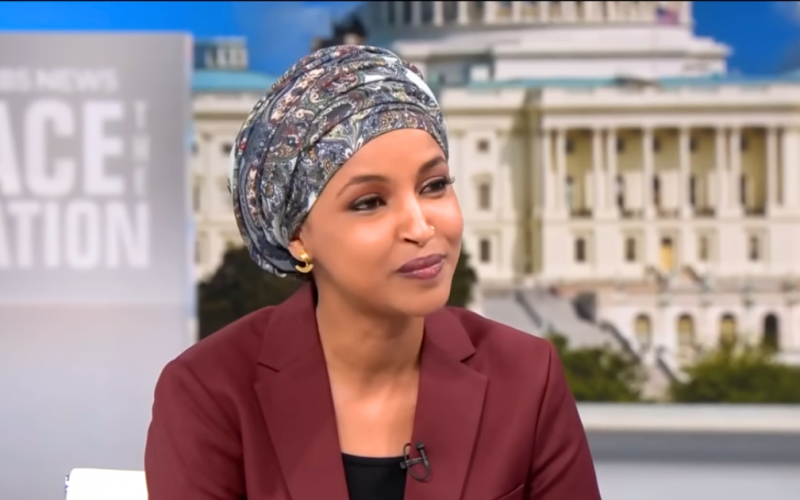
Rep. Ilhan Omar (D-MN) is facing sharp criticism from conservative commentators and political opponents after a social media post on X that many interpreted as suggesting extreme consequences for President Donald Trump.
Omar shared a clip of Trump’s remarks about fraud involving the Somali‑American community with a caption that referenced punitive practices in Somalia, prompting an uproar across political lines.
In the video Omar posted, Trump was asked about what he characterized as rampant fraud in Minnesota tied to Somali immigrants.
Trump responded by claiming that the community had contributed to abuse of public benefits and criticized Omar personally, labeling her a “fake congresswoman” and saying he would address the alleged fraud.
“The leader of the Pedophile Protection Party is trying to deflect attention from his name being all over the Epstein files,” Omar wrote.
“At least in Somalia they execute pedophiles not elect them.”
Many social media users interpreted the reference to execution—which reflects certain harsh criminal punishment practices in Somalia—as directed at Trump, rather than as symbolic commentary.
Critics seized on Omar’s wording as crossing a line for an elected official.
Conservative commentators and some Republican figures argued that invoking execution imagery in reference to a president was inappropriate and risked normalizing violent rhetoric in political debate.
Calls for formal review or censure were voiced by some on social platforms, though no official action has been taken.
Supporters of Omar, meanwhile, insisted her comment was hyperbolic political criticism intended to highlight what they see as persistent targeting of immigrant communities and inflammatory attacks by Trump and his allies.
They framed her post as part of broader frustration over rhetoric that they argue demonizes Somalis and Somali‑Americans.
The controversy occurs amid broader national debates about immigration and fraud allegations in Minnesota, where a major fraud scandal involving food benefit programs and social services has drawn widespread attention.
Law enforcement has charged dozens of individuals in connection with ongoing fraud investigations, many of whom are Somali immigrants, though prosecutors have not implicated Omar.
Trump has repeatedly highlighted concerns about fraud within the Somali community and has criticized Omar for her role in downplaying these issues.
In multiple statements and social media posts, he accused some Somalis of exploiting public programs and urged accountability. Omar has defended her comments, calling Trump’s statements politically motivated.
Omar, a Somali-born U.S. citizen who came to the United States as a child and represents a district with one of the largest Somali diasporas in the country, has frequently drawn criticism from President Trump and conservative commentators over her handling of fraud and social program oversight in her district.
She has defended her record and characterized some of the rhetoric against her as politically motivated.
Some analysts and commentators have expressed concern about how charged rhetoric on both sides of the political divide affects public discourse and the safety of public officials.
Legal experts note that interpreting Omar’s post as a literal threat involves subjective judgment, and no official investigation has been announced into her specific comments.
The broader controversy reflects ongoing debates in American politics over political language, immigrant communities, and the limits of rhetorical expression by elected officials.
