

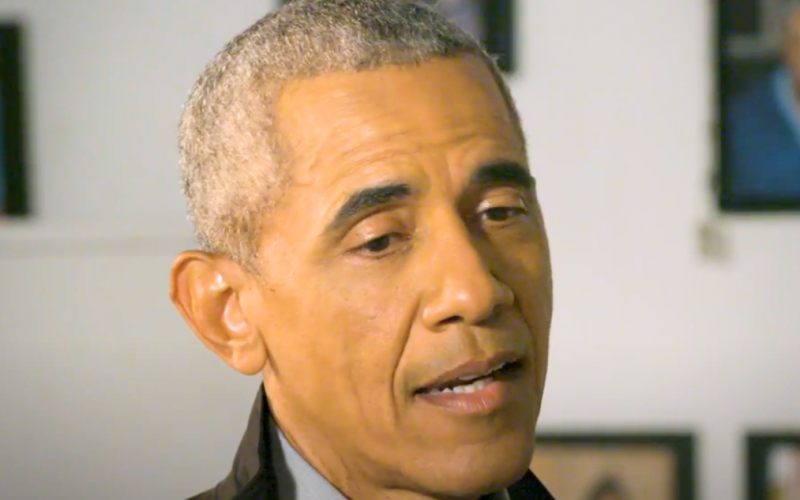
For nearly a decade, Benjamin Netanyahu reportedly knocked on America’s door with the same message: it is time to go to war with Iran. Barack Obama says he kept that door shut. Donald Trump, according to Obama, swung it wide open.
The former president sat down with The New Yorker on Monday and delivered one of his most direct public assessments yet of the current U.S.-Iran war — a conflict now stretching into its third month with no clear end in sight.
Obama told the publication that Netanyahu spent the entirety of his presidency making the case for military confrontation with Tehran, using the very same arguments the Israeli prime minister would later bring to Trump ahead of the February 28 strikes that ignited the current war.
Those strikes, carried out jointly by American and Israeli forces in an operation the administration branded Operation Epic Fury, marked the opening salvo of a conflict Trump had predicted would wrap up in four to six weeks.
That timeline has not held.
Before the first bombs dropped, a pivotal closed-door meeting took place in February between Trump, Netanyahu, and senior national security and cabinet officials from both governments.
The New York Times obtained details of that session, reporting that Netanyahu and Mossad — Israel’s national intelligence agency — mounted what the paper described as a “hard sell” on the American president.
Inside that room, Israeli officials laid out a vision of swift, decisive victory. They told Trump that a war conducted with sufficient intensity could shatter the Iranian regime’s grip on power, leaving it unable to threaten the Strait of Hormuz.
Mossad’s intelligence picture, as presented, was described as optimistic — agency officials reportedly argued that heavy enough bombardment could ignite internal opposition forces and bring the government in Tehran to its knees.
The spy agency also flagged the potential for Iranian Kurdish fighters to open a second front, further straining and accelerating the collapse of the regime.
Netanyahu’s pitch landed. “Mr. Netanyahu delivered his presentation in a confident monotone,” The New York Times reported.
“It seemed to land well with the most important person in the room, the American president. Sounds good to me, Mr. Trump told the prime minister. To Mr. Netanyahu, this signaled a likely green light for a joint U.S.-Israeli operation.”
Obama, speaking from the remove of a former president, cast that outcome as predictable — and questioned whether it was wise.
“I think my prognosis was accurate,” he said in The New Yorker interview, suggesting Netanyahu may have “gotten what he wanted” while raising pointed doubts about whether the war serves either nation.
“Whether that’s what is ultimately best for the Israeli people, I would question that. Whether I think it’s what is good for the United States and America, I would question that. I think there’s an ample record of my differences with Mr. Netanyahu,” Obama said.
Obama also turned his attention to threatening statements Trump directed at Iran in early April, in which the president raised the specter of erasing an entire civilization. The former president responded with a defense of what he described as the foundational obligations of American leadership.
“I believe American leadership, as represented by the American President, has to reflect a basic regard for human dignity and decency, not just within our own borders but beyond,” Obama told The New Yorker.
“That’s part of the responsibility of leadership. If we are not giving voice to those core values—that there are innocent people in countries with terrible governments and we have to care about those people, that we can make mistakes if we are not guarding against hubris and pure self-interest … If we don’t have those things, the world can break in very bad ways.”
Trump has offered a starkly different account of how the war began — and who drove it. Speaking in March, he pushed back hard against any suggestion that Israel pulled America into the fight.
“They were going to attack if we didn’t do it,” Trump said. “They were going to attack first. I felt strongly about that. I think they were going to attack first, and I didn’t want that to happen. So, if anything, I might have forced Israel’s hand. But Israel was ready, and we were ready, and we’ve had a very, very powerful impact.”
Netanyahu has denied that Israel was the driving force behind the American decision to enter the war.
Trump grew more pointed on April 20, posting directly to Truth Social: “Israel never talked me into the war with Iran.”
The White House has consistently backed that position, repeatedly rejecting claims that Israel held outsized sway over the decision to launch Operation Epic Fury.
The war entered a new phase of tension Monday when Trump activated “Project Freedom,” an operation to escort commercial vessels stranded in the Strait of Hormuz after Iran shut down the critical waterway.
Tehran responded by declaring the escort mission a violation of the existing ceasefire agreement — an agreement already strained by unresolved disputes over both the strait and Iran’s nuclear program.
Obama’s interview lands into that volatile environment, reviving a fierce debate over who bears responsibility for a war that is costing far more time — and almost certainly far more treasure and blood — than its architects initially projected.
