

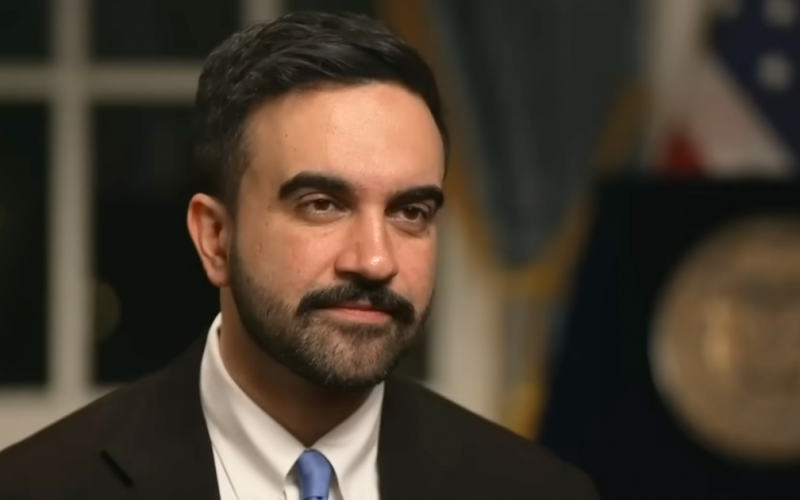
A recent Ramadan observance by the FDNY Islamic Society has ignited intense debate after prayer rugs were placed directly in front of the department’s 9/11 memorial plaque, drawing criticism from firefighters, elected officials, families of fallen heroes, and Americans nationwide.
The annual iftar, the evening meal breaking the day’s fast, occurred March 4 at FDNY headquarters in Brooklyn’s Metrotech Plaza.
Mayor Zohran Mamdani and Fire Commissioner Lillian Bonsignore attended alongside over 100 members and guests.
Traditionally held in the FDNY auditorium, this year the Maghrib prayer coincided with the iftar, prompting the placement of more than a dozen prayer rugs in the lobby near the memorial plaque, according to Morning Press.
The memorial honors 343 firefighters who died in the World Trade Center attacks and 409 others who later succumbed to illnesses linked to Ground Zero exposure.
Councilmember Joann Ariola, R-Queens, said her office received more than 20 complaints in the days following the event.
“This is a memorial, and should be sacrosanct, not a space for people to be congregating regardless of religion or rationale,” she said.
Firefighters interviewed by independent journalist Susan Edelman expressed frustration that the prayers were held in the lobby rather than in the auditorium, which could have accommodated both the iftar and Maghrib prayer without disturbing the memorial.
One active firefighter wrote, “As someone who respects the sacrifices made by all FDNY members, I believe the Muslim group involved, along with city leadership, showed a real lack of sensitivity.”
FDNY officials defended the event, emphasizing that no disrespect was intended, Trending Politics reported.
Spokeswoman Amanda Farinacci said, “Due to capacity issues inside the auditorium, the rugs were placed in the lobby. The ceremony followed the traditional iftar, breaking the fast immediately at sunset and after the Maghrib prayer.”
Despite these assurances, critics argue the placement demonstrates a lack of awareness of the memorial’s historical and emotional significance.
Conservative commentators have noted that September 11, 2001, was a terrorist attack carried out by radical Islamists, making the proximity of Islamic prayer rugs to the memorial a sensitive issue.
Canadian Professor Gad Saad’s concept of “suicidal empathy” has been cited, warning that prioritizing inclusive gestures over the feelings of victims’ families can erode respect for historical tragedies, according to Patriot Fetch.
The FDNY Islamic Society, a fraternal group of Muslim firefighters, has hosted annual iftars at headquarters for years without controversy.
This year’s deviation—placing prayer rugs in the lobby instead of the auditorium—has amplified scrutiny over institutional judgment.
Critics argue that with multiple conference rooms and open spaces, organizers had alternatives that would have preserved the memorial’s sanctity.
The controversy underscores a broader struggle in public institutions: balancing religious accommodations with the preservation of sacred spaces.
The FDNY has promoted diversity within the department, but some officials and observers noted that alternative arrangements—such as delaying the prayers, relocating them, or coordinating to keep the memorial unobstructed—were possible.
The incident has sparked a wider discussion on cultural sensitivity, institutional judgment, and political signaling in a city still scarred by 9/11.
Mayor Mamdani attended the event alongside Commissioner Bonsignore.
The FDNY’s decision to hold prayers near the 9/11 memorial has drawn public attention and remains a topic of discussion regarding the management of memorial spaces during departmental events.
