

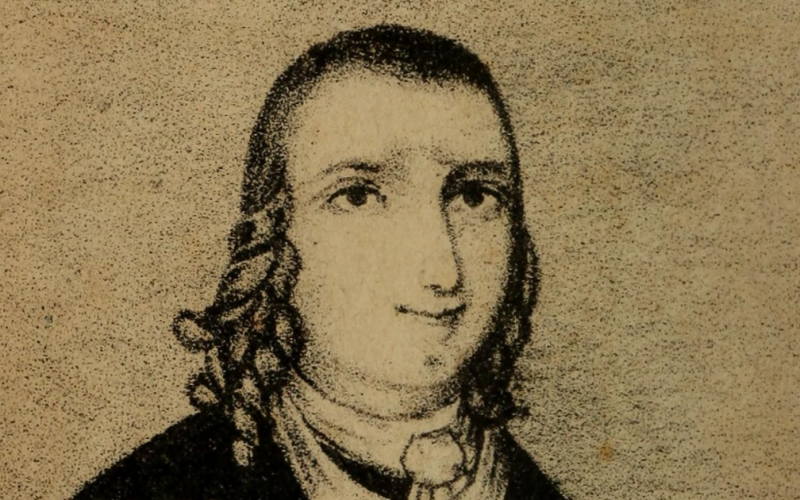
As the U.S. marks its 250th anniversary, renewed attention is being paid to Jemima Wilkinson, an 18th-century religious leader who rejected a gendered identity, founded a religious movement and promoted equality in the years following the American Revolution.
Wilkinson, a Rhode Island native, fell gravely ill in 1776 at the age of 23. According to historical accounts, family members believed the illness would prove fatal after Wilkinson spent several days bedridden with a high fever and reported visions of angels.
After recovering, Wilkinson claimed the original person had died and that a divine spirit had entered the body. Rejecting the birth name, the preacher adopted the name “Universal Friend” and instructed followers not to use gendered pronouns when referring to them. The Universal Friend also began wearing long robes and clothing intended to avoid identifying with either men or women.
The Universal Friend went on to establish the Society of Universal Friends, a religious movement that preached equality, individual liberty and the inherent worth of every person regardless of race or gender. Hundreds of followers eventually joined the movement during the late 18th century.
The movement taught that all people were equal before God and required followers to free enslaved people under their control. Some formerly enslaved individuals later joined the community themselves, while women assumed leadership positions as preachers and administrators.
The Universal Friend also predicted that Judgment Day would occur on or around April 1, 1790. When that date passed without incident, many followers concluded they had been spared through divine intervention rather than abandoning the movement.
Facing growing hostility, the Universal Friend encouraged followers to relocate to what was then the western frontier in New York’s Finger Lakes region, where they established settlements based on the movement’s religious principles. Residents organized their own households and businesses, and participation in religious meetings was not mandatory.
The settlements included single women, families, formerly enslaved people and orphans living alongside one another. According to historical accounts, the communities remained economically successful and were respected by neighboring settlements and Native American communities, per the Daily Mail.
The movement later became embroiled in legal disputes after several former followers challenged its land ownership and sought to prosecute the Universal Friend for blasphemy. A court ultimately dismissed the blasphemy case after determining such charges were no longer prosecutable under the new nation’s protections for religious liberty and free speech.
The property disputes were eventually resolved in favor of the Society of Universal Friends, although many of those decisions came after the Universal Friend’s death in 1819 at the age of 66.
Though largely absent from many accounts of early American history, the Universal Friend’s movement represented one of the nation’s earliest religious communities organized around principles of racial equality, expanded roles for women and religious freedom during the years immediately following the signing of the Declaration of Independence.
