

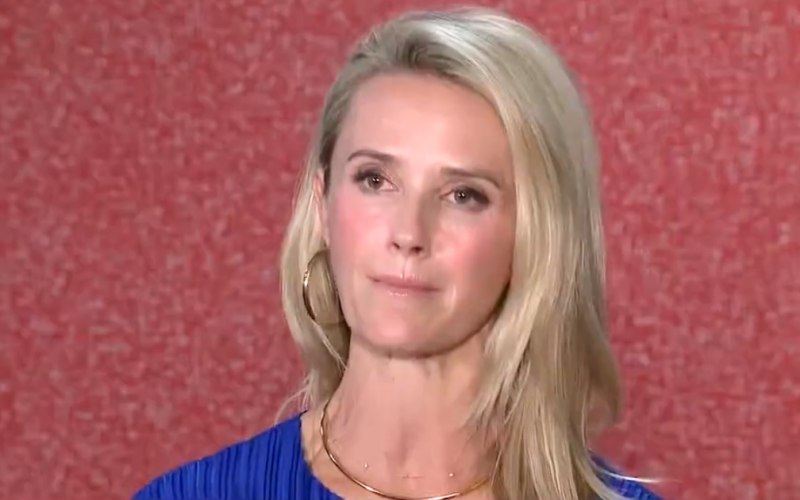
Jennifer Siebel Newsom, California Gov. Gavin Newsom’s (D) wife, is drawing renewed attention after a resurfaced video showed her discussing a childhood tragedy while speaking with incarcerated juvenile offenders, prompting criticism and debate over her remarks and their implications.
In the video, Siebel Newsom recounts how she shared a deeply personal experience during interviews with young inmates at San Quentin.
She explained that she opened up about the death of her older sister, which occurred shortly before her seventh birthday, and how she blamed herself for the incident.
“I had to be very raw,” she said, describing how she used the story to connect with the individuals she was interviewing.
Siebel Newsom went on to suggest that her story resonated with the inmates, noting that they were “shocked” to hear that she had also experienced a traumatic event.
She described the situation as being in the “wrong place at the wrong time,” adding that while her case was clearly an accident, the crimes attributed to the inmates were “probably an accident too.”
The remarks have drawn criticism from some observers, particularly over the comparison between a childhood accident and the actions of individuals convicted of serious crimes.
Critics argue that equating the two situations minimizes the severity of the offenses committed by inmates and reflects a broader ideological perspective on criminal justice.
The resurfaced video has also brought renewed focus to the tragic event from Siebel Newsom’s childhood.
According to prior reporting, she was six years old during a family vacation in Hawaii in 1981 when a golf cart she was in went into reverse, fatally striking her 8-year-old sister.
The incident has long been described as an accident, though Siebel Newsom has publicly spoken about carrying feelings of guilt in the years that followed.
In past interviews, she has discussed the emotional toll of the tragedy, including the pressure she felt to compensate for the loss within her family.
According to the Los Angeles Times, she described experiencing survivor’s guilt and striving to “be perfect,” explaining that she felt a responsibility to make a positive impact in the world in response to the loss.
The video resurfaced amid broader scrutiny of Siebel Newsom’s public statements and advocacy work, particularly as her husband is widely viewed as a national political figure and potential presidential candidate.
Critics have pointed to the remarks as part of a pattern of messaging they consider out of touch, while supporters argue her comments reflect an attempt to show empathy and build human connections in a challenging environment.
Public reaction has been swift, with some high-profile commentators criticizing the comparison made in the video.
Others, however, have emphasized the importance of context, noting that Siebel Newsom was speaking in a rehabilitative setting aimed at encouraging openness and reflection among incarcerated individuals.
A spokesperson for Siebel Newsom confirmed that the interview was connected to her documentary work but did not provide additional details about when the footage was recorded, according to the New York Post.
The video is believed to be tied to outreach efforts she conducted in connection with past projects focused on social issues and youth development.
As the discussion continues, the incident highlights the challenges public figures face when sharing personal experiences in sensitive contexts.
While Siebel Newsom’s story has long been part of her public narrative, the renewed attention underscores how such remarks can be interpreted differently depending on audience and timing.
WATCH:
