

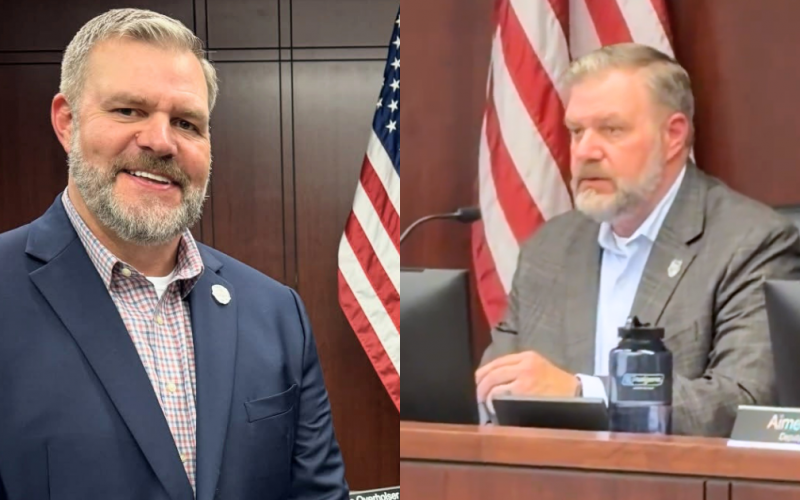
Battle Ground, Washington, Mayor Eric Overholser has issued two politically charged proclamations—one involving U.S. Immigration and Customs Enforcement (ICE) and another addressing Antifa.
The proclamations have drawn attention from city staff and residents alike, as officials weigh whether such declarations fall within the city’s traditional ceremonial role or venture into broader political messaging.
The Antifa-related draft was originally submitted on April 8 by resident Jesse McCarty under the title “A Proclamation Condemning Antifa, Associated Criminal Conduct and Directing the Vigorous Enforcement of Law.”
The document called for strict enforcement of laws involving riot activity, unlawful assembly, assault, arson, and vandalism, while condemning what it described as “Antifa-associated criminal activity.”
After receiving the draft, Overholser forwarded it to city staff and indicated support for moving it forward in the review process.
City records show that when staff sought direction on how to proceed, Overholser responded in writing that he supported continuing consideration of the proposal.
The exchange prompted internal review by city officials, who later raised questions about whether the proclamation aligned with established city guidelines governing ceremonial statements, according to The Reflector.
City Clerk Elizabeth Halili, speaking on behalf of City Manager Kris Swanson, later clarified that ceremonial proclamations are designed to formally acknowledge events, people, or community observances rather than express policy positions or directives.
She noted that the Antifa draft appeared to extend beyond recognition and instead read as a statement on law enforcement priorities and public order, placing it outside the city’s intended framework for proclamations.
Following internal review, the draft was revised later in April.
Rather than directly calling for condemnation, the updated version referenced a September 2025 federal executive order by President Donald Trump identifying “Antifa” as a domestic terrorist organization.
The revised language framed the city’s acknowledgment as recognition of federal action and broader public safety concerns at the national level.
Separately, a second proposal submitted on January 27 by Paula Ochoa called for a proclamation expressing support for ICE.
The draft described ICE personnel as playing a key role in immigration enforcement and emphasized themes of national authority, public safety, and adherence to the rule of law, while opposing efforts seen as interfering with the agency’s mission.
Overholser later stated that he had returned a modified version of the ICE-related draft to the requester for review, though that revised text was not included in the public records examined by The Reflector.
City communications indicate that discussions around scheduling the ICE proclamation for a council meeting continued in the months that followed.
Both proclamations stand apart from the city’s typical ceremonial recognitions, which have traditionally been limited to community events, awareness campaigns, and local observances rather than broader national policy issues.
City officials have noted this distinction as part of their internal review process.
The developments also come against a wider political backdrop in Washington State, where immigration enforcement remains a divisive issue.
Some jurisdictions have adopted policies limiting cooperation with federal immigration authorities, while others argue such measures are necessary for maintaining public safety and effective law enforcement coordination.
The proclamations follow previous controversy involving Overholser’s approach to LGBT-related proclamations.
In 2024, while serving on the city council, he joined two members in voting to remove a Pride Month proclamation from the agenda.
Since taking office as mayor in January, he has also declined additional LGBT-related proclamation requests.
Public reaction has been divided.
A letter published in The Columbian by former state legislator Tim Probst criticized the mayor’s involvement in ICE-related messaging, arguing that city leadership should prioritize local concerns such as housing, employment, and healthcare rather than national political debates.
Meanwhile, recent demonstrations in Battle Ground have reflected broader tensions surrounding immigration policy and federal enforcement actions.
WATCH:
