

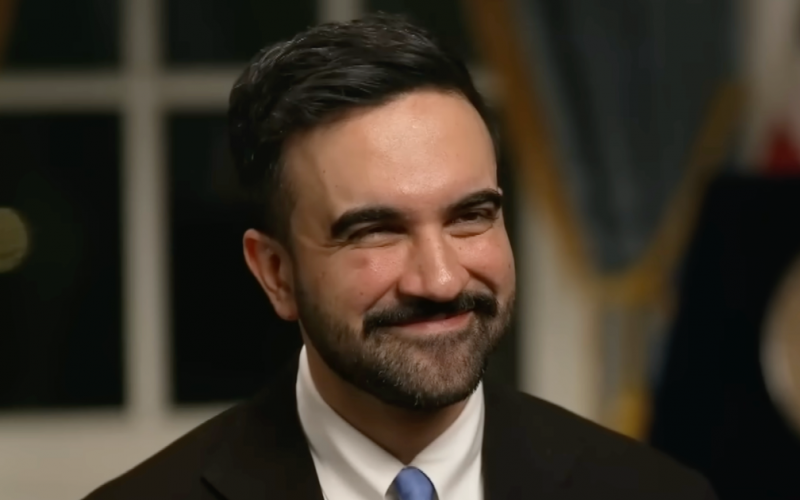
New York City Mayor Zohran Mamdani (D) is backing away from a major campaign promise on affordable housing as budget realities force a shift in policy.
The mayor is now appealing a court order that would require the city to expand its rent voucher program, a key initiative designed to help low-income residents afford housing. Critics say the move signals a retreat from one of his central campaign pledges.
Mamdani’s administration argues the expansion is simply too expensive. The program is projected to cost more than $4 billion over the next several years, a price tag the city says is unsustainable as it deals with a multibillion-dollar deficit.
“We are speaking about an expansion that would then cost over $4 billion in the next few years alone,” Mamdani said. “I am deeply committed to ending the homelessness crisis… but in a manner that is sustainable.”
The decision comes as New York City continues to face a $5.4 billion budget shortfall, even after officials worked to reduce a much larger inherited deficit. The financial pressure is forcing the administration to rethink several high-profile promises.
Instead of expanding vouchers, Mamdani is shifting focus to a new plan aimed at speeding up construction. His “Neighborhood Builders Fast Track” program is designed to cut development timelines by up to two and a half years on city-owned land.
“New Yorkers cannot afford to wait any longer,” Mamdani said while unveiling the plan in Brooklyn. The program will initially target sites in Bedford-Stuyvesant, the Bronx, and Queens.
The strategy reflects a broader pivot. Rather than relying on direct subsidies like vouchers, the administration is now emphasizing increasing housing supply as a long-term solution.
Still, the shift is drawing criticism. Opponents argue that abandoning or delaying the voucher expansion leaves vulnerable residents without immediate relief in a city where rents continue to climb.
In Bedford-Stuyvesant, median rent has surged roughly 90% over the past two decades, fueling displacement concerns. Residents say so-called “affordable housing” often remains out of reach.
“I’m seeing a lot of buildings that are coming up in this neighborhood that are not for the people in the neighborhood,” one resident said.
Another added: “I like the idea that he’s going to fast-track housing as long as it’s actually affordable.”
The voucher fight also predates Mamdani’s administration. The legal challenge was originally launched under former Mayor Eric Adams, with both administrations arguing that the expansion would strain city finances, according to the Conservative Brief.
Mamdani is now continuing that fight while trying to balance competing priorities. He has made clear that raising property taxes is a last resort, limiting the city’s options for generating new revenue.
At the same time, other campaign promises are also under pressure. Officials have acknowledged that proposals like free parking and other costly initiatives may not be feasible under current conditions.
Supporters argue the mayor is making necessary adjustments based on fiscal reality. Critics say it looks like a pattern of walking back bold promises once in office.
The core issue is simple. The administration is trying to balance affordability goals with budget constraints, and those two priorities are now in direct conflict.
For now, the voucher expansion remains uncertain as legal battles continue. But the shift in strategy is clear, and it signals a broader recalibration of Mamdani’s agenda.
What began as an ambitious push to reshape housing policy is now being reshaped by the financial limits of governing.
